Why This Series, Why Now
Modern insurgencies no longer depend on a state sponsor’s cash. They run businesses: fuel siphoning, precursor chemicals, port rackets, customs fraud and the informal money networks that move the proceeds. The organizations doing this are fluid, hiring and dropping criminal partners as markets change, which is why CommandEleven Intelligence calls them liquid cartels.
This series follows that criminal economy from the money, through the supply chains and the ports, to the measures that can starve it.
What This Series Covers
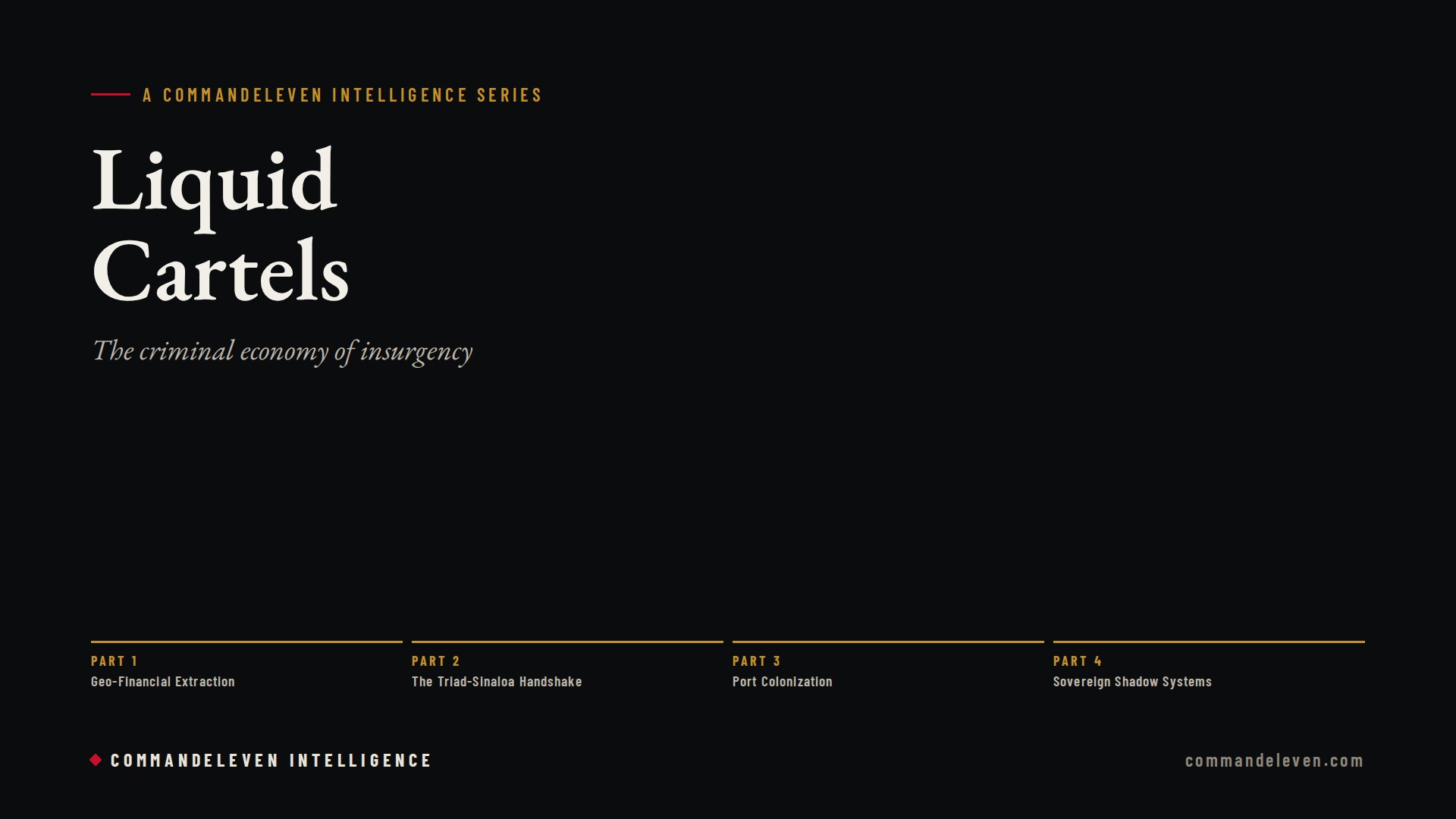
- Part 1: Geo-Financial Extraction and Liquid Cartels – fuel siphoning, tracking manipulation and the hawala networks that turn stolen commodities into operational cash.
- Part 2: The Triad-Sinaloa Handshake – the chemical procurement loop linking Asian suppliers to Mexican cartels.
- Part 3: Armed Proxies and Port Colonization – how armed networks take over port administration and the customs revenue that comes with it.
- Part 4: Sovereign Shadow Systems: Countering Parallel Logistical Oxygen – the countermeasures: cutting the utilities, ledgers and logistics that parallel systems run on.
How to Read It
Parts 1 to 3 map the economy: money, supply chain and territory. Part 4 is the response. The analytical framework behind the series, how insurgencies monetize instability, is set out in The Criminal-Terror Nexus: How Insurgencies Monetize Instability, and the cartel case study is Mexico’s Cartels in 2026.
A Note on Method
Claims across the series are confidence-tiered as CONFIRMED, ASSESSED or SPECULATIVE. The series describes how these networks operate and how to disrupt them; it does not provide operational detail that would help anyone replicate them.