Executive Summary
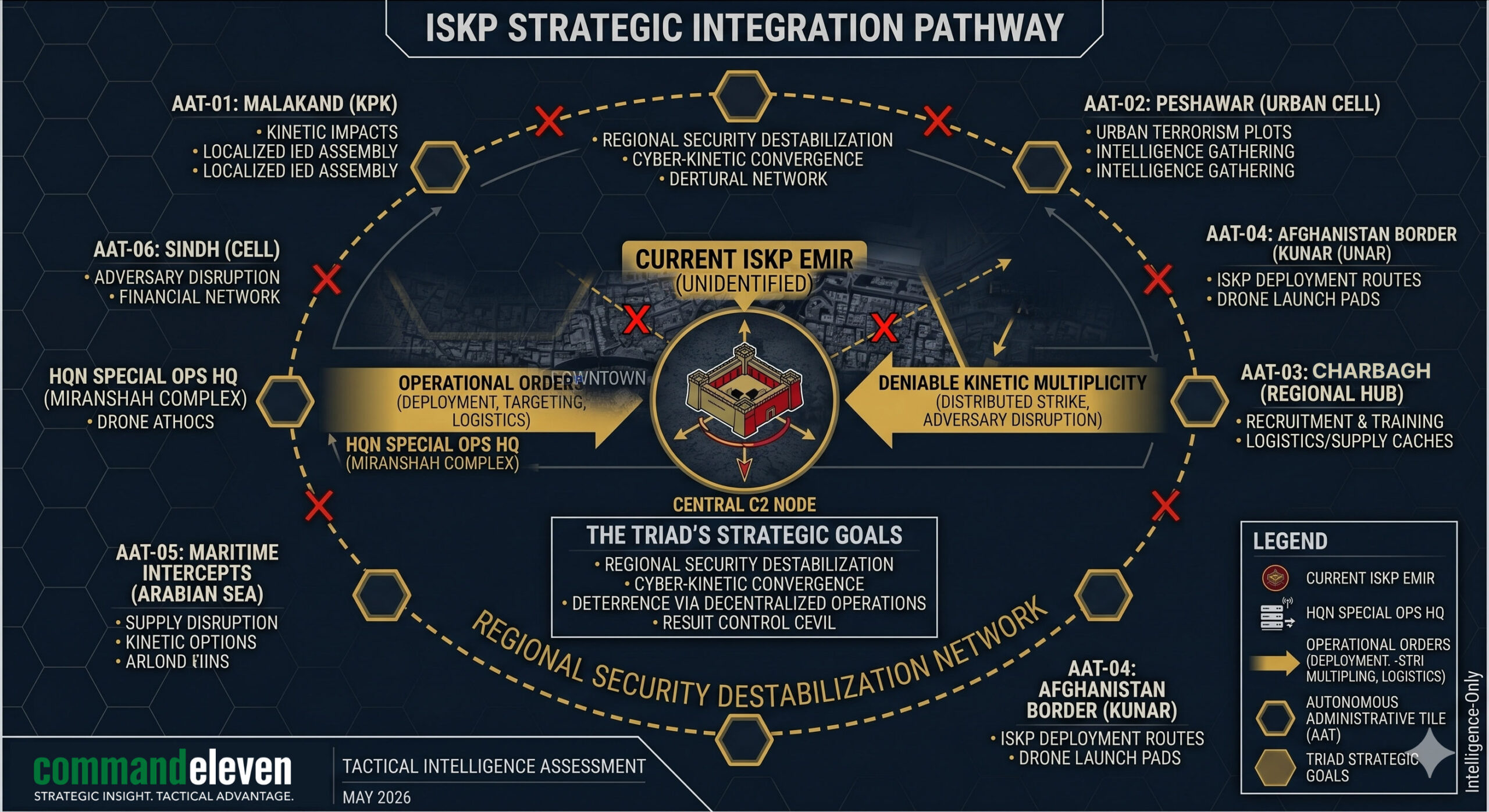
The “Former” Emir Audit (Sanaullah Ghafari) (C11-2026-IDD-LEV-02) deconstructs the narrative of leadership defection between the Haqqani Network (HQN) and ISKP as a strategic Information Mirage. The current ISKP Emir functions as a specialized “Unsanitized” kinetic operative for the HQN. This symbiosis utilizes the Sanitization Gap, where HQN provides institutional immunity and state-grade hardware (RDX, captured biometric scanners, and EW tools) to ISKP strike cells. This dual-track software allows HQN to maintain diplomatic “Hardware” (state legitimacy) while ISKP executes high-velocity institutionally-backed kinetic events.
3 Key Takeaways
- The Sanitization Gap: HQN utilizes its administrative footprint to mask ISKP logistics and technical specialists within “Sanitized” urban nodes.
- Institutional Hardware Transfer: Post-blast signatures confirm the infusion of military-grade RDX and precision detonators indistinguishable from HQN specialized units.
- Human Capital Partitioning: The Madrassa Pipeline is used to route disciplined recruits to HQN administration and high-kinetic recruits to ISKP technical bureaus.
The Institutional Handshake
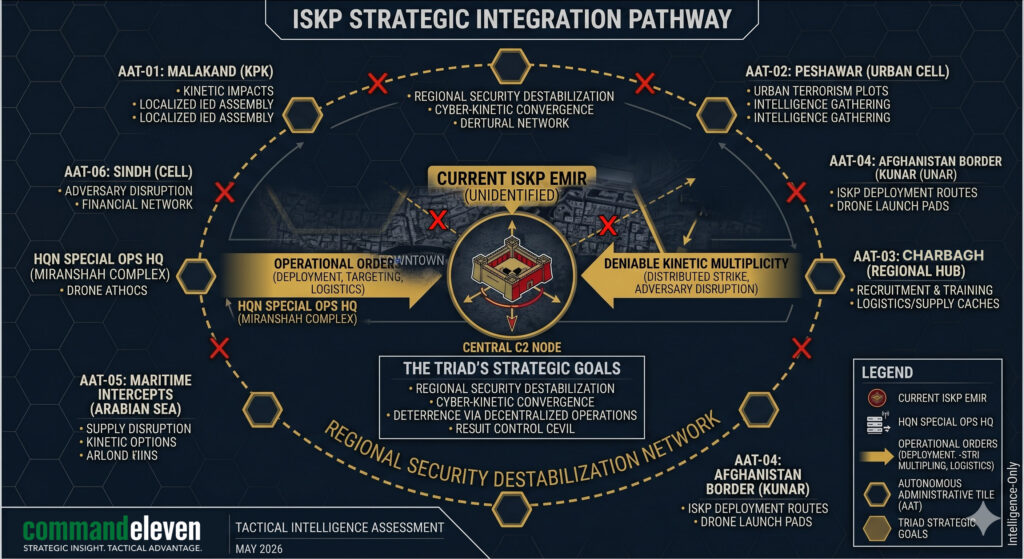
Current intelligence confirms that the “former” Haqqani Network (HQN) status of the current ISKP Emir is an operational Information Mirage. This dossier audits the functional relationship between the ISKP Emirate and HQN’s “Special Operations” directorate. We identify a clinical synchronization where HQN provides Structural Hardware (institutional immunity and urban sanctuary) in exchange for ISKP Denial Software (plausible deniability for high-impact kinetic events).
The Sanitization Gap: Structural Immunity
The HQN utilizes its administrative footprint to “sanitize” ISKP logistical corridors.
- Administrative Shielding: By categorizing ISKP strike cells as “rogue elements” or “foreign actors,” HQN security elements suppress the Hardware Truth that links these cells to institutional safe houses.
- Urban Sanitization: Intelligence identifies specific nodes in Jalalabad and Kabul where ISKP technical specialists operate under the protection of HQN-linked security details, utilizing state-level travel permits to bypass standard interdiction.
Hardware Exchange: State-Grade Assets
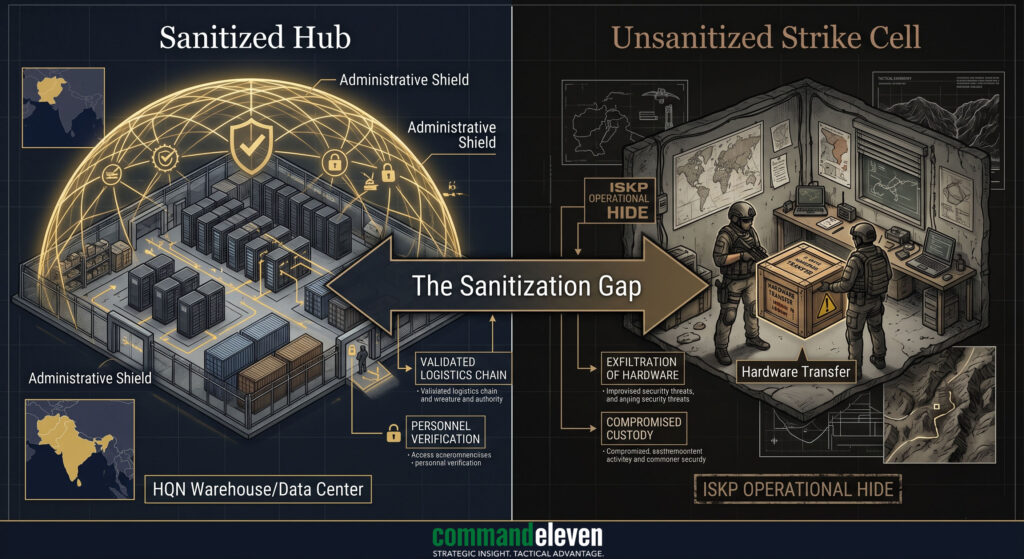
The handshake is defined by the infusion of state-grade hardware into ISKP kinetic bureaus.
- Advanced EW Infusion: Tracking the movement of captured biometric scanners and military-grade encryption hardware from HQN stockpiles to ISKP strike teams.
- The HQN Signature: Post-blast analysis of recent strikes reveals the use of high-yield RDX-based precursors and precision detonators indistinguishable from HQN’s elite specialized units.
Software & Leadership Synchronization
- The Joint Human Capital Pipeline: Recruits from the Madrassa Pipeline are partitioned: those capable of institutional discipline are routed to HQN administrative roles, while those suited for high-velocity kinetic multiplicity are transferred to ISKP technical bureaus.
- Coordinated Cognitive Warfare: HQN utilizes its state-level digital infrastructure to protect and broadcast ISKP’s “Software” updates (recruitment and doctrine).
Operational Interdiction Strategies
- Exposing the Handshake: TGs must utilize Hardware Truth to physically verify ISKP presence within HQN-protected zones.
- Forensic Accountability: Holding institutional hubs accountable for the specific technical signatures of military-grade hardware found at ISKP strike sites.