Technical Takeaways
- Decentralized Administrative Resilience: The transition to the geographic Vilayat (Province) command structure grants total operational and tactical autonomy to regional shadow governors. This structural insulation ensures that the neutralization of localized command nodes fails to disrupt adjacent operational sectors, establishing a highly resilient, matrix-based threat architecture.
- Hardware and Tactical Modernization: The systemic integration of Western-origin small arms, advanced thermal imaging systems, and digital mobile radio (DMR) Tier II encryption has elevated the TTP’s kinetic capabilities from rudimentary hit-and-run tactics to highly synchronized, multi-axis border penetration maneuvers capable of exploiting terrain-induced sensor degradation.
- Digitized Financial and Logistical Architecture: By anchoring its financial pipeline in stablecoin transactions over the TRON network alongside legacy trade-based money laundering, the TTP has successfully obscured high-value capital flight, allowing it to maintain a continuous, digitized supply chain for dual-use technologies and modified uncrewed aerial platforms.
Transnational Safe Havens and Operational Relocation Frameworks
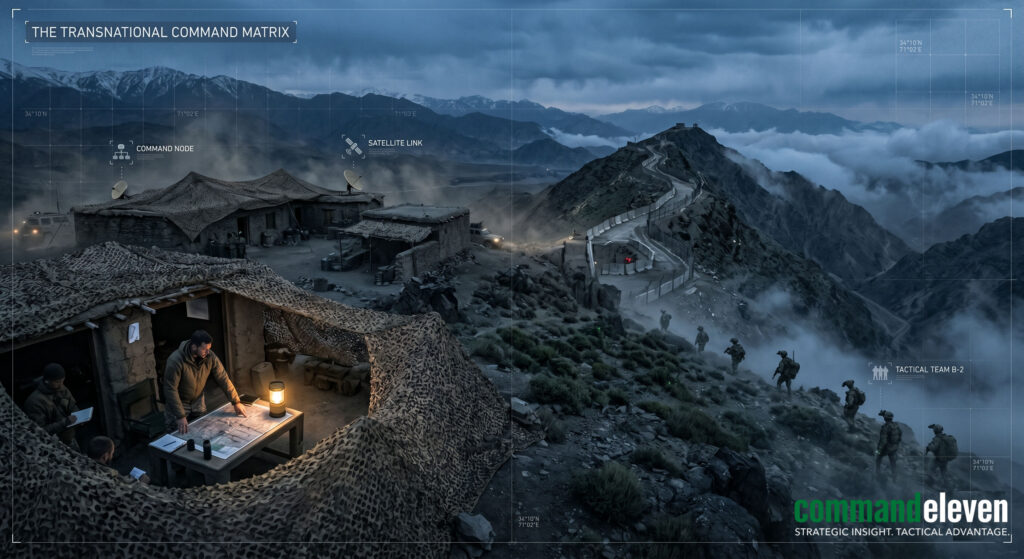
The post-August 2021 geopolitical realignment within Afghanistan fundamentally altered the operational architecture of Tehreek-e-Taliban Pakistan (TTP). Following the fall of the Western-backed Kabul government, the TTP executed a structural migration from the asymmetric urban underground and isolated pockets of the Former Federally Administered Tribal Areas (FATA) into formal, state-sanctioned sanctuaries within Afghan territory. This transition was marked by a shift from temporary tactical concealment to permanent strategic basing, facilitated directly by elements within the Islamic Emirate of Afghanistan (IEA), specifically the Haqqani Network (HQN).
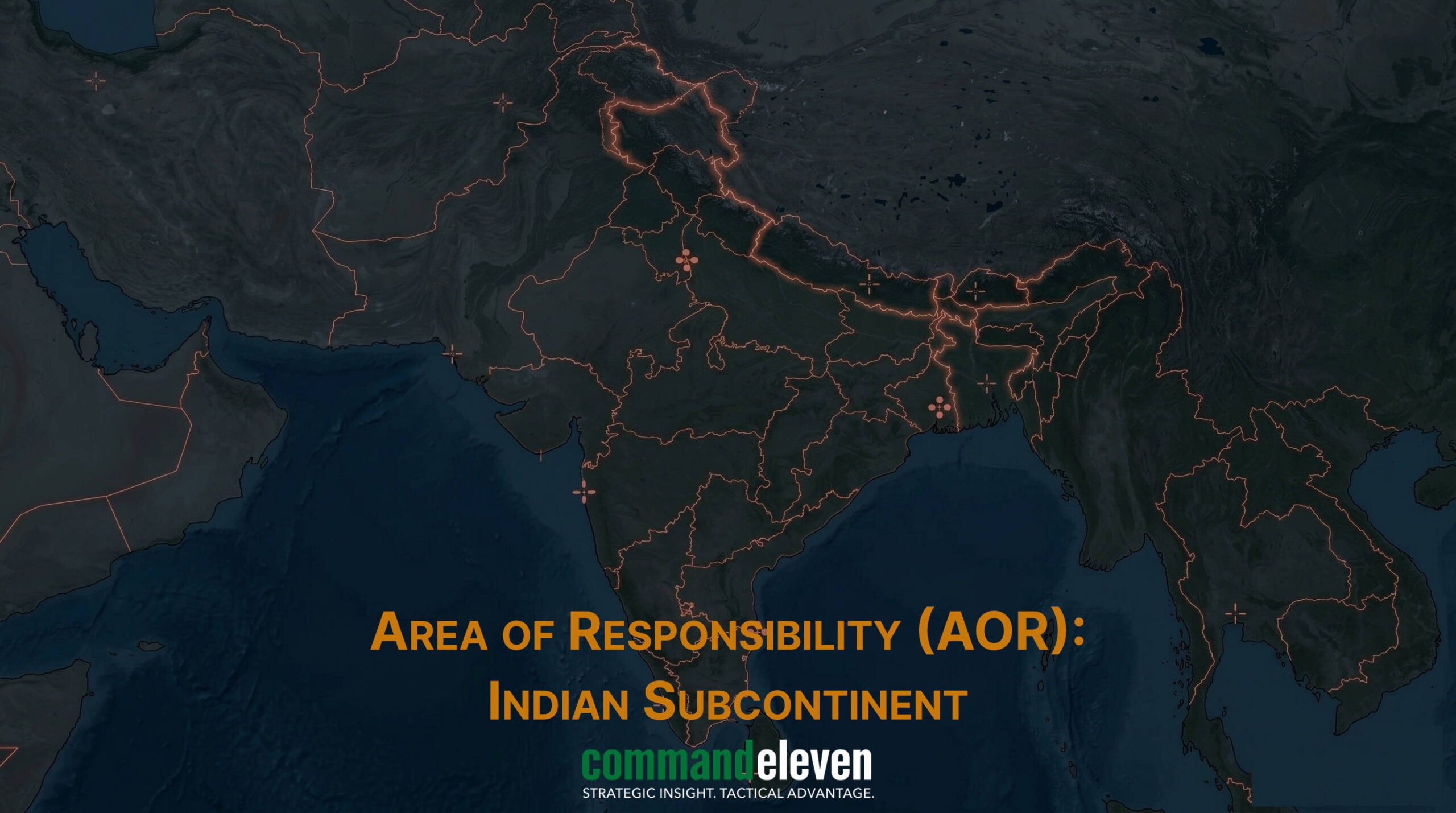
The spatial distribution of these safe havens is concentrated primarily within the eastern and southeastern provinces of Afghanistan, providing direct contiguous access to the Pakistan-Afghanistan border.
- Khost and Paktia Provinces: Serving as the primary logistics hubs and command nodes. The infrastructure here leverages historical HQN networks, utilizing legacy subterranean complexes and newly constructed semi-permanent encampments.
- Kunar and Nangarhar Provinces: Utilized predominantly as launchpads for kinetic operations targeting Pakistan’s Khyber Pakhtunkhwa (KP) province. These locations provide thick canopy cover and rugged mountainous terrain, mitigating the effectiveness of overhead surveillance and kinetic drone platforms.
Mechanically, the TTP’s relocation protocol relies on a decentralized command-and-control (C2) matrix. While the overarching shura (consultative council) retains policy-level oversight from deep within Afghan territory, operational execution is delegated to regional malgari (units) assigned to specific border sectors. This geographic distribution is underpinned by formal documentation and freedom-of-movement guarantees issued under the guise of the Muhajireen (refugee) status framework administered by local IEA governors. This administrative cover complicates international counter-terrorism targeting, as combatants are frequently co-located with civilian populations or integrated directly into local border security detachments.
Border Penetration Tactics, Hardware Integration, and Protocol Indicators
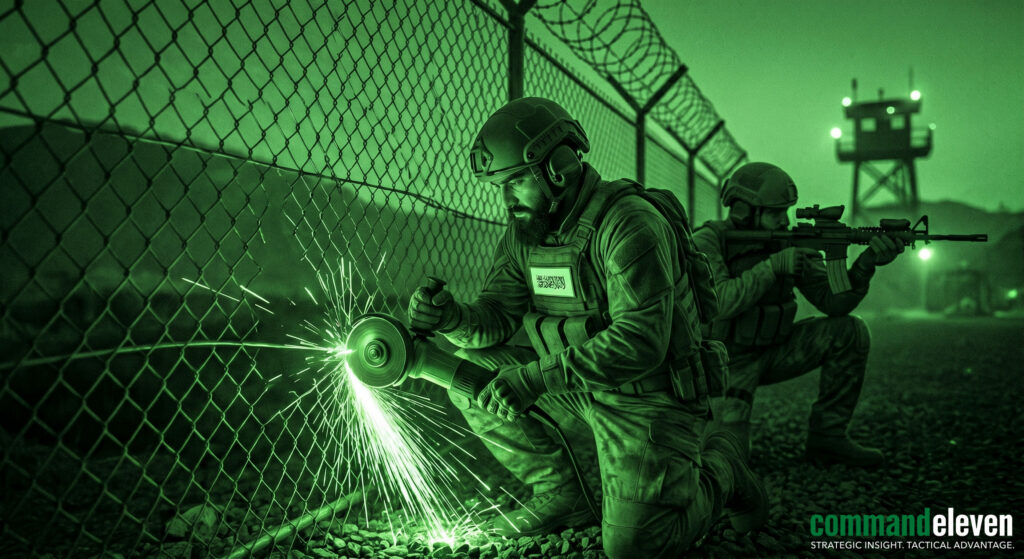
TTP border operations have evolved from rudimentary, low-yield insurgent incursions to highly coordinated, multi-axis penetration maneuvers designed to breach Pakistan’s border fencing and fortified Frontier Corps (FC) outposts. The mechanics of these operations indicate a significant infusion of advanced military hardware, primarily sourced from abandoned Western stockpiles in Afghanistan, alongside a refined tactical protocol.
Infiltration Mechanics and Hardware Optimization
The TTP utilizes a standardized operational flow for border penetration, relying on specialized equipment to exploit gaps in Pakistan’s multi-layered border security regime.
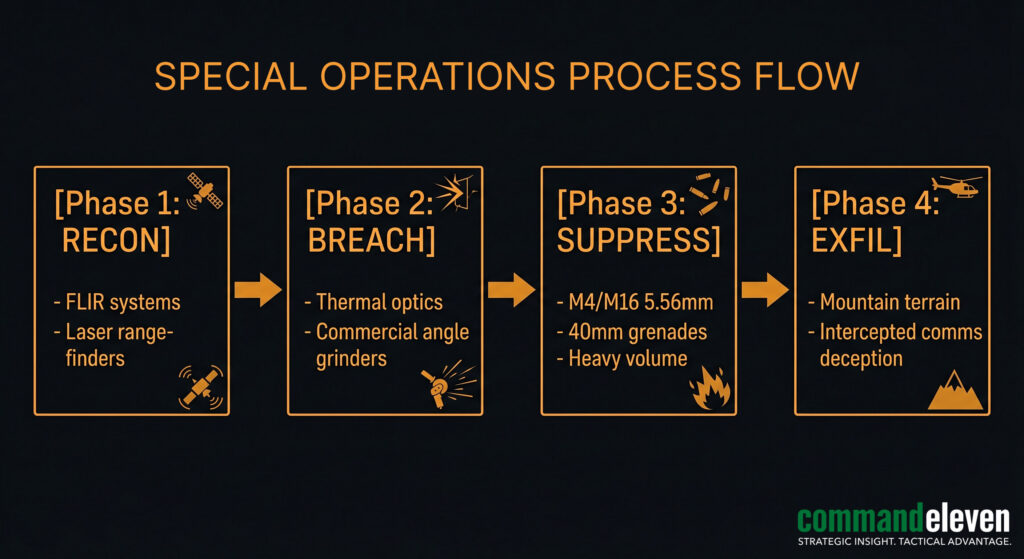
- Pre-Infiltration Reconnaissance: Operational units deploy forward-looking infrared (FLIR) systems and commercial handheld thermal imagers (such as Pulsar and Infiray systems) to map the patrol schedules, blind spots, and thermal signatures of Pakistani border posts. Laser rangefinders are systematically used to calculate precise mortar and rocket-propelled grenade (RPG) trajectories prior to the engagement phase.
- Breaching Operations: The physical barrier,primarily consisting of double-layered, concertina-wire-topped chain-link fencing equipped with electronic surveillance sensors,is breached using heavy-duty, commercial-grade portable angle grinders and specialized wire-cutting matrices. To counter the electronic sensors, teams exploit periods of adverse weather (heavy fog, precipitation) or utilize deliberate electromagnetic interference techniques targeting localized sensor arrays.
- Kinetic Suppressive Fire: Infiltration teams are heavily armed with Western-origin small arms, specifically M4 carbines and M16A4 rifles equipped with Trijicon ACOG optics or night vision compatibility (AN/PVS-14 monoculars). This hardware allows TTP marksmen to execute high-precision suppressive fire against Pakistani observation towers at distances exceeding 400 meters, effectively pinning down defenders while the breaching element moves through the wire.
Technical and Protocol-Level Tracking Indicators
Analysts tracking TTP operational shifts monitor specific signature markers that indicate an imminent or executed border operation:
- Thermal Signatures and Optical Encroachment: Frequent short-duration IR illuminator splashes detected via electronic warfare (EW) assets along specific high-altitude ridge lines, indicating the calibration of night-vision systems or targeting lasers.
- Communications Protocol Shift: Transition from VHF/UHF radio networks to secure, encrypted digital channels. The TTP increasingly utilizes modified commercial walkie-talkies utilizing digital mobile radio (DMR) Tier II encryption standards. A sudden, total radio silence among known border-adjacent nodes typically serves as a primary indicator of an ongoing or immediate tactical movement.
- Ammunition and Cartridge Case Analysis: Battlefield forensics at post-incident sites increasingly yield spent 5.56×45mm NATO cartridges bearing specific military lot numbers associated with the former Afghan National Defense and Security Forces (ANDSF) supply chain, displacing the historically dominant 7.62×39mm Soviet-caliber footprint.
Financial Pipelines, Material Logistics, and Cyber-Kinetic Capabilities

The modernization of Tehreek-e-Taliban Pakistan (TTP) is structurally supported by a diversified financial architecture and a digitized procurement network. By shifting away from reliance on local extortion and rudimentary smuggling, the organization has institutionalized its economic pipelines, leveraging cross-border trade vulnerabilities and digital financial technologies to maintain its logistics chains.
Capital Generation and Laundering Channels
The primary fiscal baseline for TTP operations is sustained through an entrenched extortion apparatus targeting commercial entities, development projects, and political figures within Pakistan, combined with sophisticated trade-based money laundering (TBML) along the Pakistan-Afghanistan border.
- Formal and Informal Trade Skimming: The TTP levies systematic transit taxes on commercial transport vehicles traversing the key border crossings of Torkham, Chaman, and Kharlachi. Commodities subjected to these illicit tariffs include Afghan coal exports, transit trade goods, timber, and illegally mined minerals (specifically chromite and talc) extracted from the border regions of Khyber Pakhtunkhwa.
- Hundi/Hawala and Cryptographic Integration: While the legacy Hawala system remains the primary mechanism for moving bulk capital across international jurisdictions, TTP’s financial cells have integrated decentralized digital currencies to obscure high-value transactions. The organization primarily utilizes stablecoins pegged to the US dollar ($USDT$) transacted over the TRON ($TRC-20$) network due to its low transaction fees and high velocity. These funds are converted into fiat currency via informal over-the-counter (OTC) brokers in Kabul, Jalalabad, and Peshawar to fund immediate operational expenditures.
Material Procurement and Supply Chain Dynamics
The TTP’s logistics networks operate a highly organized supply chain that guarantees the continuous flow of specialized munitions, optical equipment, and dual-use technologies from Afghan logistics nodes to operational cells inside Pakistan.
- Weapon Storage and Assembly Nodes: Bulk weapon components, automated manufacturing equipment, and legacy stockpiles are managed within centralized depots located in Spin Boldak (Kandahar) and the outskirts of Jalalabad (Nangarhar). At these locations, weapons are cataloged, serviced, and often modified,such as fitting custom rails onto older platform designs or assembling improvised explosive devices (IEDs),before deployment.
- Cross-Border Transport Mechanisms: Material distribution utilizes specialized concealment compartments within long-haul transport trucks, specifically those carrying agricultural products or heavy construction raw materials. Smaller, high-value components such as thermal optics, weapon parts, and drone electronics are routinely moved through rugged, non-demarcated pedestrian mountain tracks in the Tirah Valley and South Waziristan by localized courier networks (lshkars).
Cyber-Kinetic and Remote Disruption Capabilities
The integration of technology into the TTP’s offensive framework has expanded beyond propaganda dissemination into the domains of cyber-reconnaissance and the weaponization of commercial uncrewed aerial vehicles (UAVs).
- Commercial Drone Adaptation: The TTP has established specialized technical cells dedicated to modifying commercial quadcopters (primarily DJI Mavic 3 series platforms). These modifications include the fabrication of 3D-printed release mechanisms capable of dropping customized 40mm high-explosive dual-purpose (HEDP) grenades or modified mortar fins. These platforms are deployed for low-altitude reconnaissance of security installations and tactical kinetic strikes against fixed security checkpoints.
- Digital Network Exploitation: The organization’s cyber operatives engage in open-source intelligence (OSINT) gathering and targeted social engineering campaigns to map the deployments and personal details of security personnel. Furthermore, structural monitoring indicates an increasing interest in exploiting vulnerable Supervisory Control and Data Acquisition (SCADA) systems and localized digital infrastructure within Pakistan’s border districts, using basic ransomware and distributed denial-of-service (DDoS) vectors to disrupt communication links during coordinated kinetic operations.
Intra-Theater Alliances and Sub-National Operational Integration
The strategic expansion of the TTP is heavily driven by its ability to execute ideological and tactical mergers with localized, sub-national militant factions. This integration strategy has transformed the TTP from a predominantly Pashtun-centric ethno-militant movement into an umbrella platform that coordinates diverse anti-state actors across multiple theaters.
Institutional Mergers and Tactical Realignment
Since 2020, the TTP central leadership, led by Noor Wali Mehsud, has overseen the systematic re-absorption of splinter groups and the assimilation of previously independent localized networks.
- Assimilation of Splinter Factions: The formal reintegration of key factions,including the Jamaat-ul-Ahrar (JuA), Hizb-ul-Ahrar, and various localized splinters of the Lashkar-e-Jhangvi (LeJ),restored the TTP’s operational reach into the urban centers of Punjab and Sindh. These mergers were executed through formal oaths of allegiance (Bay’ah) to the TTP central command, standardizing operational procedures, media outputs, and financial distribution rules under a single administrative authority.
- The Balochistan Nexus: A critical operational shift is the tactical convergence between the TTP and specific Baloch insurgent networks, particularly factions aligned with the Baloch Liberation Army (BLA) or localized criminal syndicates in northern and western Balochistan. While significant ideological differences remain, these groups cooperate on a pragmatic, transactional basis. The TTP provides access to advanced explosive components, suicide bomber networks (via the Amjad Farooqi brigade), and secure transit paths in exchange for logistical access to southern maritime smuggling corridors and intelligence on security troop movements along China-Pakistan Economic Corridor (CPEC) infrastructure.
The Regional Complex: ISKP Convergence and Divergence
The relationship between the TTP and the Islamic State Khorasan Province (ISKP) is highly complex, characterized by simultaneous localized tactical convergence and macro-level strategic hostility.
- Ideological and Structural Friction: At the strategic level, the TTP and ISKP are locked in an intense competitive dynamic. The TTP’s stated goals remain focused on Pakistan, and it explicitly recognizes the legitimacy of the Afghan Taliban’s Islamic Emirate. In contrast, ISKP maintains a transnational caliphate narrative that views both the Afghan Taliban and the TTP as nationalist, deviant entities. This ideological divide frequently manifests in targeted assassinations and fierce turf battles over recruitment and funding in eastern Afghanistan and northwestern Pakistan.
- Lower-Level Tactical Convergence: Despite the overarching conflict, low-level operational cells frequently display fluid allegiances. Disaffected TTP commanders who view the central leadership’s tactical constraints or political engagements as overly moderate routinely defect to ISKP, carrying tactical expertise, weapons, and local intelligence networks with them. Conversely, in specific urban operational zones within Pakistan, independent facilitation networks provide shared logistics, safe houses, and falsified documentation to both TTP and ISKP operational teams, treating the supply chain as a purely commercial enterprise. This fluid micro-level crossover complicates the task of identifying specific organizational attribution during complex urban operations.
Command Structure, De-centrally Coordinated Vilayats, and Structural Resilience
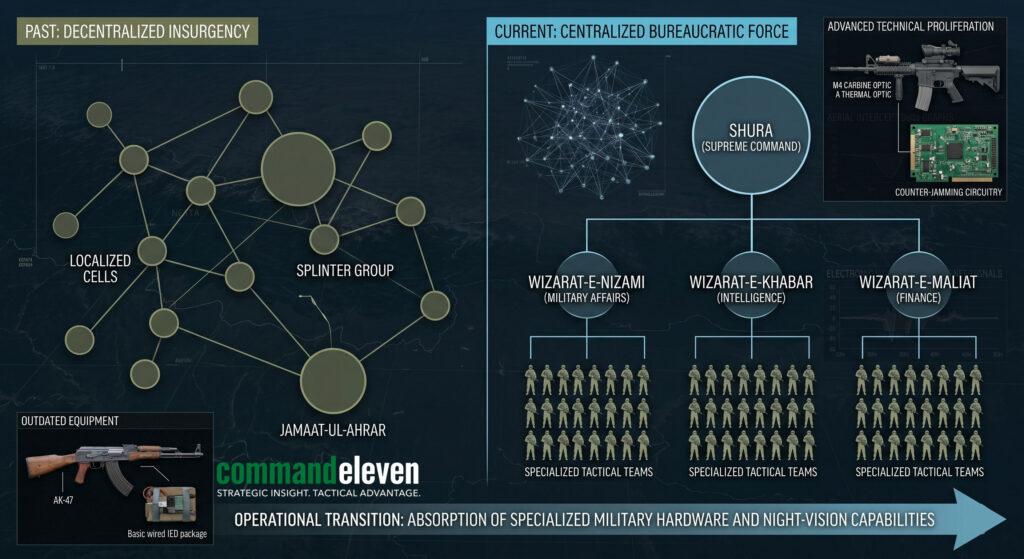
The structural stability of Tehreek-e-Taliban Pakistan (TTP) is maintained through a formalized administrative framework that mirrors a conventional shadow government. This design deliberately minimizes the vulnerabilities inherent in highly centralized militant structures, specifically mitigating the impact of decapitation strikes against senior leadership nodes.
The Rahbari Shura and Ministerial Oversight
At the apex of the organization sits the Rahbari Shura (Central Consultative Council), directed by Emir Noor Wali Mehsud. Operating from secure command hubs within Afghan territory, this body dictates macro-level strategic policy, approves major kinetic campaigns, and manages external relations with host state actors and allied transnational networks. Beneath the Rahbari Shura, the TTP has instituted an organized bureaucratic apparatus consisting of functional ministries (comissions):
- Military Commission (Nizami Commission): Tasked with weapon procurement, tactical training standardization, and the deployment of central strategic reserves, such as the Istishhadi (suicide bombing) detachments.
- Finance Commission: Oversees the collection of transit tariffs, cryptocurrency ledgers, and the redistribution of liquidity to regional fronts.
- Intelligence Commission (Askar Cell): Manages internal counter-espionage protocols, conducts vetting of new recruits, and operates specialized reconnaissance cells tasked with identifying vulnerabilities within Pakistani law enforcement and military facilities.
The Vilayat System: Operational Autonomy
To execute campaigns inside Pakistan, the TTP transitioned its field forces into a geographic command architecture known as the Vilayat (Province) system. This decentralized network designates specific operational commands,such as the Peshawar Vilayat, Malakand Vilayat, Quetta Vilayat, and Zhob Vilayat,that correspond directly to Pakistani administrative and military zones.
Mechanically, each Vilayat is led by a shadow governor and a military commander who possess total operational autonomy regarding target selection, tactical deployment schedules, and localized financial generation. The central leadership sets the overarching strategic boundaries, while the regional Vilayats retain the flexibility to exploit local security gaps. This insulating mechanism prevents a counter-terrorism breakdown in one sector from compromising adjacent operational zones.
Structural Resilience Dynamics
The resilience of this administrative design is reinforced by two specific structural mechanisms:
- Redundant Communication Networks: To safeguard vertical command lines, the TTP utilizes a multi-layered communications matrix. High-priority strategic directives are transmitted via air-gapped, physical courier networks operating across the Pakistan-Afghanistan border, utilizing encrypted USB storage media running localized VeraCrypt containers. For rapid tactical synchronization, regional commanders deploy matrix-based decentralized communication protocols and custom-configured Session/Signal applications running on hardened mobile operating systems.
- Rapid Leadership Succession Protocols: The Rahbari Shura enforces a strict, pre-approved succession matrix for every critical bureaucratic and command position. When a high-value target (HVT) or regional commander is neutralized, the deputy commander assumes immediate structural authority under a pre-tabulated protocol, preventing the command vacancies that traditionally lead to internal fractionalization.
Counter-Measures, Kinetic Interdiction Protocols, and Interoperability Challenges
Countering the modern operational profile of the TTP requires a highly integrated, multi-domain defensive and offensive response from Pakistan’s security architecture. This effort is led by the Inter-Services Intelligence (ISI), Military Intelligence (MI), and specialized frontline kinetic formations, including the Frontier Corps (FC) and the Special Services Group (SSG).
Kinetic Interdiction and Special Operations
The kinetic strategy deployed against TTP cross-border incursions and safe havens relies on a combination of precision aerial interdiction, stand-off artillery strikes, and high-readiness counter-insurgency operations.
- Uncrewed Aerial Weapon Systems (UAWS) and Air Interdiction: Pakistan Air Force (PAF) and Army Aviation elements deploy domestic and imported armed UAVs,including the Shahpar-II and Turkish-origin Bayraktar TB2 and Akinci platforms,to conduct continuous intelligence, surveillance, and reconnaissance (ISR) over high-threat border sectors. These platforms monitor known infiltration routes, utilizing high-definition electro-optical and infrared (EO/IR) payloads to identify thermal signatures associated with TTP wire-cutting teams. When positive identification is achieved, precision strikes are executed using laser-guided munitions (such as the MAM-L and Burraq missiles) to neutralize targets prior to physical border penetration.
- Cordon-and-Search Operations (CASO): Inside the border districts of Khyber Pakhtunkhwa and Balochistan, the military executes intelligence-driven CASO maneuvers. These operations rely on real-time signals intelligence (SIGINT) intercepts provided by localized cellular monitoring arrays and electronic warfare vehicles. Once a TTP safe house or transition node is localized, elite light infantry units and SSG detachments deploy via fast-rope helicopter insertions or armored convoy movements to isolate and neutralize the cell.
Technical Interoperability and Operational Impediments
Despite significant technological advancements, the execution of sustained counter-TTP operations faces critical structural and technical friction points:
- Jurisdictional and Data Siloing: The primary operational friction exists between federal military intelligence organizations and provincial civilian counter-terrorism departments (CTDs). SIGINT data, satellite imagery, and high-level interrogation dossiers captured by military intelligence assets are frequently delayed or filtered before reaching civilian police personnel on the frontline. This lack of automated, real-time data interoperability prevents civilian law enforcement from mapping urban TTP facilitation networks before cells relocate.
- Terrain-Induced Sensor Degradation: The geographic profile of the Pakistan-Afghanistan border,characterized by sheer cliff faces, deep ravines, and heavy seasonal cloud cover,significantly reduces the efficacy of radar and EO/IR surveillance platforms. TTP units systematically exploit this terrain, utilizing radar-shadow zones in deep valleys to move undetected by long-range ground-based surveillance radars (GBSR).
- Tactical Communications Misalignment: During multi-agency operations involving the Pakistan Army, Frontier Corps, and provincial police forces, tactical units often operate on disparate radio frequencies and legacy analog encryption standards. This misalignment prevents seamless voice and data transmission during active engagements, resulting in delayed reinforcement timelines and vulnerabilities that TTP infiltration teams exploit during withdrawal maneuvers.
Media War, Information Operations, and Psych-Kinetic Synchronization
The contemporary operational doctrine of Tehreek-e-Taliban Pakistan (TTP) treats information operations not as a secondary support mechanism, but as a primary, co-equal line of effort synchronized directly with kinetic actions. Through its official media wing, Umar Media, the organization has developed a highly agile digital dissemination apparatus designed to degrade the psychological resilience of state security forces and systematically expand its domestic recruitment pool.
The Umar Media Production Infrastructure
Umar Media has undergone a structural modernization, transitioning from a localized, low-resolution operation into a decentralized, digital production network that employs professional-grade editing suites, high-definition (HD) recording platforms, and automated distribution protocols.
- Production Capabilities: Field media units (Umar Media combat cameramen) are embedded directly within active tactical teams during border incursions and urban ambushes. These operatives deploy commercial GoPro action cameras, high-resolution DSLRs, and lightweight stabilization rigs to capture high-definition, first-person footage of kinetic engagements. This raw data is transferred via encrypted channels to regional editing cells located within Afghan safe havens, where it is compiled into serialized propaganda products using advanced post-production software.
- Multi-Lingual Strategy: To maximize its psychological footprint, Umar Media has abandoned its historically exclusive reliance on Pashto. Content is systematically produced, translated, and subtitled in Urdu, Balochi, English, and Arabic. This deliberate multi-lingual approach targets specific sub-national audiences, exploiting localized grievances within Balochistan and urban Punjab while presenting a standardized ideological narrative to the global jihadi movement.
Information Distribution and Digital Counter-Measures Evasion
The TTP employs an agile digital footprint to circumvent aggressive content moderation and platform bans executed by international tech conglomerates and state regulatory bodies like the Pakistan Telecommunication Authority (PTA).
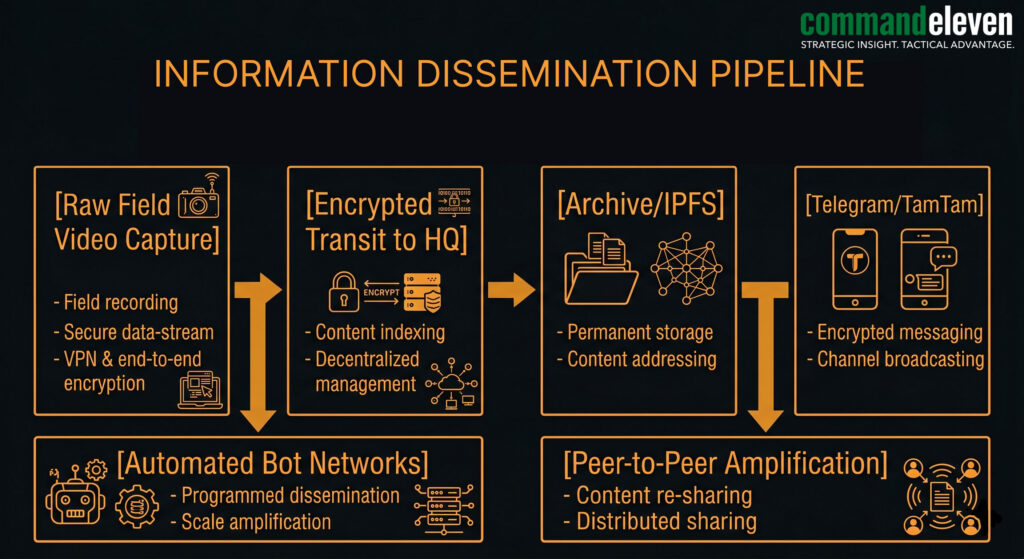
- Decentralized Delivery Networks: Umar Media utilizes decentralized cloud infrastructure and InterPlanetary File System (IPFS) hashing protocols to archive and distribute large video files, ensuring that content remains accessible even if the primary download domains are seized.
- The Telegram-TamTam Loop: For real-time propaganda and claim dissemination, the TTP maintains a redundant matrix of channels across encrypted messaging applications, specifically Telegram and the Russian-hosted platform TamTam. When a primary channel is banned, automated bot networks immediately redirect subscribers to pre-configured mirror channels, minimizing audience loss.
- Exploitation of Mainstream Social Media: To target broader demographics within Pakistan, TTP media cells deploy ephemeral accounts on mainstream platforms like X (formerly Twitter) and TikTok. These accounts utilize obfuscated text layouts, localized hashtags, and algorithmic manipulation to trend briefly, maximizing visual exposure before automated detection algorithms trigger an account suspension.
Psych-Kinetic Synchronization
The core of TTP’s current psychological warfare is the deliberate orchestration of “psych-kinetic” operations, where the timing, styling, and dissemination of a media product are engineered to amplify the political and psychological fallout of a specific military action.
- Pre-Incident Mobilization: Prior to a major offensive or high-profile suicide operation, media cells generate targeted teaser packages or specialized infographics highlighting the alleged failures or vulnerabilities of the specific security formation slated for targeting.
- Immediate Attribution and Narrative Control: Within minutes of a kinetic strike, Umar Media releases formal communiqués specifying the exact unit targeted, casualties claimed, and hardware seized, frequently accompanied by raw imagery of the attack. This rapid delivery outpaces official state public relations mechanisms (such as Inter-Services Public Relations – ISPR), seizing the initial narrative space and generating a perception of operational omnipresence.
- Demoralization Campaigns: Specialized video releases focus on captured security personnel or documented tactical retreats, deliberately framed to erode the morale of frontline police and Frontier Corps detachments in high-threat districts.
Future Projections, Tactical Evolution, and Geopolitical Threat Scenarios
The strategic trajectory of the TTP over the next 24 to 36 months indicates an organization shifting from a localized border insurgency into a resilient, technologically advanced transnational threat actor. Analyzing structural indicators, weapon acquisition vectors, and geopolitical dynamics reveals distinct tactical and macro-level threat scenarios.
Future Tactical and Technological Trajectories
- Proliferation of Stand-Off and Precision Hardware: The TTP’s tactical units are expected to achieve complete integration of Western-origin night-vision and thermal targeting suites across all frontline cells. This will likely be coupled with the acquisition of more sophisticated man-portable air-defense systems (MANPADS) and anti-tank guided missiles (ATGMs) sourced from illicit regional arms markets, severely threatening Pakistani low-altitude rotary-wing aviation and armored transport capabilities within Khyber Pakhtunkhwa.
- Evolution of Uncrewed Systems: The organization’s drone program is projected to transition from commercial quadcopter adaptations to the deployment of fixed-wing, longer-range loitering munitions. These platforms, fabricated using imported commercial components and locally machined explosive housings, will allow TTP cells to execute deep-penetration strikes against fixed military installations, airbases, and critical infrastructure networks well beyond the border districts.
- Advanced Cyber-Kinetic Integration: Future operational planning will likely feature synchronized cyber-kinetic assaults. TTP cyber units will seek to deploy targeted malware or execute zero-day exploits against local telecommunications grids and power infrastructure, temporarily blinding regional security command nodes precisely as a physical, multi-axis kinetic infiltration is launched on the ground.
Geopolitical Threat Scenarios and Regional Flashpoints
The evolution of the TTP introduces profound destabilization risks across the broader South Asian and Central Asian security landscape.
| Threat Scenario | Primary Structural Drivers | Regional Geopolitical Impact |
| Permanent Transnational Sanctuary Consolidation | Continued patron-client shielding by the Haqqani Network; administrative integration into eastern Afghan border infrastructure. | Direct erosion of the Pakistan-Afghanistan border’s territorial integrity; permanent frustration of Pakistani strategic depth calculations; institutionalization of a dual-state asymmetric war footing. |
| Expansion of the Anti-State Umbrella Platform | Formal structural alliances with Baloch separatist factions (BLA/BLF) and disaffected sectarian networks. | Systemic targeting of China-Pakistan Economic Corridor (CPEC) infrastructure; disruption of deep-water transit nodes in Gwadar; potential containment of Chinese regional infrastructure investments. |
| Strategic Realignment with Transnational Jihadi Actors | Pragmatic or ideological alignment with Al-Qaeda in the Indian Subcontinent (AQIS) or tactical factions of ETIM/IMU. | Transformation of the Pak-Afghan border zone into a launchpad for broader regional operations; increased threat vector targeting Central Asian Republics (CARs) and Chinese interests in East Turkestan. |
The Strategic Impasse
The TTP has successfully exploited the post-August 2021 geopolitical reality to reconstruct its entire operational profile. By leveraging secure transnational safe havens, upgrading its tactical arsenal with advanced Western military hardware, decentralizing its command infrastructure through the Vilayat system, and modernizing its media and financial networks, the organization has achieved structural resilience.
For Pakistan’s security architecture, countering this evolved threat requires moving past legacy counter-insurgency doctrines. The current threat paradigm demands an integrated strategy that seamlessly unifies real-time electronic intelligence interoperability, advanced counter-UAV frameworks, and an aggressive, multi-domain response capable of disrupting both the physical border-penetration mechanics and the digital information networks that sustain the modern TTP apparatus.