
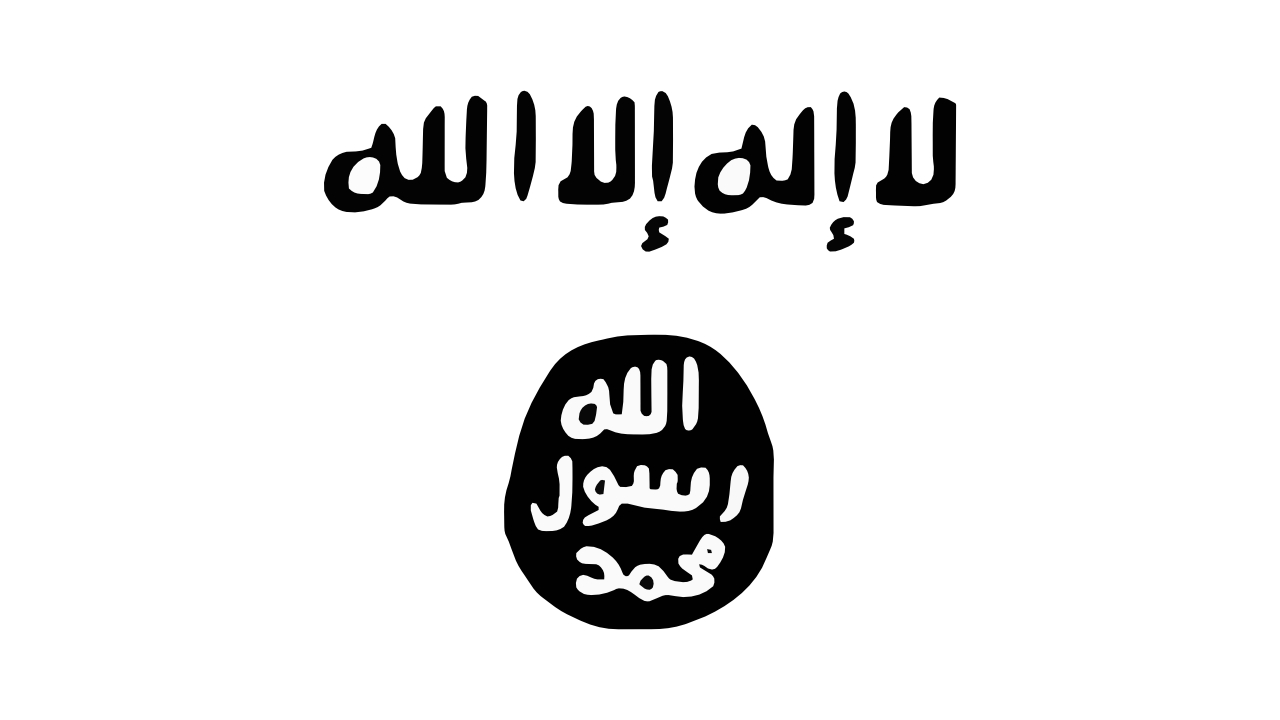
Intelligence Command Center // Terror group profile //

Tehreek-e-Taliban Pakistan (TTP)

area of operation

Indian Subcontinent

Specific AOR

Waziristan, Swat, Dera Ismail Khan, and Bajaur, Pakistan

Volatility Index

VI-5 – Critical

Ideological Alignment

Deobandi-Jihadist

force strength

7,000-10,000

Leadership

Noor Wali Mehsud

Headquarters

Khost/Paktika (Afghanistan side) and North Waziristan

SIGNATURES //

TECHNICAL PROFILE
Tier 2 - High-Tier / Professionalized
OPERATIONAL SIGNATURE
Hybrid Warfare / Guerrilla Ops
SPATIAL PROFILE
Alpine / Mountainous Sanctuary

Operational Brief //

A militant umbrella organization seeking to overthrow the Pakistani state and implement Sharia in the tribal regions.

Leadership & Command Structure

  • Command Element: Supreme command is held by Amir Noor Wali Mehsud, who engineered a massive organizational transformation. The TTP is structured under a centralized executive council (Rahbari Shura) that oversees a formalized shadow state matrix, complete with dedicated ministries for defense, finance, and intelligence.
  • Leadership Doctrine: Employs a highly centralized, bureaucratic insurgent model. Mehsud successfully reversed years of factional fragmentation by bringing dozens of autonomous regional splinters under a unified command, enforcing strict operational codes, and streamlining tactical targeting.
  • Regional Management: Geographically organized into distinct shadow provinces (wilayats) spanning Khyber Pakhtunkhwa, Balochistan, and parts of Punjab, with each wilayat governed by a designated shadow governor and military commander.

Regional Center-of-Gravity (Historical Focus)

  • Primary Growth Theater: The Pakistan-Afghanistan border, historically dominating the old FATA agencies (South/North Waziristan, Swat, Bajaur) before establishing deep cross-border sanctuaries.
  • Operational Hub: The secure, sovereign-backed border provinces of Khost, Paktika, Nangarhar, and Kunar inside Taliban-governed Afghanistan. These sanctuaries serve as the primary staging grounds for training conventional paramilitary formations, storing advanced hardware, and launching continuous cross-border campaigns.
  • Strategic Isolation: Exceptionally Low. Avoids isolation by exploiting its deep ideological, historical, and tribal bonds with the ruling Afghan Taliban, ensuring an unyielding baseline of geographic shelter and material support that protects it from conventional defeat.

Intelligence Behavioral Matrix (TRAP-18/VERA-2R)

  • Volatility Index: Sustained High / Conventional State Threat. Maintains an exceptionally aggressive, high-velocity military posture focused on overrunning state forces and capturing territory.
  • High-Risk Indicators: Proven capacity to execute large-scale, conventional-style paramilitary offensives (such as Operation Ghazab lil-Haq) utilizing advanced night-vision arrays and heavy infantry hardware; industrialized deployment of suicide bombers and complex IED matrices; and systematic extortion of entire provincial commercial and political structures.

Disruption Vector Matrix //

vector //

vulnerability //

disruption strategy //

logistics //

Complete dependence on the sovereign cross-border sanctuaries and safe havens provided by Afghanistan to regroup, train, and store heavy hardware.

Sovereign Containment & Border Air-Strikes: Execute targeted, intelligence-led precision air and drone strikes against verified TTP command camps within border zones, paired with total physical border closure.

financial //

Vulnerable to localized disruption of its massive domestic extortion department (khidmat) and cross-border commercial smuggling taxation networks.

Anti-Extortion Financial Audits: Implement comprehensive biometric and digital tracking on all banking and mobile currency transfers in frontier districts, backed by specialized federal anti-extortion task forces.

leadership //

Highly dependent on the centralized strategic vision of Noor Wali Mehsud and his core circle of shadow ministers to maintain organizational unity.

High-Value Target Decapitation: Prioritize real-time signal intelligence tracking to locate and physically neutralize supreme command figures, breaking the bureaucratic connective tissue holding the factions together.

Threat Matrix //

OPERATIONAL REACH: 3 – Medium (Regional Network)
KINETIC CAPABILITY: 4 – High (Advanced SALW/Thermal Optics/Coordinated Ambushes)
LOGISTICAL RESILIENCE: 4 – High (Sustained Cross-Border Safe Havens/Diversified Revenue)
INFORMATION INFLUENCE: 4 – High (Centralized Media Wing/Multi-Lingual High-HD Video)

OVERALL THREAT INDEX
3.75

operational reach //

Theater/Regional. Operating primarily out of safe havens in eastern Afghanistan (Kunar, Nangarhar, Paktika), the TTP projects force across the Durand Line into Pakistan. While its primary kinetic focus remains concentrated in Khyber Pakhtunkhwa (KP) and Balochistan, its operational reach extends to urban targeted strikes in major Pakistani centers and a broadening network of regional mergers.

kinetic capability //

Advanced Asymmetric. The TTP possesses a high capacity for physical disruption, characterized by complex ambushes, suicide vehicle-borne IEDs (SVBIEDs), and targeted assassinations. Following the 2021 geopolitical shift in Afghanistan, their lethal efficacy has been enhanced by the acquisition of specialized military hardware, including thermal imaging optics, M4 carbines, and laser-guided systems.

logistical resilience //

Structured to Self-Sustaining. The group exhibits high survivability due to deep-rooted tribal integration, cross-border sanctuary, and an influx of absorbed splinter factions. Financing is secured through decentralized mechanisms: systematic extortion networks (cross-border trade and local businesses), smuggling pipelines, kidnapping for ransom, and a symbiotic relationship with regional host networks.

information influence //

Institutionalized. Operating through its official media wing, Umar Media, the TTP runs a sophisticated, centralized propaganda apparatus. It produces high-definition, multi-lingual content (Pashto, Urdu, English, Balochi) tailored to specific ethnic and regional grievances. It effectively utilizes encrypted digital platforms for psychological operations, recruitment, and dynamic narrative control.

analytical note //

The TTP currently represents a consolidated threat model where advanced asymmetric kinetic capability is directly reinforced by cross-border logistical resilience. Its transition toward a decentralized, modular command structure under current leadership has minimized vulnerability to traditional leadership decapitation strategies.

[!] CLASSIFICATION: OPERATIONAL STATUS UPDATE TTP command and control (C2) currently operates through a decentralized "Shadow Province" structure. Integrated splinter nodes, including Jama’at-ul-Ahrar (JuA) and Lashkar-e-Islam (LeI), now coordinate kinetic activity under the centralized Rahbari Shura.

Kinetic and Multi-domain capabilities //

Primary adversary//

Pakistan Armed Forces, Intelligence Services

weaponry focus

Precision Rifle
Nato Std
Pkm
Rpg
Atgm
Svbieds
Ieds Efp
Comm Drones
Thermal

Geopolitical and Logistics //

financial vectors

Extortion
Kfr
Foreign Funding
Hawala

RESTRICTED: STRATEGIC DISRUPTION //

Kinetic attrition against security personnel

affiliated entities //

Division / Zone Sub-Unit / Waliyat Commander / Minister Intelligence Focus
TTP Command Structure
Location/Division Waliyat Governor/Commander/Minister Administrative Focus
Northern Zone (North-Central KP/Gilgit) Peshawar Khalid Mansoor Urban Sabotage/Target Killings
Northern Zone (North-Central KP/Gilgit) Swat Maulvi Khalid Re-establishing Sharia courts
Northern Zone (North-Central KP/Gilgit) Bajaur Maulvi Bilal Cross-border Supply (Kunar/Khyber)
Northern Zone (North-Central KP/Gilgit) Mardan Maulvi Ihsanullah Recruitment/Logistics
Northern Zone (North-Central KP/Gilgit) Chitral Mutfi Owais Tactical Expansion (Wakhan Corridor)
Central Zone (Tribal Belt/Pak-Afghan Border) North Waziristan Maulvi Shakir Heavy Kinetic Ops & Coordination with HGB
Central Zone (Tribal Belt/Pak-Afghan Border) South Waziristan Maulvi Kashif Operational HQ - Mehsud Tribal Belt
Central Zone (Tribal Belt/Pak-Afghan Border) Khyber Mufti Ibrahim Torkham Gate - Smuggling taxation
Central Zone (Tribal Belt/Pak-Afghan Border) Kurram/Orakzai Mufti Hussain Ahmad Sectarian Friction Points
Southern Zone (Balochistan/Sindh/Punjab) Zhob, Quetta Maulvi Adil Coordination with BLA/Cross-Border Transit
Southern Zone (Balochistan/Sindh/Punjab) Karachi Maulvi Nusrat Wazir Financial Laundering/KRE/Urban Cells
Southern Zone (Balochistan/Sindh/Punjab) Dera Ismail Khan Maulvi Sangar Linkage between Punjab and Waziristan
Southern Zone Kalat & Mastung Maulvi Bashir Sectoral Alliances with ASWJ/LeJ splinters
Southern Zone Makran Coast Classified Maritime Smuggling & CPEC Infrastructure Sabotage
Southern Zone Southern Punjab Mufti Tariq Recruitment in Seraiki Belt; Logistics for Urban Strikes
Media Division Media Commission (Umar Media) Mufti Ghufran Manages the digital cognitive warfare strategy and official statements
Military Divisions Intelligence (Riyasat-e-Istikhbarat) Maulvi Asad Focuses on counter-intelligence and internal security
Military Divisions The Air Force (Hawai Khwak) Maulvi Saleem Haqqani Focuses on IED-equipped drones and aerial surveillance
Military Divisions Air Force Operations (UAV Wing) Mufti Ghufran Focus on Commercial Drone Modifications for ISR and dropped-munitions attacks
Military Divisions Badri 313 (TTP Wing) "Specialized ""Shock Troops"" for high-value targets (HVT)"
Ministries & Shadow Government Departments Finance (Iqtisad) Mullah Gul Dar Resource Extraction & Smuggling Taxation
Ministries & Shadow Government Departments Health (Sehat) Qari Shah Khalid Tactical Casualty Care & Field Hospitals
Ministries & Shadow Government Departments Education (Ma'arif) Mufti Abu Haraira Ideological Indoctrination & Madrasa Control
Ministries & Shadow Government Departments Information Mufti Ghufran Cognitive Warfare & Media Production
Judicial & Legal Directorate (Qaza/Courts) Supreme Court (Mahkama-e-Tameez) Qazi Kashif Sahib Final Court of Appeal
Judicial & Legal Directorate (Qaza/Courts) Appellate Courts (Mahkama-e-Murafe'a) - North Qazi Abdul Aleem Sahib
Judicial & Legal Directorate (Qaza/Courts) Appellate Courts (Mahkama-e-Murafe'a) - South Qazi Muhammad Amir Sahib
Judicial & Legal Directorate (Qaza/Courts) Primary Courts (Mahkama-e-Ibtidaiya) "Distributed across districts (Khyber, Swat, Waziristan) to handle immediate civil and criminal disputes"
Judicial & Legal Directorate (Qaza/Courts) Dar-ul-Ifta (Fatwa Department) Mufti Abdur Rehman Nizami Provides the religious justifications for kinetic operations and administrative decrees
Social Services & Economic Directorate Department of Education (Ma'arif) Mufti Abu Huraira Oversee madrasas and standardized curricula in shadow-controlled regions
Social Services & Economic Directorate Economic Commission (Iqtisad) Mullah Gul Dar "Responsible for the ""War Chest,"" taxation of local businesses and managing smuggling revenues"
Social Services & Economic Directorate Public Welfare (Falah-o-Behbood) Qari Shah Khalid Focused on Zakat Distribution and support of families of martyrs