
Technical Takeaways
- Topographic Friction Destroys Mechanized Utility: Heavy armored formations and massed conventional infantry lines suffer systemic mobility and communication failures inside vertical mountain defiles. Transitioning to decentralized small-unit structures operating man-portable drones and independent command parameters is mandatory to match the mobility of irregular adversaries.
- Realistic Electronic Conditioning Preserves Command Integrity: Modern counter-insurgency operators must be hardened against degraded signaling environments prior to deployment. Institutional training that embeds localized radio jamming, GPS spoofing, and cyber-kinetic exploitation simulations ensures field units can implement immediate analog and cryptographic counter-measures during active frontier operations.
- Decentralized Tiles Insulate Border Defense Networks: Centralized border guarding models suffer from single-trigger system failures during high-velocity asymmetric crises. Implementing autonomous administrative tiles ensures that localized sensory ruptures remain isolated, while the delivery of superior state-backed logistics permanently destroys the population’s economic dependency on illicit networks.
Executive Summary
The structural modification of regular conventional infantry elements into highly agile specialized counter-insurgency units defines the operational evolution within the rugged border corridors. This dynamic adaptation requires shifting military emphasis away from conventional massed mechanized maneuvers designed for flat eastern plains to decentralized small-unit operations. Transnational militant syndicates systematically exploit high-altitude terrain friction and fragmented administrative sectors to construct unmonitored sanctuary networks along the frontier. Conventional armored formations suffer rapid utility degradation in these vertical environments because mountain chokepoints restrict physical movement and disrupt centralized command signaling. To secure permanent territorial reclamation, the military institution must execute comprehensive training overhauls focused on mountain warfare mechanics and advanced signal insulation. Reclaiming sovereign dominance depends on the continuous integration of real-time signals intelligence with decentralized kinetic execution platforms at the individual platoon level. This dossier evaluates the technical parameters of tactical doctrine transformation, automated border tracking dependencies, and institutional specialized training frameworks required to collapse irregular networks. Failing to transition to a high-agility specialized posture will permit the permanent survival of insurgent sanctuaries inside fragile peripheral border sectors. The state must treat localized tactical optimization as the primary doctrinal center of gravity to defeat asymmetric frontier threats.
Conventional Mass Failures and Vertical Terrain Realities
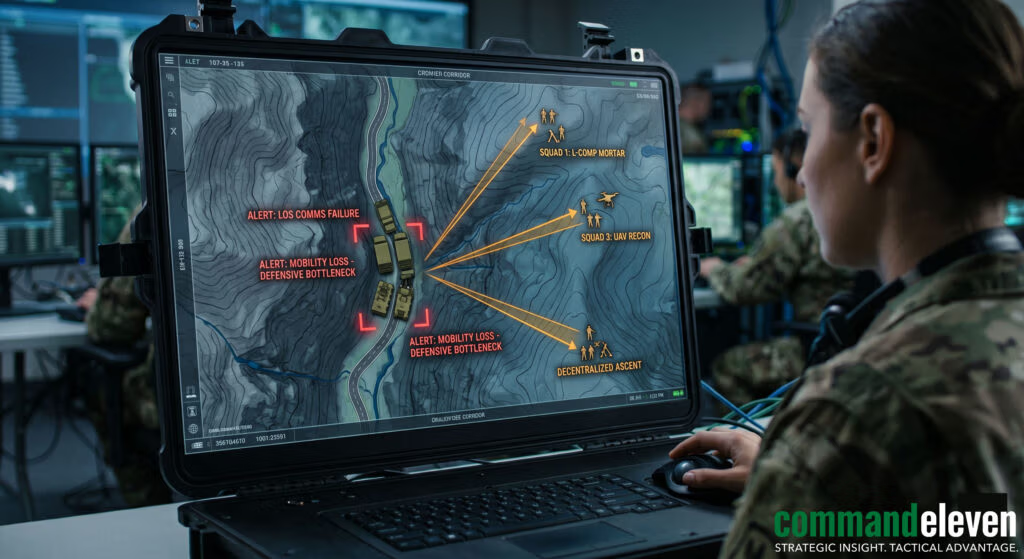
Regular conventional infantry formations encounter severe operational friction when deploying high-mass mechanized assets inside the vertical terrain of the border corridors. Heavy armored vehicles and large-scale supply convoys depend on rigid, predictable road networks that trace narrow valley floors. Irregular militant units exploit this geographical predictability, positioning high-velocity ambush cells along elevated ridgelines to target vulnerable transport bottlenecks. The restriction of physical movement inside deep mountain defiles strips conventional forces of their qualitative technological superiority, reducing units to static defensive posteriors. This material vulnerability forces an immediate re-evaluation of legacy deployment doctrines within the border theater.
- Heavy armored formations suffer complete mobility loss along unpaved mountain tracks, converting multi-million dollar main battle tanks into fixed ballistic targets.
- Centralized logistics lines experience systemic supply delays when navigating narrow high-altitude mountain passes, starving forward operating positions of essential ammunition.
- Line-of-sight communications drop completely inside deep granite ravines, severing the vital electronic link between field commanders and tactical aviation assets.
- Massed artillery deployments experience significant target acquisition degradation due to high vertical crest features that block traditional flat-trajectory ballistic firing loops.
This structural operational friction directly invalidates the utility of conventional high-mass offensive maneuvers inside peripheral frontier zones. Concurrently, operational data reveals that insurgent syndicates coordinate these physical ambushes with localized electronic signal manipulation to maximize state confusion. The tactical isolation of conventional units remains dependent on the network’s capacity to disrupt regular army communications links during the initial engagement phase. Once a conventional convoy is pinned inside a geographical defile, the target cell transitions from mobile transit to active defensive entrenchment. This transition requires the rapid deployment of specialized counter-insurgency units designed to operate outside regular vehicular infrastructure.
The military institution responds to these conventional failures by creating highly specialized small-unit formations trained to operate independently across rugged mountainous ridges. These decentralized units abandon heavy mechanized assets, relying instead on lightweight tactical equipment and autonomous support weapons to match the mobility of the adversary. This doctrinal shift allows the state to project kinetic power directly into the high-altitude sanctuaries historically controlled by the insurgent alliance. The specialized units operate without a fixed logistical footprint, eliminating the vulnerable convoy pipelines targeted by militant cells.
- Lightweight composite mortar systems deliver high-angle plunging fire over steep vertical peaks, neutralizing hidden insurgent ridgeline mortar positions.
- Man-portable surveillance drones execute continuous local aerial reconnaissance sweeps, providing small-unit commanders with real-time terrain and threat maps.
- Decentralized tactical command structures delegate direct air-strike authorization privileges to platoon-level operators, compressing the target execution timeline.
- High-mobility mule transport cadres replace wheeled logistical vehicles, moving critical supplies across unpaved mountain tracks in all weather conditions.
The application of decentralized small-unit mechanics ensures that state security forces can contest the rugged high-altitude terrain on equal terms. This tactical adjustment allows infantry units to execute persistent tracking operations without suffering the systemic communication blackouts that crippled conventional formations. Once these specialized units secure local ridgeline dominance, they transition to the systematic clearance of embedded valley sanctuaries. This operational phase requires the integration of advanced signals intelligence to locate hidden subterranean command bunkers.
Specialized Training Foundations at Institutional Warfare Centers

The conversion of conventional infantrymen into high-agility counter-insurgency operators requires the institutionalization of specialized training programs within dedicated domestic warfare facilities. The state utilizes the National Counter Terrorism Centre at Pabbi to execute rigorous physical and technical transformation regimens for all deployment-ready units. This specialized training foundation focuses on mastering high-altitude combat tactics, advanced tracking methodology, and asymmetric survival protocols. The training curriculum matches the exact material realities of the frontier theater, removing conventional plains-warfare habits from the soldier’s operational mindset.
- High-altitude endurance tracks condition infantry personnel to execute continuous combat maneuvers under severe hypoxic conditions without experiencing physiological degradation.
- Subterranean structure breaching bays train tactical teams to infiltrate and sanitize reinforced cave systems using specialized close-quarters kinetic tools.
- Advanced biometric tracking modules instruct field operators on the physical methods required to identify hidden insurgent signatures in local populations.
- Cryptographic signal insulation courses teach small-unit communication teams to maintain secure radio links using specialized frequency-hopping electronic hardware.
The completion of this specialized institutional regimen ensures that deploying battalions possess the qualitative tactical skills required to dismantle irregular networks. Concurrently, tracking data indicates that this specialized training directly increases the survivability of small units during isolated frontier deployments. By mastering the physical mechanics of mountain mobility and signature reduction, the specialized units eliminate the tactical advantages previously held by indigenous militant cadres. The individual soldier transitions from a conventional mass asset into an independent data-driven kinetic engine.
The warfare center reinforces this technical training by embedding automated simulations that model real-time insurgent electronic warfare tactics. Trainees face localized radio jamming, GPS spoofing, and cyber-kinetic manifest manipulation scenarios designed to replicate active border vulnerabilities. This realistic electronic conditioning ensures that field communication teams can implement immediate counter-measures when encountering hostile signal disruption during frontier operations. The training output delivers highly resilient tactical structures capable of maintaining command integrity under extreme electronic friction.
- Automated jamming simulation fields emit high-power radio interference during tactical exercises, forcing trainees to transition to secure analog fallback systems.
- GPS alternate navigation arrays teach small-unit leaders to execute precise terrain target navigation using legacy celestial and paper-mapping mechanics.
- Simulated cyber exploitation injection forces command teams to identify and neutralize synthetic network intrusions within localized tactical databases.
- Electronic counter-measure deployment drills familiarize operators with the physical activation protocols of portable signal suppression pods.
The execution of realistic electronic warfare simulation loops prepares specialized units to operate inside degraded communication environments without suffering structural paralysis. This technical durability ensures that when the unit deploys to active border sectors, they can shield their tactical command grids from insurgent electronic disruption. The training foundation bridges the gap between institutional instruction and active theater survival, enabling units to execute precision interdiction operations immediately. The specialized forces transition from the training base directly into active border hardening campaigns.
Automated Border Tracking and Signaling Hardening
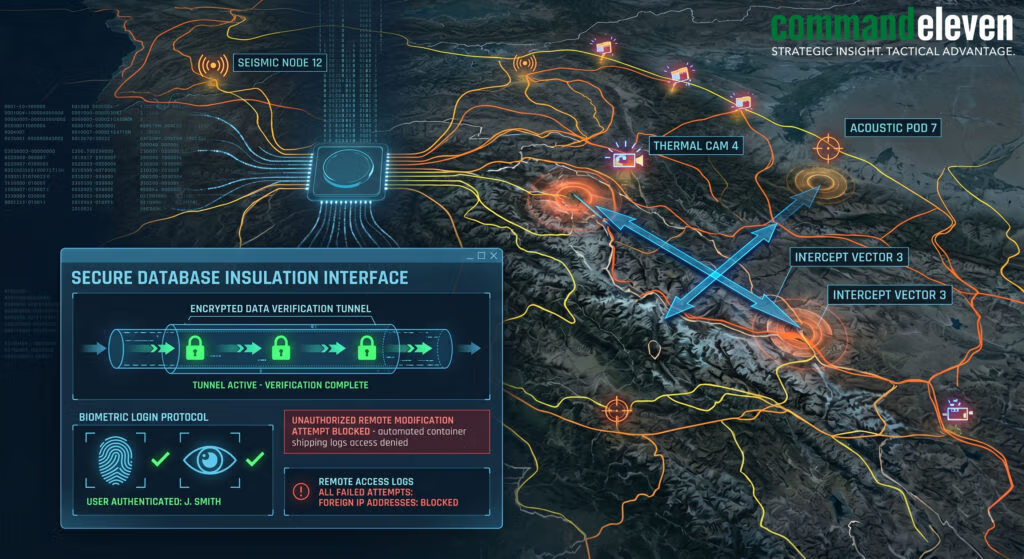
The specialized counter-insurgency units deploy automated border tracking arrays along critical frontier corridors to eliminate the unmonitored movement of insurgent cells. These systems utilize data-dense sensor grids that integrate ground-based seismic sensors, thermal cameras, and acoustic indicators into a single tracking interface. This automated surveillance network establishes an unbreachable digital barrier that flags anomalous cross-border movements in real time. The specialized units use this data to plan high-probability intercept vectors, catching infiltration groups before they can melt into interior transit lanes.
- Ground-based seismic sensors record localized footstep frequencies, utilizing automated filtering algorithms to distinguish human movement from regional wildlife signatures.
- Long-range thermal tracking arrays scan remote mountain passes continuously, flagging anomalous body-heat signatures during low-visibility nighttime windows.
- Acoustic gunshot localization pods triangulate the exact geographic coordinates of kinetic engagements, transmitting immediate intercept vectors to quick-reaction cells.
- Automated drone docking stations launch low-signature aerial platforms automatically upon sensor activation to verify tracking anomalies remotely.
The deployment of automated sensor grids converts the rugged border line into a highly transparent operational matrix. Concurrently, cyber intelligence indicates that the syndicates attempt to subvert these tracking systems by deploying custom database exploit scripts against customs networks. The specialized units counter this digital threat by executing total cryptographic isolation across all tactical border safety databases. This digital hardening ensures that the registry tracking data remains uncorrupted by remote cartel cyber cells.
The small-unit formations pair digital database hardening with the active deployment of localized signal suppression arrays during border interdiction runs. These portable devices emit focused directional jamming energy that completely flatlines the communication bands used by insurgent spotter networks. By blinding the adversary’s local intelligence collection mechanism, the state units preserve the element of absolute tactical surprise during night ambushes. This electronic dominance ensures that the infiltration fleet is cut off from external logistical support.
- Directional radio frequency suppressors saturate local mobile communication bands, preventing insurgent spotters from transmitting early warning messages.
- Portable GPS signal alternators transmit falsified positioning metrics to approaching smuggling vessels, steering them into pre-planned state ambush sectors.
- Encrypted data verification tunnels isolate tactical border safety logs from public networks, blocking unauthorized remote administrative access.
- Biometric administrative login interfaces require dual-factor physical credentials for all modifications made to automated shipping container logs.
The implementation of automated physical and digital verification protocols converts commercial transit terminals into unbreachable bottlenecks for the insurgent supply chain. This technical blockage stops the importation of raw chemical precursors and weaponized hardware components at the port of entry. By choking the supply lines along the frontier, the state starves the interior processing laboratories of their material inputs. The logistics disruption forces the insurgent alliance to operate out of diminishing domestic stockpiles, accelerating their structural decline.
Subterranean Sanctuary Clearance and Structural Sanitization
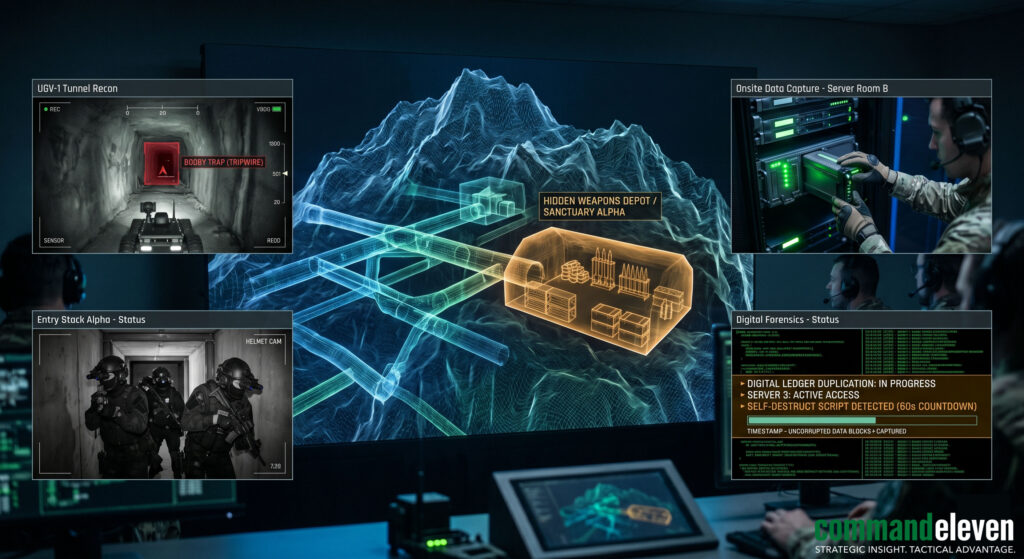
Specialized counter-insurgency forces execute high-velocity structural sanitization operations to permanently dismantle the subterranean safe havens built by irregular networks. These operations target reinforced cave complexes, underground weapons depots, and hidden logistics tunnels carved into deep mountain faces. The specialized units utilize multi-spectral structural mapping tools to analyze internal tunnel geometries prior to initiating physical entry. This technical preparation minimizes state casualties while ensuring the total destruction of the adversary’s physical survival infrastructure.
- Multi-spectral structural scanning arrays read density differentials in mountain rock faces, mapping out hidden tunnel dimensions and underground storage cavities.
- Tactical kinetic breaching charges detonate with precise directional pressure to collapse reinforced steel bunker doors without damaging the wider tunnel stability.
- Robotic tunnel exploration platforms traverse narrow subterranean shafts ahead of the entry stack, detecting pre-positioned booby traps and toxic gas pockets.
- High-intensity acoustic disruption devices saturate internal cave spaces with disorienting sound frequencies, temporarily paralyzing target defensive responses.
The physical clearance of subterranean safe havens permanently removes the logistical oxygen required to sustain long-term insurgent campaigns. Concurrently, operational data reveals that these structural sanitization runs prevent the network from maintaining localized command hubs near the border. The speed of the penetration sequence ensures that tactical teams secure uncorrupted digital ledgers and communication hardware before the enemy can activate self-destruct scripts. The cleared cave complexes are permanently sealed using industrial explosive materials to prevent future re-occupation.
The specialized units coordinate these structural breaches with the deployment of advanced electronic extraction kits to harvest enemy data onsite immediately. Technical operators secure laptop computers, hard drives, and satellite communication receivers found inside the command bunkers before power depletion occurs. This rapid data recovery provides state intelligence with real-time insight into upcoming operational timelines and external financial handlers. The captured intelligence assets are transferred via secure channels to the central provincial database for instant exploitation.
- Hot-plug data preservation modules bypass standard operating system login locks, blocking the activation of automated data-wiping security encryption scripts.
- Portable high-speed storage duplicators execute exact bit-stream forensic copies of recovered hard drives, creating verified replicas for immediate database integration.
- Automated software decryption platforms process recovered digital passwords and key files harvested from physical ledger books found onsite.
- Localized wireless network isolation blocks jam all external radio signals, preventing remote handlers from executing data deletion commands during the raid.
The recovery of uncorrupted digital ledgers and operational maps provides the state with complete structural visibility into the remaining elements of the irregular network. This intelligence windfall allows tracking cells to map out the complete hierarchy of the organization, including corrupted actors inside urban administrative centers. By converting the insurgent sanctuary into an information source, the state ensures that every tactical raid feeds the next sequence of operations. This systematic clearing of physical sanctuaries forces surviving operatives to abandon the border zone entirely.
The Mosaic Defense Architecture and Permanent Frontier Hardening
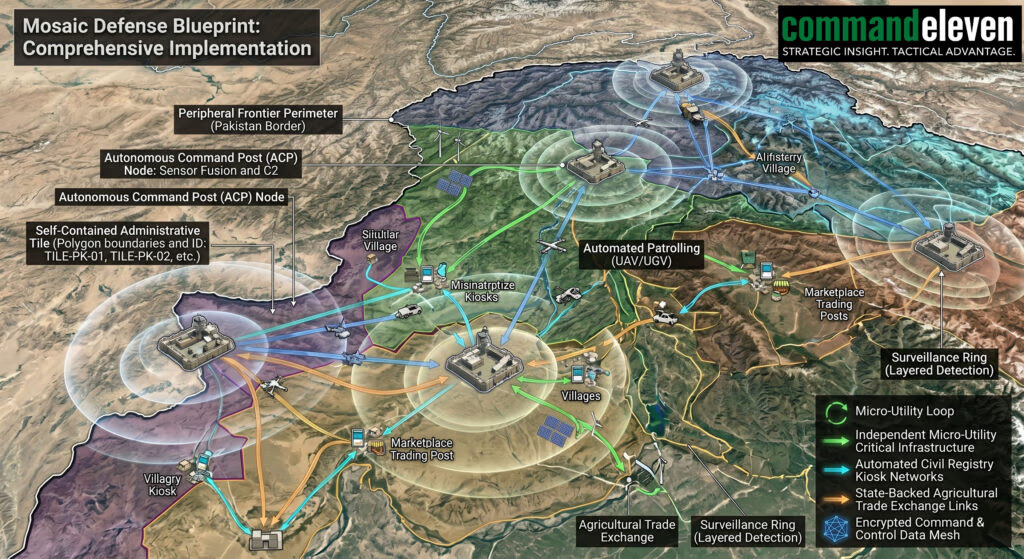
The final stabilization of the border corridors requires the permanent deployment of the Mosaic Defense architecture to establish unyielding state administrative persistence. The military institution replaces legacy centralized border guard footprints with a dense network of autonomous administrative tiles along the entire frontier perimeter. Each tile functions as an independent security and municipal node, managed by an authorized Tile Guardian equipped with fused sensing arrays. This structural decentralization ensures that the local population receives superior logistical oxygen exclusively from the legitimate state apparatus.
- Autonomous sensor-fused command posts integrate real-time radar, thermal tracking, and seismic sensor data into a unified local surveillance feed.
- Localized micro-utility infrastructure loops distribute independent solar power and water filtration services directly to border village households.
- Automated civil registry kiosks issue digital sovereignty tokens and biometric identity documents to local populations to regularize administrative records.
- Mobile tactical intervention cells execute high-velocity pre-emptive strikes against any irregular assembly identified within the tile boundary.
The deployment of autonomous administrative tiles permanently hardens the frontier against the re-emergence of shadow governance systems. Concurrently, structural analysis reveals that this decentralized model eliminates the single-trigger threat vector that historically crippled centralized border defense grids. If a proxy cell executes a localized cyber-attack or sensory rupture against one tile, the adjacent nodes remain fully operational. This systemic insulation ensures that the state maintains permanent administrative persistence across the frontier during high-velocity asymmetric crises.
The Tile Guardians use their localized utility networks to permanently sever the economic dependency that bound the population to the liquid cartels. By providing superior logistical oxygen,including functional justice, secure trade velocity, and stable utility access,the state renders the syndicate’s parallel social support structures obsolete. The population transitions from a passive facilitator of irregular militancy into an active component of the state’s sovereign defensive matrix. This societal realignment seals the border zone, preventing the re-infiltration of transnational criminal elements.
- State-backed agricultural trade exchanges guarantee local farmers secure access to domestic markets, bypassing cartel extortion rings.
- Biometric employment verification registries link local infrastructure development jobs directly to verified compliance with national security frameworks.
- Localized dispute resolution councils deliver fast, transparent mediation services based on statutory law, replacing informal proxy tribunals.
- Community-integrated communications networks provide secure, direct digital links between village elders and the local Tile Guardian command center.
The stabilization of these decentralized administrative and economic frameworks cements the state’s victory over parallel sovereign systems. The territory is no longer an ungoverned evasion hub; it is a highly integrated, self-defending segment of the national grid. By combining physical border hardening with superior utility delivery, the state achieves long-term structural persistence along its frontier. This comprehensive reclamation doctrine permanently neutralizes the capacity of transnational syndicates to monetize instability and compromise national sovereignty.
Doctrinal Synthesis and the Preservation of Administrative Persistence
The definitive success of the specialized counter-insurgency doctrine demonstrates that frontier sovereignty is preserved through small-unit agility and data-driven persistence rather than conventional high-mass infantry sweeps. Modern asymmetric threats operating within topographically complex border corridors cannot be contained through legacy conventional deployment models. To achieve permanent territorial stabilization, the state must implement a unified operational framework that treats specialized institutional training, automated tracking technology, and decentralized tile architecture as interdependent layers of a single defensive system. Implementing the #72/48 Protocol is mandatory to shield national command grids from the digital manipulation and sensory ruptures executed by sophisticated proxy electronic warfare cells. Furthermore, the state must aggressively eliminate internal vulnerabilities by enforcing strict counter-measures against insider threats within administrative customs registries. Reclaiming sovereign authority requires replacing reactive security postures with persistent, automated verification protocols across all physical and digital transit lanes. The conflict within peripheral border zones represents a critical structural competition for control over institutional integrity and the preservation of civil stability. Victory requires the uncompromising application of hardware truth to permanently dismantle the parallel economic and tactical ecosystems that sustain transnational militant networks.