
Executive Summary
As of May 2026, the South China Sea (SCS) has reached a critical inflection point in littoral security, defined by the aggressive operationalization of the Philippine-US Mutual Defense Treaty (MDT). Under the 2026 maritime security framework, the alliance has transitioned from symbolic cooperation to a posture of Distributed Deterrence. This realignment is anchored by the full activation of Enhanced Defense Cooperation Agreement (EDCA) sites in Palawan and Northern Luzon, providing the geographic leverage necessary to monitor both the West Philippine Sea and the Taiwan Strait. While the integration of Integrated Air and Missile Defense (IAMD) and the establishment of the ASEAN Maritime Center in the Philippines have fortified regional sovereignty, these developments have triggered a high-frequency “gray zone” escalation from Beijing. CommandEleven assesses that the era of maritime ambiguity has ended, replaced by a rigid, networked deterrence model involving Japan and Australia.
3 Key Takeaways
- Shift to Operational Reciprocity: The Philippine-US alliance has moved beyond legacy dependency; the MDT now explicitly covers the Philippine Coast Guard (PCG), integrating them into a shared multi-domain operational space with USINDOPACOM.
- Strategic Bastion Formation: The nine activated EDCA sites, particularly those in Northern Luzon, are being transformed into A2/AD (anti-access/area-denial) nodes, creating a “Fortress Luzon” that complicates any potential kinetic movement through the First Island Chain.
- Institutionalized Maritime Leadership: The establishment of the ASEAN Maritime Center in the Philippines marks a shift in regional diplomacy, centering UNCLOS as the non-negotiable legal framework and positioning Manila as the steward of a rules-based maritime order.
The MDT Realignment: From Legacy to Strategic Reciprocity

The 1951 Mutual Defense Treaty has undergone a fundamental realignment in 2026, moving away from post-war dependency toward a model of strategic reciprocity.
- Clarification of Scope: Official bilateral strategic dialogues in February 2026 reaffirmed that the MDT explicitly covers armed attacks on Philippine armed forces, aircraft, and public vessels,including the Philippine Coast Guard (PCG),anywhere in the Pacific and South China Sea.
- PACAF and INDOPACOM Integration: The May 2026 visit of Admiral Samuel J. Paparo (USINDOPACOM) underscored a commitment to real-time maritime domain awareness (MDA) and multi-domain operations. The alliance now reflects a shared operational space where Philippine coastal defense investments complement US forward posture.
- Pax Silica and Economic Links: Recognizing that economic resilience is integral to national security, the “Luzon Economic Corridor” has been established to catalyze investments in logistics, semiconductors, and energy, reducing strategic vulnerabilities to Chinese economic coercion.
EDCA Sites and Infrastructure Operationalization

The expansion of EDCA sites to nine strategic locations has fundamentally altered the littoral landscape.
- Strategic Positioning: Sites in Palawan and northern Luzon provide the alliance with geographic flexibility to monitor both the West Philippine Sea and the Taiwan Strait. US funding in 2026 has prioritized runway improvements, fuel storage, and command-and-control (C2) infrastructure.
- The IAMD Gap: Despite robust public support, current technical assessments identify a critical need to fast-track Integrated Air and Missile Defense (IAMD). The deployment of cutting-edge missile and unmanned systems is ongoing to ensure that currently fielded capabilities can defend against hostile drone and missile threats without abandoning civilian centers.
- Joint Exercises (Balikatan 2026): The May 2026 iteration of Exercise Balikatan utilized anti-ship missile systems in realistic littoral conditions, demonstrating a “shoulder-to-shoulder” integration that China has formally condemned as destabilizing.
Beijing’s Gray Zone Counter-Offensive
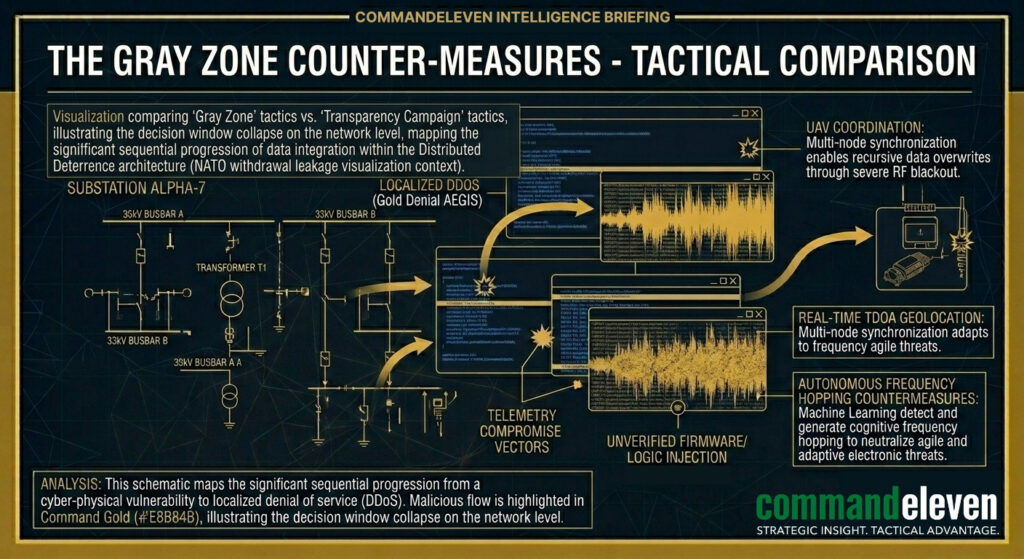
China’s response to the Philippine-US realignment has been a multi-pronged campaign of coercion and “investigative sabotage.”
- The Transparency Campaign: The Philippines’ initiative to document and publicize Chinese Coast Guard (CCG) incursions in real-time has been a powerful deterrent tool. In response, the Chinese Embassy in Manila launched a coordinated pressure campaign in early 2026 to discredit independent journalism and investigative outlets exposing maritime encroachment.
- Maritime Friction Points: CCG maneuvering against PCG patrol ships remains persistent. Beijing continues to urge ASEAN to “resist disruptions” to the Code of Conduct (CoC) negotiations, attempting to frame the US-Philippine alliance as an external interference in regional stability.
ASEAN Chairmanship and the Maritime Center
As the 2026 ASEAN Chair, the Philippines has positioned itself as a steward of a rules-based order.
- ASEAN Maritime Center: In May 2026, the 11-member bloc agreed to establish the ASEAN Maritime Center in the Philippines. This facility is designed to support ASEAN-led mechanisms on maritime security and provide a platform for inclusive dialogue, centering UNCLOS as the governing legal framework for all disputes.
- Multilateral Partnerships: The security architecture has expanded to include Australia and Japan, creating a networked deterrence model. Australian infrastructure investments in 2026 are specifically designed to complement EDCA sites, enhancing interoperability across the Indo-Pacific.
Intelligence Assessment and Forecasting (2026–2030)
CommandEleven forecasts that the littoral security of the South China Sea will be defined by the “Race for Technological Parity.”
- Asymmetric Maritime Evolution: The PCG will increasingly rely on unmanned surface vessels (USVs) for persistent surveillance, reducing the risk to human personnel during “gray zone” confrontations.
- The “Fortress Luzon” Doctrine: If IAMD integration continues at its current pace, northern Luzon will become a permanent anti-access/area-denial (A2/AD) bastion, complicating any potential Chinese kinetic moves toward the Luzon Strait or Taiwan.
- Sovereignty Sustainability: The long-term viability of the Philippine-US realignment depends on the Philippines’ ability to maintain domestic political consensus amidst intense pro-China influence operations targeting the 2028 electoral cycle.
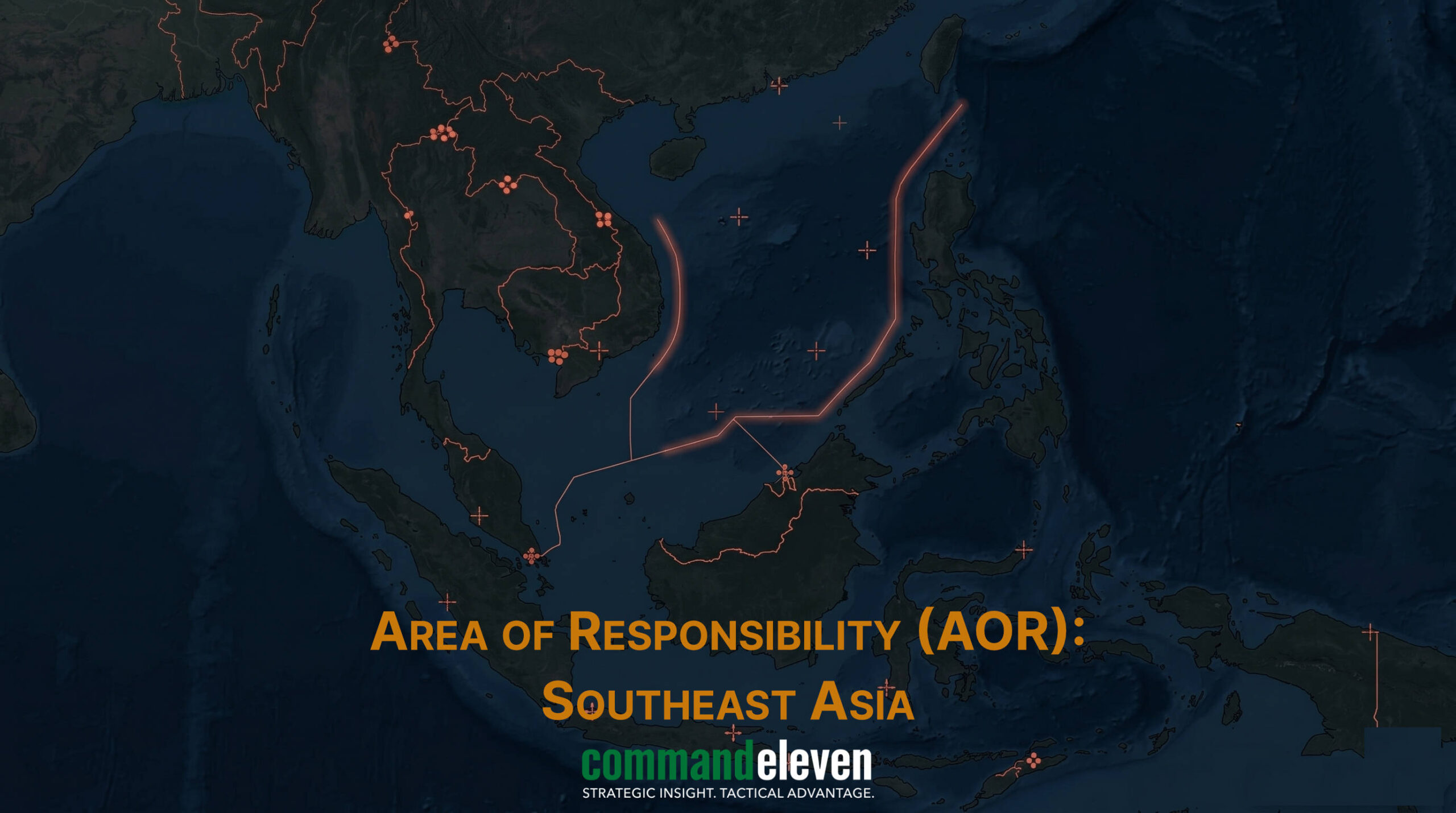
The strategic map of the First Island Chain highlights the critical positioning of the Philippines as a buffer between the South China Sea and the open Pacific.