
Executive Summary
This intelligence dossier assesses the strategic competition over critical mineral corridors in South America. The region holds major deposits of lithium and rare earth elements. These materials are vital for global defense supply chains, energy storage technologies, and advanced industrial manufacturing. The United States and China are competing for secure access to these finite resources. China uses state-backed infrastructure investments and long-term mining concessions to gain dominance. The United States responds through diplomatic partnerships and targeted financial incentives. This competition creates significant geopolitical vulnerabilities for the host nations. It increases the risk of supply chain disruptions during international crises. Local governance challenges and environmental disputes complicate external extraction efforts. This document provides a detailed analysis of the current operational environment, specific country vulnerabilities, foreign infrastructure investments, and security risks. It evaluates the strategic implications for international security and global supply chain resilience over the next decade.
Technical Takeaways
- Refining Monopoly Dominance: China maintains an asymmetric advantage in the defense supply chain by controlling over sixty percent of global lithium refining capacity alongside significant equity stakes in Chile’s Chemical and Mining Society and Argentine brine operations.
- Dual-Use Logistics Infrastructure: Chinese state-backed investments in deep-water hubs like the Chancay Port complex establish direct maritime corridors to East Asia while creating long-term maritime domain vulnerabilities for Western security forces.
- Supply Chain Vulnerability: The high concentration of critical minerals in remote Andean sectors exposes Western defense manufacturing to sudden disruptions from localized resource nationalism, regulatory fragmentation, and maritime chokepoint interdictions.
The Lithium Triangle and Strategic Resource Mapping
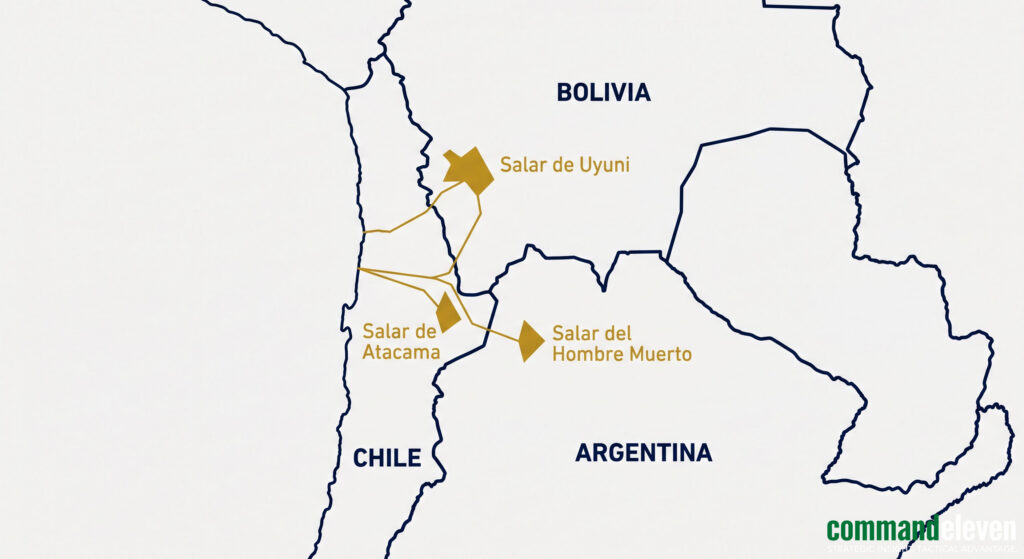
The Lithium Triangle covers the high-altitude salt flats of Argentina, Bolivia, and Chile. This geographical zone contains over fifty percent of the known global lithium reserves. The Salar de Uyuni in Bolivia, the Salar de Atacama in Chile, and the Salar del Hombre Muerto in Argentina serve as the primary extraction points. Lithium is a critical component for high-density batteries utilized in military communication systems, guided missiles, and electric vehicle fleets.
China currently controls over sixty percent of global lithium refining capacity. It leverages this dominance by securing direct ownership of South American extraction sites. The Chinese firm Tianqi Lithium acquired a twenty-three percent stake in Chile’s Chemical and Mining Society in 2018 for four billion dollars. This transaction granted Beijing substantial influence over the highest-grade lithium deposit in the world.
The United States relies heavily on imported lithium to sustain its domestic defense industrial base. The United States Geological Survey identifies this dependence as a significant strategic vulnerability. The current strategy aims to diversify supply chains through the Minerals Security Partnership. This initiative seeks to channel Western private capital into South American mining projects. However, bureaucratic delays and local regulatory frameworks slow down Western investments.
- Salar de Atacama (Chile): This site yields the highest lithium concentration globally. It features low levels of magnesium impurities, which reduces processing costs significantly.
- Salar de Uyuni (Bolivia): This area holds the largest total resource base. High magnesium-to-lithium ratios and seasonal rainfall hamper efficient commercial extraction efforts.
- Salar del Hombre Muerto (Argentina): This location features advanced brine extraction infrastructure. It operates under provincial regulations that favor foreign direct investment.
- Ganfeng Lithium: This Chinese corporation acquired the Pastos Grandes project in Argentina in 2022. The deal cost nine hundred and sixty million dollars.
- Contemporary Amperex Technology: This state-linked Chinese entity signed a one-billion-dollar agreement with Bolivia in 2023. The contract authorizes the construction of direct lithium extraction plants.
The extraction process relies on solar evaporation of underground brines. This method requires millions of gallons of water per ton of lithium produced. The process strains local water tables in arid Andean regions. This water scarcity triggers persistent conflicts with indigenous communities and agricultural sectors. Environmental regulations vary greatly across the three jurisdictions. Chile enforces strict environmental quotas and demands high royalty payments. Argentina operates a decentralized system where individual provinces negotiate terms directly with foreign corporations. This regulatory fragmentation allows external actors to exploit legal loopholes. Bolivia maintains a state-centric model through its national company, Yacimientos de Litio Bolivianos. This approach has restricted large-scale commercial output for over a decade. The divergence in national strategies prevents the formation of a unified regional lithium cartel. External powers exploit these policy differences to secure exclusive bilateral supply contracts.
Chinese Infrastructure Infiltration and Debt-Book Diplomacy
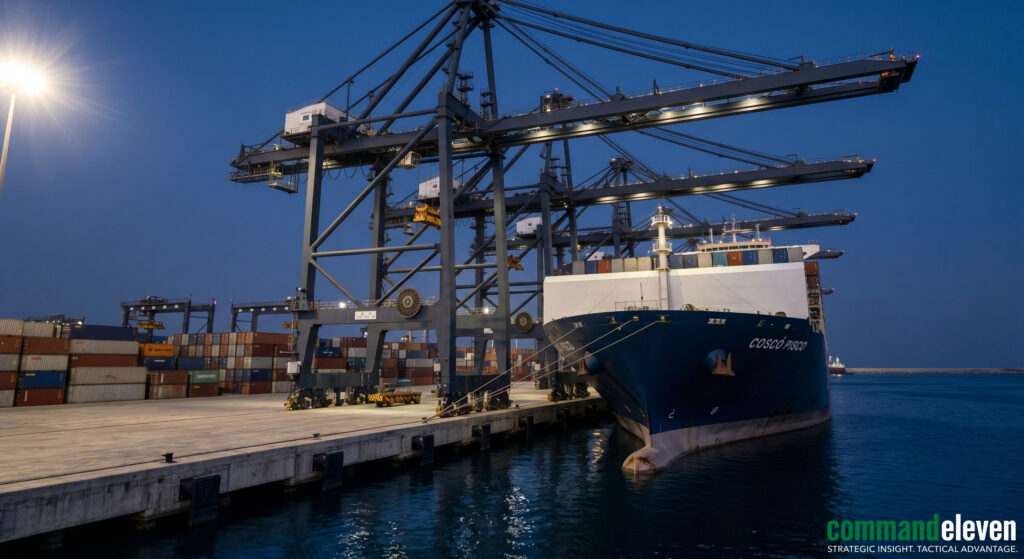
Beijing utilizes its Belt and Road Initiative to construct dual-use infrastructure near critical mineral deposits. These investments extend beyond mining operations to include deep-water ports, rail networks, and electrical grids. This integrated infrastructure network ensures that harvested raw materials move directly to Chinese processing facilities.
The China Ocean Shipping Company is constructing the Chancay port complex in Peru. This three-billion-dollar megaproject will serve as a primary maritime hub. It will reduce shipping times between South America and Shanghai by ten days. The port possesses the depth required to handle ultra-large container ships. Military analysts note that the facility can support Chinese naval vessels during a conflict.
China also employs state-backed loans to create economic leverage over resource-rich nations. When host governments face default, Beijing negotiates for long-term concessions of strategic assets. This mechanism secures critical mineral flows even during periods of regional political instability.
- Chancay Port Project: A deep-water facility located north of Lima. It establishes a direct maritime corridor from the South American Pacific coast to East Asia.
- Belgrano Cargas Railway: A major logistics network in Argentina. China Machinery Engineering Corporation financed its rehabilitation with two billion dollars to facilitate grain and mineral transport.
- State Grid Corporation of China: This entity purchased Chile’s electricity distributor, Compania General de Electricidad, in 2020. The transaction was worth three billion dollars.
- Exim Bank of China: This institution provided financing for the Cauchari solar farm in Argentina. The facility provides power directly to nearby lithium extraction operations.
- Hydroelectric Dams in Ecuador: Chinese firms financed and built the Coca Codo Sinclair dam. Structural flaws give Beijing persistent leverage over national energy policy negotiations.
Control over the regional energy infrastructure enhances China’s operational security. By owning the power grids and generating stations, Chinese firms can prioritize electricity allocation to their own mining operations during energy shortages. This dominance places Western competitors at a severe disadvantage. Western companies must rely on state-controlled utilities that are vulnerable to political pressure from Beijing.
Furthermore, Chinese infrastructure contracts frequently include clauses that mandate the use of Chinese technology and personnel. This practice limits local technology transfer and ensures long-term operational dependency. The integration of Huawei fifth-generation telecommunications infrastructure across these logistics corridors creates electronic espionage vulnerabilities. It allows Chinese intelligence services to monitor the movement of equipment, personnel, and mineral volumes throughout the region.
United States Strategic Countermeasures and Defense Industrial Base Security

The United States Department of Defense classifies lithium and rare earth elements as critical to national security. Section 303 of the Defense Production Act allows the Pentagon to invest in domestic processing and foreign sourcing. The United States strategy focuses on establishing resilient supply chains that bypass Chinese state-controlled entities.
Washington utilizes the International Development Finance Corporation to counter Chinese economic influence. This agency provides loans and political risk insurance to Western mining companies operating in South America. The United States Southern Command monitors Chinese commercial activities near strategic chokepoints. It emphasizes the security risks of foreign control over maritime access points.
Bilateral security cooperation agreements now include provisions for protecting critical infrastructure. The United States offers technical assistance to regional partners to improve their foreign investment screening mechanisms. This program helps host nations identify hidden state ownership and national security threats within commercial bids.
- Defense Production Act Title III: Funding mechanisms utilized to subsidize domestic separation facilities and secure allied foreign supply chains.
- Minerals Security Partnership: A coalition involving fourteen nations. It coordinates institutional support for sustainable critical mineral processing projects globally.
- International Development Finance Corporation: This agency approved a debt financing package for tech-metal exploration in Brazil. The initiative targets rare earth deposits.
- Southern Command Science and Technology Program: This project deploys advanced maritime domain awareness systems to monitor shipping lanes near regional ports.
- Technical Assistance Program: United States Treasury experts train regional financial intelligence units to detect illicit capital flows linked to mining concessions.
The United States defense industrial base requires a continuous supply of neodymium and dysprosium for permanent magnets. These magnets are essential for the propulsion motors of Virginia-class submarines and F-35 fighter aircraft. Currently, the United States lacks sufficient domestic extraction and separation capabilities.
To mitigate this risk, Washington is fostering partnerships with Brazil and Colombia. Brazil possesses the second-largest rare earth reserves globally. The United States-Brazil Critical Minerals Working Group meets semi-annually to synchronize regulatory standards and accelerate project financing. The United States also leverages its existing Free Trade Agreements with Chile and Colombia to secure preferential access to newly discovered deposits. These agreements provide legal protections for American investors that counteract the state-backed advantages enjoyed by Chinese firms. However, Western companies still face challenges from volatile global commodity prices, which are frequently manipulated by Chinese state production quotas.
Geopolitical Risks, Supply Chain Vulnerabilities, and Local Instability
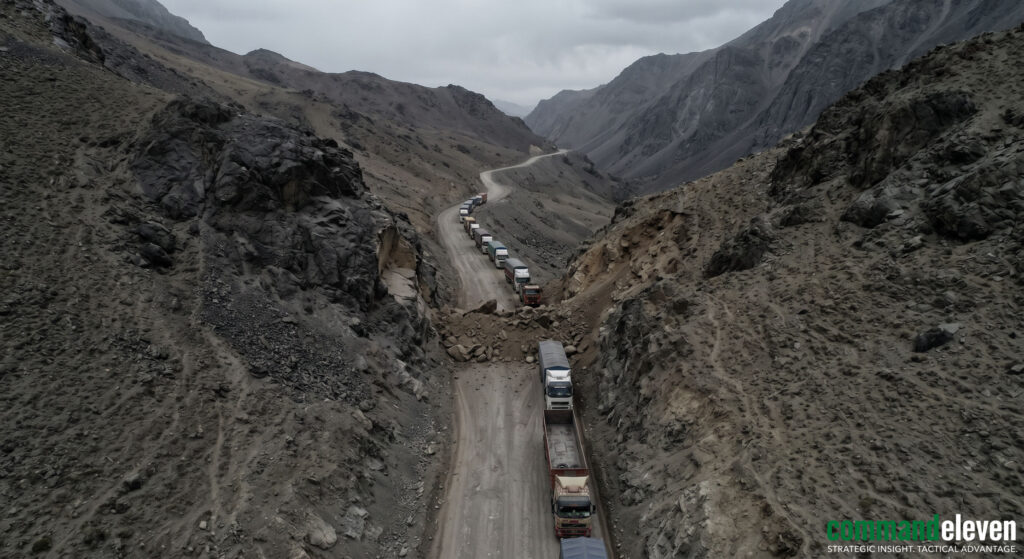
The concentration of critical mineral extraction in South America exposes the global supply chain to severe disruptions. Political volatility remains a primary risk factor across the region. Resource nationalism often escalates during economic downturns, leading to contract renegotiations, increased taxes, or outright nationalization of foreign-owned assets.
Resource nationalism manifests differently across jurisdictions. In Peru and Colombia, local communities frequently block transport corridors to demand a larger share of mining revenues. These protests can halt production at major sites for weeks. The lack of robust state presence in remote mining regions allows transnational criminal organizations to infiltrate the supply chains.
Illicit mining operations generate significant revenue for criminal networks. These groups launder money through legal mining concessions and corrupt local government officials. The convergence of corporate competition, state rivalry, and criminal exploitation creates a highly complex operating environment for foreign entities.
- Blockade of the Southern Mining Corridor: Regular protests in Peru disrupt copper and rare earth logistics. These actions cause millions of dollars in daily export losses.
- Bolivian Nationalization Decree: Legislation enacted in 2006 that mandates state control over hydrocarbon and mineral resources. It deters foreign venture capital.
- Environmental Injunctions: Chilean courts frequently suspend mining operations. They cite violations of water usage rights in the Atacama Desert region.
- Transnational Criminal Networks: Groups like the Primeiro Comando da Capital operate illicit gold and rare earth extraction rings along the Brazil-Peru border.
- Cyber Espionage Threats: Advanced persistent threat actors linked to foreign states target the digital networks of South American mining ministries to steal geological data.
The vulnerability of maritime supply routes introduces significant strategic risk during geopolitical crises. A conflict in the Taiwan Strait would likely lead to maritime interdictions, disrupting the flow of minerals from the South American Pacific coast to East Asian processing hubs. The reliance on narrow chokepoints, such as the Panama Canal, exacerbates this vulnerability.
Extreme weather events driven by climate patterns also threatens operational continuity. Severe droughts limit the hydroelectric power generation required to run energy-intensive refining plants. Conversely, unseasonal flash floods damage high-altitude transport roads and rail links, isolating remote mining sites from coastal ports. Western defense planners must account for these vulnerabilities by establishing strategic stockpiles and developing alternative logistics corridors that do not rely on infrastructure managed by adversaries.
Conclusion
The geopolitical struggle for South American critical mineral corridors represents a significant challenge to Western security interests. China retains a substantial advantage through early infrastructure investments and integrated supply chains. The United States is expanding its diplomatic, economic, and security initiatives to secure alternative supply lines for its defense industrial base. The host nations face a complex balancing act as they attempt to maximize economic returns without compromising their sovereignty. The vulnerabilities within these resource corridors stem from political instability, resource nationalism, regulatory fragmentation, and the presence of transnational criminal networks. Disruptions within these supply chains will directly impact the production of advanced military platforms, energy storage systems, and critical electronics. Protecting these lifelines requires sustained Western investment, improved intelligence sharing, and robust security cooperation with regional partners to counter foreign state dominance over these vital global resources.