
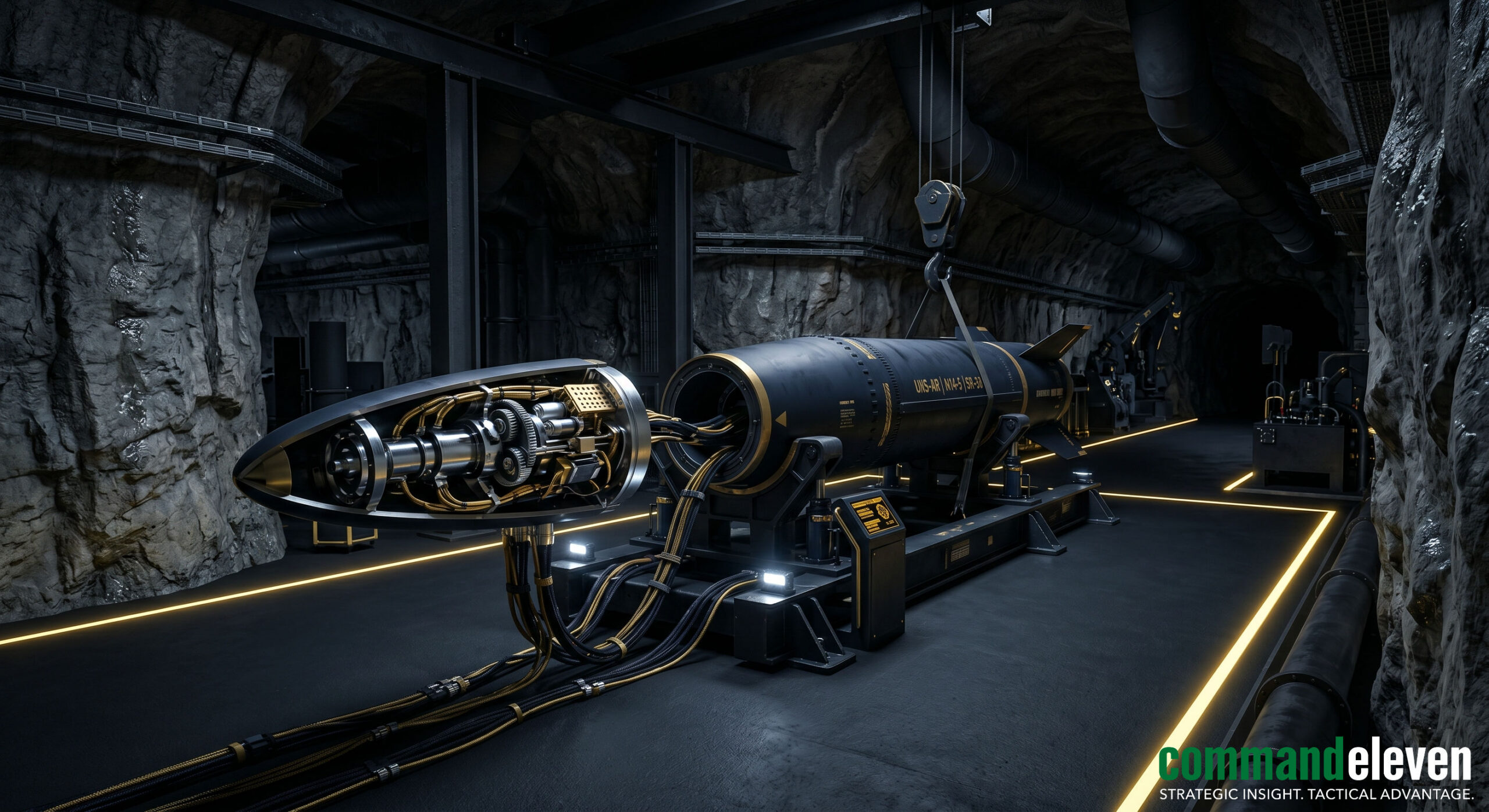
Executive Summary
Regional non-state actors operating in Western Lebanon have altered the regional balance of power by transitioning from importing complete precision-guided munitions to localized industrial assembly. This strategic shift relies on highly fortified subterranean infrastructure designed to withstand sustained aerial interdiction campaigns and technical intelligence monitoring. By constructing multi-layered underground facilities, these factions protect critical assembly lines where unguided artillery rockets receive advanced guidance system upgrades. This dossier evaluates the engineering frameworks of these subterranean complexes, the mechanical integration protocols for precision guidance kits, the specialized domestic supply chains, and the electronic signature mitigation strategies. The establishment of decentralized underground conversion hubs creates an operational reality that severely limits the effectiveness of traditional preemptive kinetic strikes. Countering this infrastructure requires a comprehensive understanding of underground engineering vulnerabilities and the precise tracking of dual-use hardware flowing into the littoral zones.
Technical Takeaways
- Subterranean Blast Mitigation. Subterranean engineering designs utilize steel-fiber reinforced shotcrete arches combined with compressed gravel shock-absorption layers to decouple the facility from natural bedrock vibrations and withstand immense kinetic overpressure from surface-penetrating munitions.
- Modular Aerodynamic Retrofitting. The conversion process shifts legacy unguided rockets to precision-guided munitions by integrating a mid-body cylindrical module housing independent electromechanical canard actuators and dedicated thermal batteries linked via an external steel conduit.
- Electromagnetic Signal Containment. Total signature mitigation is achieved through the exclusive use of buried armored fiber-optic communication lines and continuous galvanized steel Faraday cage enclosures, eliminating all radio frequency emissions capable of being tracked by signals intelligence assets.
Subterranean Engineering and Structural Fortification
Non-state engineers have developed highly standardized excavation protocols to construct deep-buried assembly halls within the rugged topography of Western Lebanon. These facilities are intentionally placed beneath dense limestone strata to maximize natural protection against high-explosive bunker-buster munitions. The structural layout prioritizes modularity, connecting isolated processing chambers through narrow, reinforced transit tunnels to isolate kinetic damage if a breach occurs.
The physical construction of these underground facilities follows rigid civil engineering templates optimized for military survivability.
- Reinforced Concrete Arching. Engineers line the ceilings of excavation chambers with multi-layered, steel-fiber reinforced shotcrete spraying arrays coupled with interlocking cast concrete arches. This structural configuration distributes the immense kinetic overpressure generated by surface-penetrating munitions away from the sensitive assembly machinery below.
- Shock-Absorption Buffering Layers. The design incorporates a deliberate air gap or a compressed gravel layer between the primary limestone rock face and the inner reinforced concrete facility walls. This structural buffer dampens the acoustic and seismic shockwaves propagating through the rock mass during nearby kinetic impacts, protecting calibrated calibration equipment.
- Modular Blast Door Arrays. Heavy, double-reinforced steel blast doors equipped with dual-track hydraulic locking pins isolate each assembly section along the subterranean transit paths. These barriers are rated to withstand overpressure levels exceeding 30 bars, preventing blast propagation or toxic gas migration through the wider complex.
The structural survival of these deep-buried installations provides the necessary operational safety required to run highly sensitive mechanical workflows. Once the physical integrity of the facility is secured, the engineering challenge shifts directly to environmental control. Without continuous climate management, the high humidity levels found in subterranean caverns would rapidly degrade the electronic guidance components waiting for integration.
The environmental management systems are integrated directly into the structural foundations of the facility to maintain strict operating parameters.
- Subterranean Air Scrubber Loops. Facilities utilize closed-loop environmental control units fitted with commercial-grade desiccant dehumidifiers and high-efficiency particulate air filtration banks. This hardware maintains interior relative humidity below 40 percent, preventing moisture condensation and electrostatic discharge on exposed guidance circuitry.
- Concealed Heat Rejection Vents. Thermal exhaust lines pass through extensive subterranean serpentine rock fields before venting into civilian industrial zones or deep mountain crevices. This extensive heat dissipation path lowers the exit temperature of the air currents, completely neutralizing the thermal signatures visible to airborne infrared tracking platforms.
- Vibration Isolation Foundations. The heavy industrial machinery used for rocket body modification sits on independent concrete plinths resting on thick elastomeric damping pads. This physical isolation prevents the transmission of low-frequency rhythmic vibrations through the surrounding bedrock, masking the facility from regional seismic monitoring networks.
Guidance Kit Integration and Mechanical Modifications
The primary industrial activity inside these subterranean installations centers on the conversion of standard unguided heavy rockets into precision-guided munitions. Technicians disassemble the forward structural sections of legacy rocket airframes to insert localized control surfaces and independent navigation computers. This conversion process requires precise mechanical alignment to ensure the aerodynamic stability of the modified projectile during its high-velocity terminal flight path.
The upgrade process follows a standardized assembly line format that treats the rocket as a modular chassis.
- Canard Actuator Section Integration. Assembly teams remove the standard warhead fuze section and bolt a specialized cylindrical control module between the rocket motor and the payload. This module houses four independent electromechanical canard actuators that adjust their aerodynamic angles in real time based on steering commands.
- Internal Wire Harness Routing. Technicians channel high-strength data links and power cables from the forward guidance computer down the exterior of the rocket casing inside a compressed steel conduit. This external modification links the guidance brain directly to the aft fin deployment mechanisms without requiring complete structural disassembly of the rocket motor casing.
- Thermal Battery Placement. A compact, high-output thermal battery is installed adjacent to the actuator systems to provide dedicated electrical power during the flight profile. This power source activates via a mechanical setback switch upon ignition, ensuring the guidance electronics remain independent of legacy rocket electrical architectures.
The successful attachment of these external components transforms the aerodynamic profile of the legacy projectile, requiring precise internal software calibration. Once the physical hardware is locked into place, the rocket must receive its targeting intelligence via localized data injection protocols. Technicians utilize specialized diagnostic diagnostic bays built directly into the subterranean assembly line to program the guidance computers.
The terminal guidance architecture combines multiple tracking methodologies to achieve high-accuracy coordinate delivery.
- Hardened Inertial Measurement Units. The core guidance module integrates micro-electro-mechanical gyroscopes and silicon accelerometers calibrated to track flight deviations along three independent axes. This internal system continuously calculates velocity and positional changes, steering the rocket along a pre-programmed ballistic arc without requiring external data inputs.
- Global Navigation Receiver Hardening. The navigation computer features a multi-channel satellite receiver array equipped with null-steering patch antennas mounted flush on the rocket skin. This hardware configuration concentrates its reception beam upward, blocking civilian or military GPS jamming signals originating from terrestrial electronic warfare stations on the horizon.
- Optical Scene-Matching Sensors. Advanced variants receive an electro-optical nose cone housing an uncooled thermal imaging camera that activates during the terminal dive phase. The internal processor compares the live visual landscape features against pre-loaded satellite imagery maps, adjusting the canards to guide the weapon toward high-value target coordinates.
Specialized Supply Chains and Domestic Component Flow
The sustainability of the subterranean conversion program depends on a highly resilient supply chain that feeds dual-use components into Western Lebanon. Factions avoid large, single-source bulk shipments that are easily tracked by international intelligence services, opting instead for distributed procurement networks. These networks exploit legitimate global commercial channels to acquire industrial machinery, electronic sub-assemblies, and specialized raw materials.
The influx of precision components utilizes multiple front companies operating across European and Asian logistics hubs.
- Dual-Use CNC Machine Sourcing. Procurement agents purchase multi-axis computer numerical control machining tools under the guise of funding vocational technical schools or civilian automotive repair enterprises. These precision tools are broken down into modular sub-components before shipping, allowing them to pass through international customs inspections without triggering weapon proliferation alerts.
- Industrial Resin and Fiber Diversion. High-strength carbon fiber filaments and epoxy resins flow into littoral warehouses through legitimate commercial contracts signed by local maritime vessel manufacturing firms. Once inside the country, logistics cells divert these materials to the underground assembly halls to wrap reinforced rocket motor casings.
- Commercial Microchip Aggregation. The network harvests high-reliability microcontrollers and solid-state sensors from commercial off-the-shelf drone kits and industrial automation hardware. These components are stripped from their original motherboards and re-soldered onto military-grade guidance plates designed within hidden regional engineering laboratories.
The arrival of these raw materials at maritime and overland entry points triggers a highly coordinated internal transport protocol. To prevent aerial identification, the transport networks merge the specialized components into the daily commercial shipping flows of the domestic economy. This method ensures that the critical parts reach the subterranean assembly points without attracting specialized tracking focus.
The internal logistics network relies on complete physical and documentation concealment to preserve operational security.
- Distributed Logistics Disguise. Material handlers pack sensitive electronic guidance modules inside sealed, weather-proof containers marked as consumer electronics or commercial refrigeration parts. These items move aboard standard civilian flatbed trucks along primary transit routes during high-traffic daylight hours to blend into normal economic activity.
- Subterranean Transit Adits. Convoys deliver the components to inconspicuous transit stations, such as agricultural warehouses or commercial quarries, located adjacent to the primary underground facility entrances. From these staging zones, the cargo travels down specialized subterranean adits carved directly into the mountain faces, remaining completely hidden from satellite tracking.
- Just-In-Time Inventory Cycles. Facilities maintain minimal stockpiles of raw components on-site, relying on a highly synchronized just-in-time delivery schedule coordinated via encrypted fiber-optic communication links. This protocol minimizes the loss of high-value components if a single subterranean node suffers kinetic interdiction or structural compromise.
Signature Mitigation and Electronic Counter-Measures
To protect the subterranean assembly lines from detection by advanced technical intelligence platforms, non-state actors enforce total electromagnetic and visual silence. The complexes are engineered from the foundation up to eliminate the physical telltale signs that typically indicate the presence of a high-value military industrial installation. This comprehensive signature management framework effectively blinds standard aerial and electronic surveillance methodologies.
The primary defense against electronic intelligence tracking focuses on the absolute containment of all radio frequency emissions.
- Fiber-Optic Communication Backbones. The entire underground infrastructure utilizes a dedicated internal communication network constructed exclusively from armored fiber-optic cables buried deep within the concrete floors. This hardwired system completely replaces wireless radio communications, preventing foreign signals intelligence satellites from intercepting operational data leaks.
- Electromagnetic Shielding Enclosures. The laboratory spaces where technicians program the rocket guidance computers are constructed as complete Faraday cages lined with continuous galvanized steel sheets. This physical barrier blocks any accidental radio frequency emissions or electronic noise generated by diagnostic testing equipment from escaping into the upper atmosphere.
- Acoustic Damping Ventilation Mufflers. The primary intake and exhaust fans feature industrial silencer baffles and acoustic absorption blankets that attenuate low-frequency mechanical hums. This damping prevents foreign acoustic intelligence sensors from mapping the location of subterranean power plants through ground-vibration analysis.
The containment of electronic signatures is mirrored by a strict discipline regarding visual and physical transformations on the surface above the facilities. If the terrain surrounding the entrances shows signs of military engineering, satellite imaging algorithms will automatically flag the sector for kinetic target development. Factions counter this vulnerability by enforcing rigid environmental preservation rules across the surface perimeter.
The visual signature management protocols focus on blending the underground infrastructure into the pre-existing human and natural geography.
- Camouflaged Material Extraction. Excavated rock and soil are not massed into visible spoil piles near the tunnel mouths; instead, the material travels via covered trucks to active commercial quarries or civil construction zones miles away. This dispersal prevents satellite imagery analysts from calculating the internal volume of the underground complex based on debris accumulation.
- Co-Opted Civilian Superstructures. Tunnel entrances and air shafts emerge directly inside the interior footprints of pre-existing civilian buildings, such as active farm complexes or commercial distribution hubs. This structural integration masks the true purpose of the vehicle traffic, presenting a completely normal pattern of life to monitoring assets.
- Surface Pattern Disruption. Exterior lighting arrays, perimeter fencing, and visible security checkpoints are strictly prohibited within the surface zone overlying the subterranean complex. Security personnel operate exclusively in civilian attire and utilize unmarked commercial utility vehicles, preventing tactical spotters from identifying high-value military infrastructure nodes.
Conclusion
The evolution of precision-guided munition conversion infrastructure within the subterranean spaces of Western Lebanon marks a significant technological advancement in asymmetric warfare capabilities. By shifting from direct weapon importation to localized underground assembly, non-state networks have significantly neutralized traditional multi-layered aerial interdiction frameworks. The integration of structural engineering fortifications, autonomous guidance calibration arrays, and strict electromagnetic signature containment protocols ensures these facilities can operate continuously under contested conditions. Traditional kinetic options face steep technical challenges due to the depth, natural limestone shielding, and visual camouflage of these installations. Countering this threat requires an operational shift toward tracing the international flows of dual-use hardware, disrupting front-company procurement chains, and deploying specialized ground-penetrating sensory networks to detect structural connections before components reach the terminal conversion halls.