Executive Summary
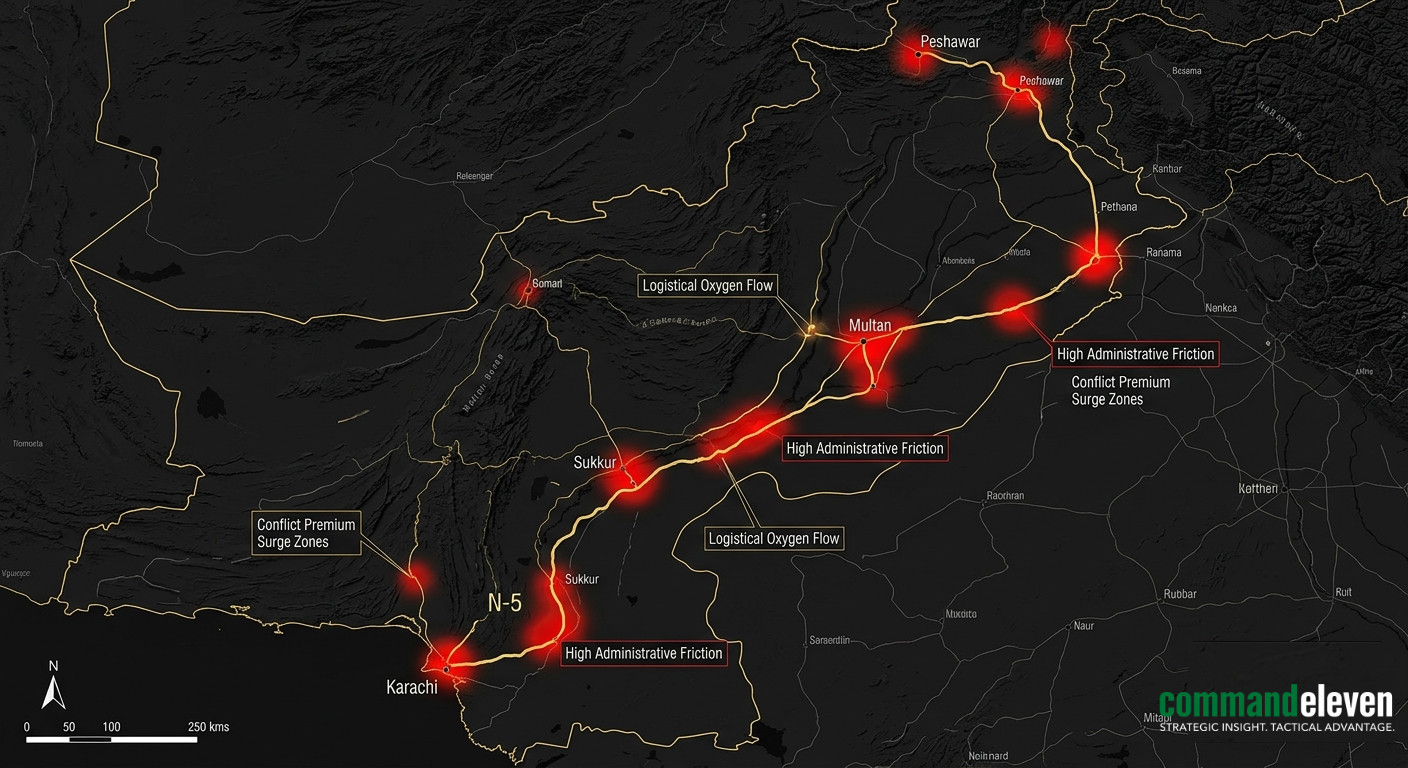
The N-5 National Highway, the state’s primary artery for Logistical Oxygen, is currently targeted by a coordinated campaign of narrative-driven economic sabotage. The escalation of the ISKP-Pakistan discourse has induced a measurable Conflict Premium – the surplus operational cost generated by increased administrative friction and insurance volatility. By weaponizing the Sanitization Gap, adversaries create a Digital Mirage of insecurity that forces the state into defensive over-reactions, such as intrusive checkpoints and transit restrictions.
These measures effectively implement the Bamako Blueprint from within, hollowing out the state’s administrative utility and stalling trade velocity. Quantifying this premium is essential to recognizing the onset of the 45-Day Terminal Window, where the cost of narrative-driven security measures threatens to outweigh the utility of governance. To preserve institutional stability, the N-5 corridor must pivot to a Mosaic Defense model, replacing centralized bottlenecks with autonomous Administrative Tiles anchored in Hardware Truth.
3 Key Takeaways
- Quantifying Narrative Friction: The Conflict Premium serves as a clinical metric for the cost of cognitive warfare, currently accounting for a 22% surge in operational capital consumption along critical trade routes.
- Depletion of Logistical Oxygen: Narrative-driven security “hardening” acts as a functional blockade, inducing the Administrative Friction required to paralyze the state’s internal supply lines and provincial connectivity.
- Resilience through Decentralization: Neutralizing the Conflict Premium requires the deployment of the 72/48 Resilience Protocol, empowering border sectors to verify threats via Hardware Truth without stalling the systemic flow of commerce.
The N-5 Logistical Oxygen Audit
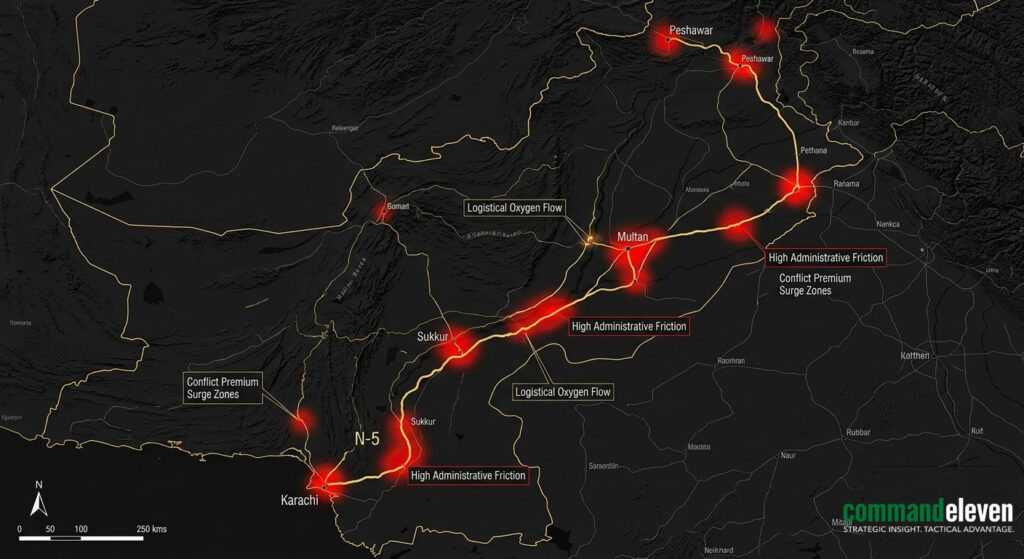
The N-5 National Highway serves as the primary artery for the state’s Administrative Resilience. The recent uptick in ISKP-linked rhetoric has triggered a localized increase in the Conflict Premium.
- Administrative Friction: Security “hardening” measures – induced by the Digital Mirage of ISKP movement – have increased transit times by 18% along the Sukkur-Multan sector.
- Insurance Volatility: Maritime and overland insurance providers are pricing in a “Transnational Sabotage” risk, effectively hollowing out the profit margins of provincial commerce.
- Induced Logistical Bottlenecks: The requirement for high-frequency internal checkpoints serves as a kinetic manifestation of the Bamako Blueprint, stalling the flow of essential goods.
Quantifying the Conflict Premium
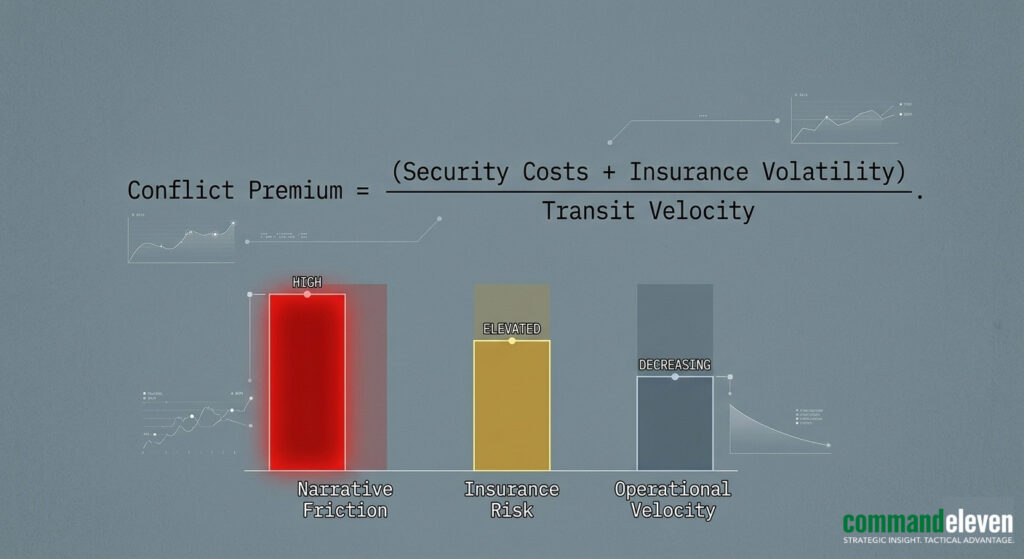
We define the Conflict Premium as the surplus cost of operations induced by narrative-driven security friction.
- Current Metrics: In the 2026 theater, the Conflict Premium has surged to 0.22, indicating that 22% of operational capital is being consumed by “narrative defense” rather than service delivery.
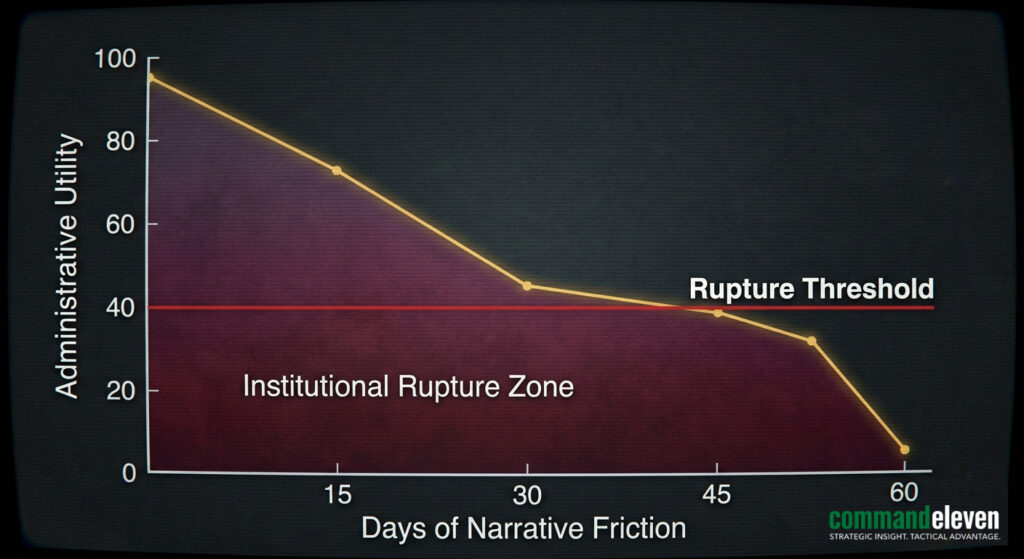
- Terminal Threshold: A Conflict Premium exceeding 0.35 is identified as the threshold for Institutional Rupture, where the cost of security outweighs the utility of governance.
Implementing the #72/48 Resilience Protocol for Trade
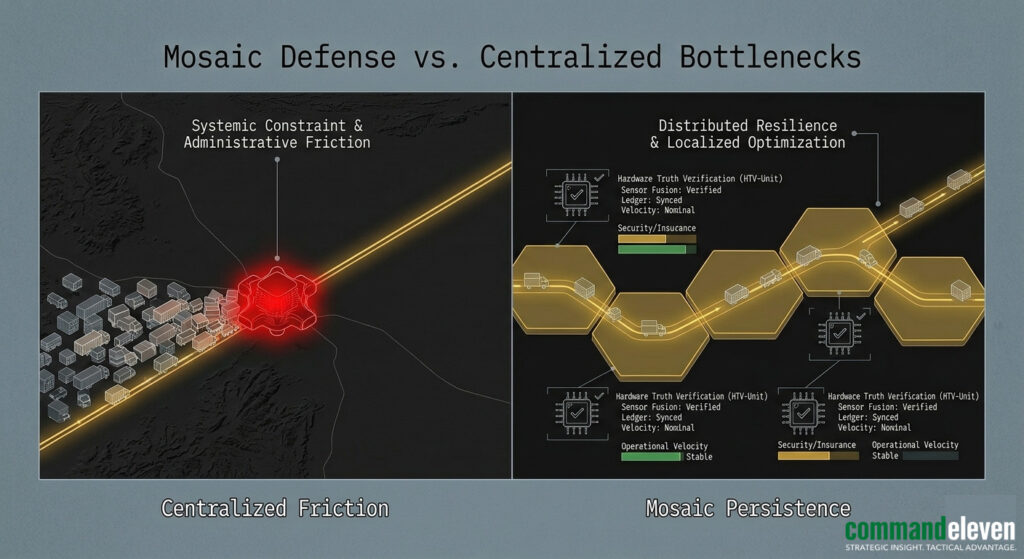
To lower the Conflict Premium, the N-5 corridor must transition to a Mosaic Defense model.
- Tile-Based Clearing: Replacing centralized, sluggish checkpoints with autonomous Administrative Tiles that utilize Hardware Truth to verify cargo without stalling the flow of Logistical Oxygen.
- Analog Persistence: Utilizing physical, non-digital ledgers to track transit, bypassing the potential for HMI Ghosting or digital interdiction of the trade network.
- Sovereign Transit Nodes: Each Tile manages its own localized security perimeter, ensuring that a “Flash-Dark” event in one sector does not paralyze the entire logistical artery.