Executive Summary
The term ‘Great Game’, now a common cliché, was born of the infamous competition for regional control played out in the Indian sub-continent during the 19th century between the British and Russian Empires.
The Russian search for warm water ports extended their interests towards the Indian Ocean, bringing them into direct conflict with British interests. Subsequently, the British found themselves involved in three Anglo-Afghan Wars, primarily undertaken to contain Russian expansion towards the east, ultimately resulting in Afghanistan accepted as a buffer state between the two belligerents.
In 1979, a century later, the Soviet Union invaded Afghanistan with an eye on the mineral resources and access to the Indian Ocean through Iran or Pakistan.
However, not only did they fail, but instead unravelled the Soviet Union in 1991. The resulting years of wars, chaos and anarchy transformed Afghanistan a haven for terrorist organizations resulting in the al-Qaeda’s September 11th attack on the World Trade Center.
Yet, after a 20-year experiment, overseen by a coalition of the US and a NATO lead International Security Assistance Force (ISAF), in nation building, constitutional structural development and setting up of a security apparatus and the ultimate withdrawal of US forces securing the failure in Afghanistan, set the stage for the New Great Game in South Asia.
In simple terms, the US again failed to export its version of democracy and nation building, creating numerous opportunities for both state and non-state actors to benefit.
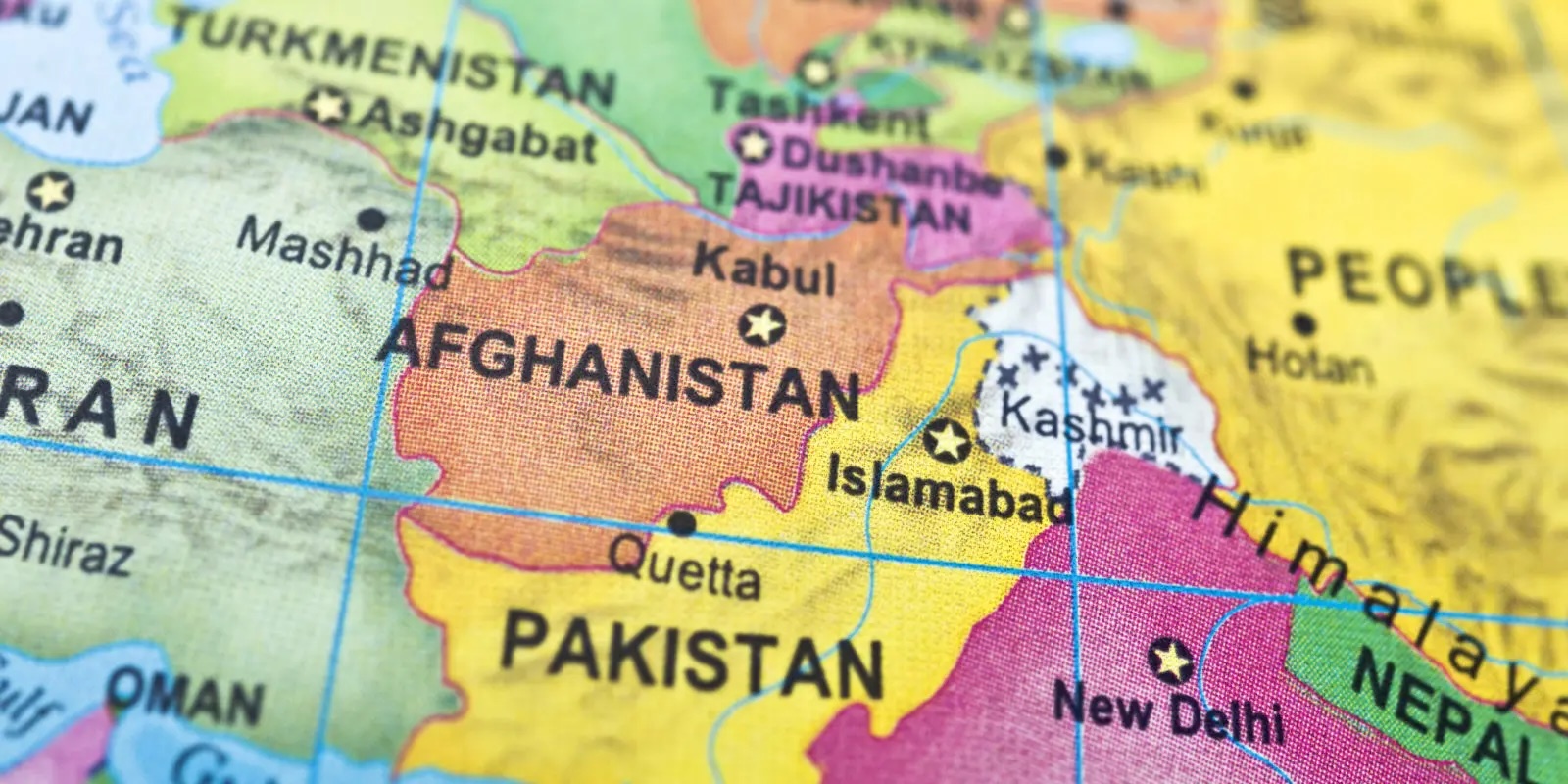
Afghanistan’s geostrategic location makes its stability crucial to China, the Central Asian Republics, Iran, and Pakistan. It is a fulcrum in the region, whose political and administrative status can, and has, impact on the region as a whole for decades. In the same region, where two nuclear armed states stand at the ready to declare war.
With China assertion to global leadership in the economic domain, the US set up a strategic alliance with India, including them in the Quad security paradigm. This further strained the transactional US-Pakistan relationship, pushing it closer to China.
The Indo-US partnership forced a Pak-China collaboration as natural counter-balance in the affairs of a regional strategic paradigm.
A New Great Game has begun, where the games are more diverse, the methods more covert and the players more versatile, but the objectives have not changed, in a region that has already survived the original Great Game.
The Indian sub-continent has experienced the trials and tribulations of establishing democratic functioning systems against influences, both internal and external, to derail those systems, and created alliances based on the animosities that threaten peace. But in the eleven nation Indian sub-continent, it is the conflicts and trials that India, Pakistan, and Afghanistan face that take center stage, regionally and internationally.