
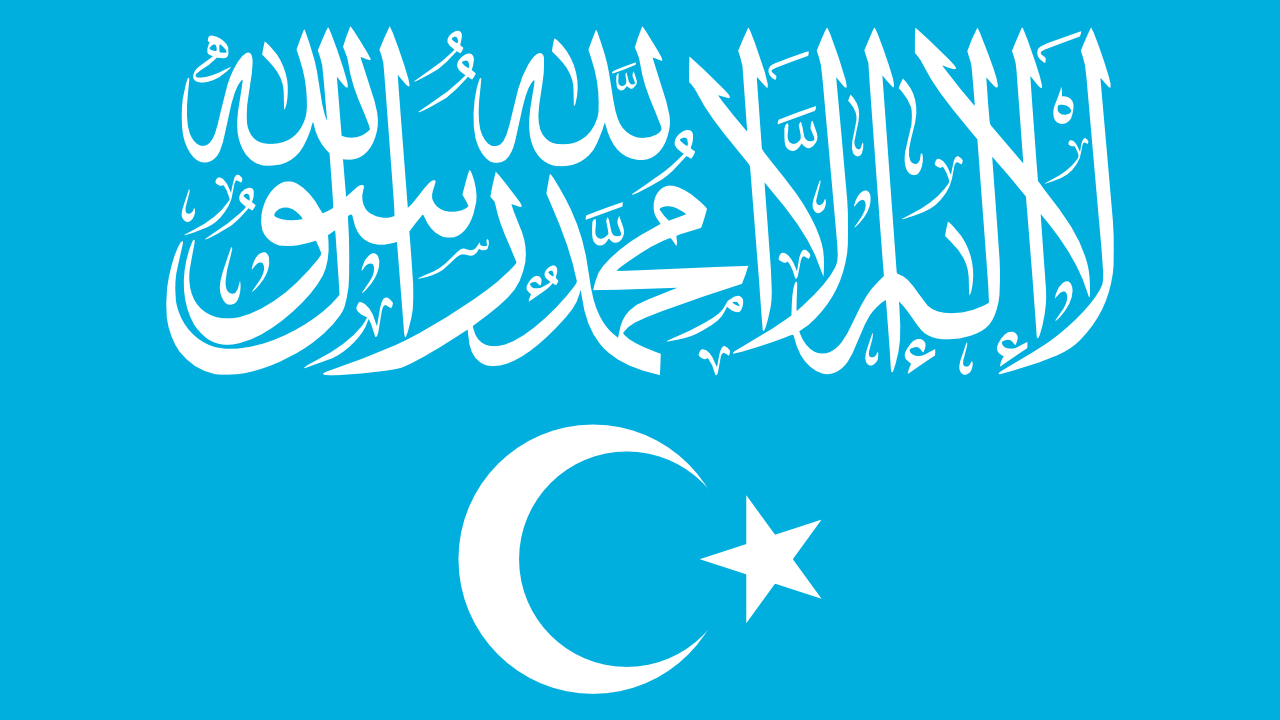
Intelligence Command Center // Terror group profile //

East Turkestan Islamic Movement (ETIM)

East Turkestan Islamic Movement (ETIM/ETIP)

area of operation

Indian Subcontinent, Central Asia

Specific AOR

Badakhshan (Afghanistan), Idlib (Syria), and the Wakhan Corridor

Volatility Index

VI-3 – Moderate

Ideological Alignment

al-Qaeda Central

force strength

1,500-3,000

Leadership

Led by Abdul Haq al-Turkistani (Shura-led)

Headquarters

Badakhshan Sector

SIGNATURES //

TECHNICAL PROFILE
Tier 3 - Mid-Tier / Standard Insurgent
OPERATIONAL SIGNATURE
Asymmetric / Terror-Focused
SPATIAL PROFILE
Alpine / Mountainous Sanctuary

Operational Brief //

The East Turkestan Islamic Movement (ETIM), which operates globally under its self-designated title, the Turkestan Islamic Party (TIP), requires evaluating a highly unique, dual-theater structure.

The organization is structurally divided between its Core/Khorasan wing (headquartered in Afghanistan under the overall emirship of Abdul Haq al-Turkistani, who sits on al-Qaeda’s executive Shura council) and its highly potent Syrian wing (historically aligned with Hay’at Tahrir al-Sham).

Following the fall of the Assad regime, the group’s Syrian wing underwent a radical institutional shift: in early 2025, it announced its official dissolution as an independent militia and was systematically integrated into the newly formed Syrian Army’s 84th Division,a foreign volunteer unit utilized by the transitional government in Damascus.

Leadership & Command Structure

  • Command Element: Operating under the long-standing leadership of Abdul Haq al-Turkistani (Emir). The group’s core leadership maintains historical allegiance (Bay’ah) to the al-Qaeda central command matrix while balancing complex operational relations within the contemporary Central Asian theater.
  • Leadership Doctrine: Dual-track management structure. The group maintains a tightly disciplined, battle-hardened cadre system inherited from the Syrian and historical Afghan theaters, combined with decentralized, clan-embedded cells across remote border zones.
  • Regional Management: Coordinated through specialized military and media committees (Sawt al-Islam). Command elements are split between a Syrian branch (historically active in Idlib) and the South/Central Asian wing, which directly interfaces with regional networks to manage recruitment, transit corridors, and logistics.

Regional Center-of-Gravity (Current Focus)

  • Primary Growth Theater: Northeastern Afghanistan, specifically focusing on the Wakhan Corridor and the rugged, non-demarcated border zones of Badakhshan province. This positioning places them directly adjacent to China’s Xinjiang province.
  • Operational Hub: Remote training sanctuaries and hidden staging facilities embedded within the high-altitude valleys of Badakhshan. These bases are utilized for advanced arms training, ideological drilling, and coordinating regional smuggling networks.
  • Secondary/Support Theaters: Logistical transit lines and clandestine recruitment pipelines cutting through Tajikistan, the Ferghana Valley intersection, and emerging operational links into the ISKP network in northern Afghanistan.

Intelligence Behavioral Matrix (TRAP-18/VERA-2R)

  • Volatility Index: Moderate to High. While historically constrained by the Afghan Taliban to prevent direct cross-border friction with Beijing, individual factions are exhibiting high volatility due to potential shifts in group alliances.
  • High-Risk Indicators: Operational friction caused by the Afghan Taliban’s diplomatic and economic engagement with China, creating a strong push for radicalized ETIM elements to shift allegiances and merge personnel with ISKP. This convergence exponentially increases the risk of targeted attacks against commercial infrastructure and diplomatic assets.

Disruption Vector Matrix //

vector //

vulnerability //

disruption strategy //

logistics //

Complete dependence on high-altitude transit chokepoints and vulnerable mountain passes across Badakhshan and the Wakhan Corridor to sustain bases.

Coordinated Border Denial: Expand integrated perimeter sensor arrays and station persistent high-altitude ISTAR assets over critical border corridors to intercept and neutralize transit cells.

financial //

Reliance on transnational gray-market smuggling networks, illicit gem extraction, and deep integration into informal financial exchanges across Central Asia.

Targeted Asset Interdiction: Deploy algorithmic monitoring against informal currency networks and commercial front companies laundering assets within regional trade centers to choke the operational supply pipeline.

leadership //

Significant underlying tension between the legacy al-Qaeda-aligned leadership core (prioritizing strategic patience) and younger field operatives frustrated by Taliban restrictions.

Information Operations: Run targeted cognitive operations to amplify ideological and strategic fractures, framing regime-imposed constraints as a betrayal of their core objective to destroy group internal cohesion.

Threat Matrix //

OPERATIONAL REACH: 3 – Medium (Regional Network)
KINETIC CAPABILITY: 4 – High (Advanced SALW/Thermal Optics/Coordinated Ambushes)
LOGISTICAL RESILIENCE: 4 – High (Sustained Cross-Border Safe Havens/Diversified Revenue)
INFORMATION INFLUENCE: 3 – Medium (Basic Digital Presence/Uncoordinated Channels)

OVERALL THREAT INDEX
3.50

operational reach //

Theater/Regional (Bifurcated). ETIM/TIP manages two disconnected geographic hubs. The Core command operates out of northern and eastern Afghanistan (Badakhshan, Kunduz, Kabul), maintaining traditional cross-border links with Central Asian networks. The Syrian wing, now institutionalized within the Levant, controls strategic pockets around Jisr al-Shughur and Idlib, extending its reach into coastal Latakia and Tartus. While its ultimate strategic objective remains force projection into China’s Xinjiang region, its actual kinetic reach is constrained within its host theaters.

kinetic capability //

Conventional Convergence (Syria) / Advanced Asymmetric (Core). In the Levant, TIP functions effectively as a conventional light-to-medium infantry force. Through its integration into the Syrian military’s 84th Division, its cadres wield heavy armor, captured state artillery, anti-tank guided missiles (ATGMs), and weaponized drone architectures. In the Khorasan theater, the core remnants maintain a more traditional asymmetric profile, possessing advanced post-2021 infantry gear, night-vision equipment, and high-tier IED fabrication modules used primarily for defensive containment and local tactical support.

logistical resilience //

State-Integrated (Syria) / Safe Haven Protected (Core). The group’s financial and physical pipelines are highly secure but dependent on its political hosts. In Syria, the transitional government’s decision to absorb the group into its formal military structures shields them from standard Western counter-terrorism interdiction. In Afghanistan, the core leadership is protected by deep legacy ties with the de facto authorities, allowing them to maintain hidden training camps in Badakhshan despite intense diplomatic pressure from Beijing. Financing is supplemented by long-standing charitable front networks based in Turkey and the Euro-Mediterranean zone.

information influence //

Institutionalized. Operating via its central media organ, Islam Awazi (Voice of Islam), the group publishes high-production-value video and audio content primarily in the Uyghur language, alongside Arabic and Turkish translations. Following its tactical victories in Syria, its propaganda has shifted toward long-term strategic messaging, explicitly warning of a pivot back to its foundational anti-China objective while using its current state-sanctioned legitimacy in Damascus to drive transnational recruitment across the Uyghur diaspora.

analytical note //

ETIM/TIP represents a complex case study in terrorist evolution. By trading its non-state insurgent status in Syria for formal integration into the transitional state’s military architecture, the group has successfully insulated itself from external elimination. This dual-theater setup allows the al-Qaeda-linked core command in Afghanistan to preserve an elite, combat-hardened cadre in the Levant that can be re-mobilized or externally deployed when regional geopolitical conditions shift.

Kinetic and Multi-domain capabilities //

Primary adversary//

China (MSS), Afghan Taliban (Under political pressure), Syrian Arab Army

weaponry focus

Precision Rifle
Atgm
Light Mortar

Geopolitical and Logistics //

financial vectors

Kfr
Aq Warchest
Local Funding

RESTRICTED: STRATEGIC DISRUPTION //

Diplomatic pressure on host nations; interdiction of cross-border smuggling routes in the Wakhan

affiliated entities //