
Intelligence Command Center // Terror group profile //

Turkestan Islamic Party (Syrian Wing)

East Turkestan Islamic Movement (ETIM/ETIP)

area of operation

Specific AOR

Volatility Index

VI-1 – Static

Ideological Alignment

al-Qaeda Central

force strength

Leadership

Headquarters

SIGNATURES //

TECHNICAL PROFILE
Tier 1 - State Actor / Peer Rival
OPERATIONAL SIGNATURE
Conventionalization (State-Model)
SPATIAL PROFILE
State-Level / Fixed Administration

Operational Brief //

Historically established in 2012 as an offshoot of the core Uyghur-dominated Turkestan Islamic Party (TIP/ETIM) based in the Afghan-Pakistani theater, the Syrian wing functioned for over a decade as one of the most cohesive, shock-infantry elements operating in northwestern Syria. Settling primarily in the strategic Idlib enclave of Jisr al-Shughur, the group maintained a deep, ironclad operational alliance with Hay’at Tahrir al-Sham (HTS), serving as a frontline vanguard during major conventional offensives against the Bashar al-Assad regime.

The group’s operational status underwent a definitive mutation following the collapse of the Ba’athist regime in December 2024. During the January 29, 2025, Syrian Revolution Victory Conference in Damascus, the Syrian wing of the TIP formally announced its dissolution as an independent militant entity.

Rather than being disarmed or expelled, the group was systematically integrated into the new state infrastructure under President Ahmed al-Sharaa. Through mid-2026, the TIP functions as a major, formalized component of the regular Syrian military, having morphed into three cohesive brigades within the newly established 84th Division of the Syrian Armed Forces. While this provides the transitional government with a battle-hardened loyalist force, it has placed Damascus under severe international diplomatic strain, particularly with Washington and Beijing.

Leadership & Command Structure

  • Command Element: Historically overseen by veteran Uyghur commanders deployed from the Afghanistan-Pakistan theater (including Abu Omar al-Turkistani and later Abu Omar/Kawsar). In early 2025, Major General Abdulaziz Dawood (alias Zahid) was appointed Emir of the Syrian branch. Following the post-Assad structural reorganization, individual commanders have been assigned formalized commissions within the transitional defense framework.
  • Leadership Doctrine: Pragmatic, combat-tested alignment with the central ruling authority. TIP-Syria historically maintained an unyielding battlefield and administrative alliance with Ahmad al-Sharaa (formerly Abu Mohammad al-Julani) and Hay’at Tahrir al-Sham (HTS), consistently executing its vertical command directives during factional consolidations.
  • Institutional Integration: Following the 2024 collapse of the Ba’athist regime, TIP officially announced its structural dissolution alongside other armed opposition factions. The organization’s approximate 4,000–5,000 battle-hardened combatants were formally regularized into the Syrian Army’s newly created 84th Division,a specialized formation composed predominantly of foreign volunteers and non-Syrian cadres.

Regional Center-of-Gravity (Contemporary Status)

  • Primary Operational Theater: Northern and Western Syria, moving from historical insurgent enclaves to formal state defense deployment zones.
  • Historical Hub: The strategic border city of Jisr al-Shughur in the Idlib Governorate, which served for a decade as the group’s de facto administrative, familial, and logistical fortress.
  • Contemporary Realignment: Operating under the authority of the Ministry of Defense in Damascus, division units are deployed along crucial geo-strategic frontiers,including the Latakia coastal ridges, Aleppo perimeter zones, and central transit tracks,acting as shock-infantry and frontline garrison forces for the transitional administration.

Intelligence Behavioral Matrix (TRAP-18/VERA-2R)

  • High-Risk Indicators: Deep involvement in high-yield attritional infantry maneuvers and complex urban assaults; implication in severe intercommunal and sectarian violence during transitional vacuum periods (including targeted operations in Alawite coastal sectors); and the retention of latent transnational ambitions, with core leadership publicly stating a long-term strategic intent to pivot focus toward the Chinese state apparatus now that the Syrian theater has consolidated.
  • Volatility Index: High (Regulated State-Sanctioned Kinetic Capability). While the group has stepped away from non-state insurgent behaviors to secure domestic institutional placement, its cadres maintain an exceptionally aggressive offensive strike profile.

Disruption Vector Matrix //

vector //

vulnerability //

disruption strategy //

logistics //

Complete structural dependence on the Syrian Transitional Government’s defense budget, supply lines, and state-sanctioned base infrastructure.

Institutional Conditioning: Damascus utilizes formal military regularization (the 84th Division) to systematically leash and control the foreign legion, restricting independent ammunition procurement and limiting cross-border movement.

financial //

Transitioning from independent gray-market funding and asset extraction to centralized state salaries and localized administrative businesses.

Diplomatic Leverage & Chokepoints: External powers (specifically Beijing) condition bilateral Levant economic investments and reconstruction aid on Damascus aggressively auditing, suppressing, and permanently containing Uyghur militancy within state boundaries.

leadership //

Risk of secondary radicalization or factional drift into subterranean networks (like ISIS) if the state apparatus attempts forced deportation or scales back integration benefits.

Counter-Infiltration & Monitoring: Continuous signals intelligence (SIGINT) overwatch by international partners to identify non-compliant sub-cells trying to maintain clandestine networks separate from the 84th Division command structure.

Threat Matrix //

OPERATIONAL REACH: 4 – High (National/Cross-Border Infiltration)
KINETIC CAPABILITY: 4 – High (Advanced SALW/Thermal Optics/Coordinated Ambushes)
LOGISTICAL RESILIENCE: 4 – High (Sustained Cross-Border Safe Havens/Diversified Revenue)
INFORMATION INFLUENCE: 2 – Low (Localized Printed/Audio Leaflets)

OVERALL THREAT INDEX
3.50

operational reach //

Sovereign-Scale Deployment (From Enclave to National Frontiers). The TIP’s historical isolation within the rugged confines of Idlib and the Latakia mountains has been entirely broken. As a direct component of the regular Syrian Army’s 84th Division, the group’s brigades are deployed nationally under central command directives out of Damascus. Through early 2026, their units have been positioned along the coastal ridges of Latakia, Tartus, and central transit vectors. Furthermore, declassified theater troop movements indicate that TIP brigades were deployed as part of the state’s January 2026 offensive into the northeast, participating in the pacification and integration of former SDF territories in Raqqa and Deir ez-Zor.

kinetic capability //

Conventional Light-Shock Infantry / State-Sanctioned Firepower. Wielding an active, integrated force estimated at 3,000 to 4,000 battle-hardened fighters, the group possesses exceptional kinetic lethality. By dropping its independent banner to don official Syrian military uniforms, the TIP transitioned from an asymmetric guerrilla force into a conventional light-infantry shock element backstopped by state-provided armor, artillery, and heavy logistics pipelines. However, its kinetic integration features severe human rights challenges; international verification monitors confirmed that TIP elements integrated into the 84th Division were directly implicated in a spate of retributive intercommunal violence and property destruction against Alawite civilian communities along the coast.

logistical resilience //

State-Sustained / Insulated Institutional Pipeline. The TIP has completely abandoned its legacy reliance on covert transnational smuggling corridors and cross-border grey-market networks to maintain its material supply. Its operational overhead, ammunition reserves, heavy hardware procurement, and personnel salaries are now structurally guaranteed by the formal defense budget and state supply structures of the Syrian Ministry of Defense. While this integration insulates the group from traditional counter-terrorism financial blockades, it faces localized, precision disruption; the U.S. military has maintained a targeted drone and air-interdiction envelope, executing precision strikes on foreign jihadist command figures who resist state command codes.

information influence //

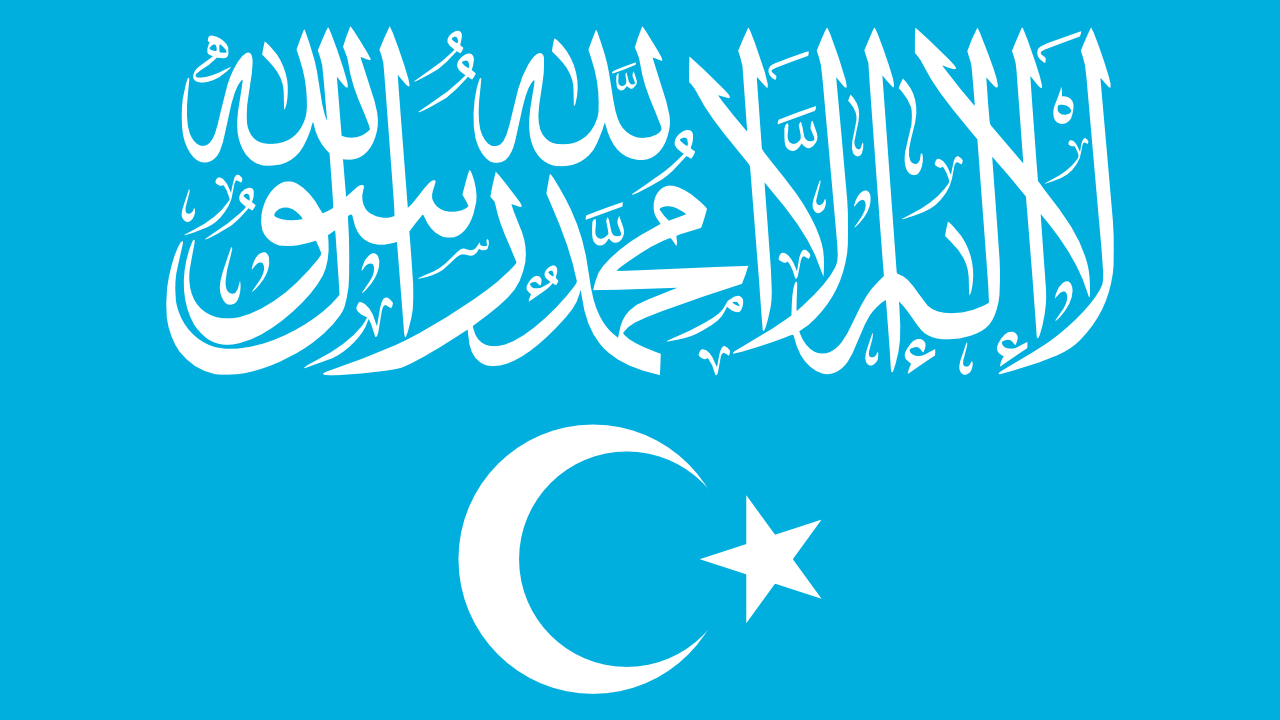
Muted / Sovereign Subordination & Enforced Silence. The group’s information and propaganda apparatus has been severely degraded and restricted by state mandate. Historically, the TIP utilized its Voice of Islam media organs to distribute high-definition videos featuring the blue East Turkestan flag to promote global jihad and anti-Chinese sentiment. Through mid-2026, the Damascus administration has enforced an ironclad censorship regime over the group, banning independent digital media outputs and threatening immediate execution or incarceration for any foreign brigade that releases unauthorized political or ideological statements that could jeopardize Syria’s external diplomatic normalization or economic ties.

analytical note //

The Turkestan Islamic Party’s Syrian Wing represents the definitive case study of a foreign fighter legion successfully “leashed” and repurposed to serve the state-building ends of a transitional government. By preserving the internal command structure of the TIP while absorbing it into the 84th Division, President Ahmed al-Sharaa has secured a highly disciplined, politically dependent shock-force that lacks local tribal ties—making them the ideal tool for domestic suppression and internal security reinforcement, as demonstrated during the crushing of the April 2026 Ba’athist coup attempt in Damascus. However, this strategy acts as a critical diplomatic barrier. The presence of thousands of Uighur militants within the formal Syrian state apparatus remains an absolute red line for Beijing and a primary point of friction with Washington, creating a structural reality where Damascus must continuously choose between retaining its most reliable frontline infantry or securing the comprehensive international recognition and reconstruction capital required to stabilize the state long-term.

Kinetic and Multi-domain capabilities //

Primary adversary//

weaponry focus

DATA PENDING

Geopolitical and Logistics //

financial vectors

DATA PENDING

RESTRICTED: STRATEGIC DISRUPTION //

affiliated entities //