
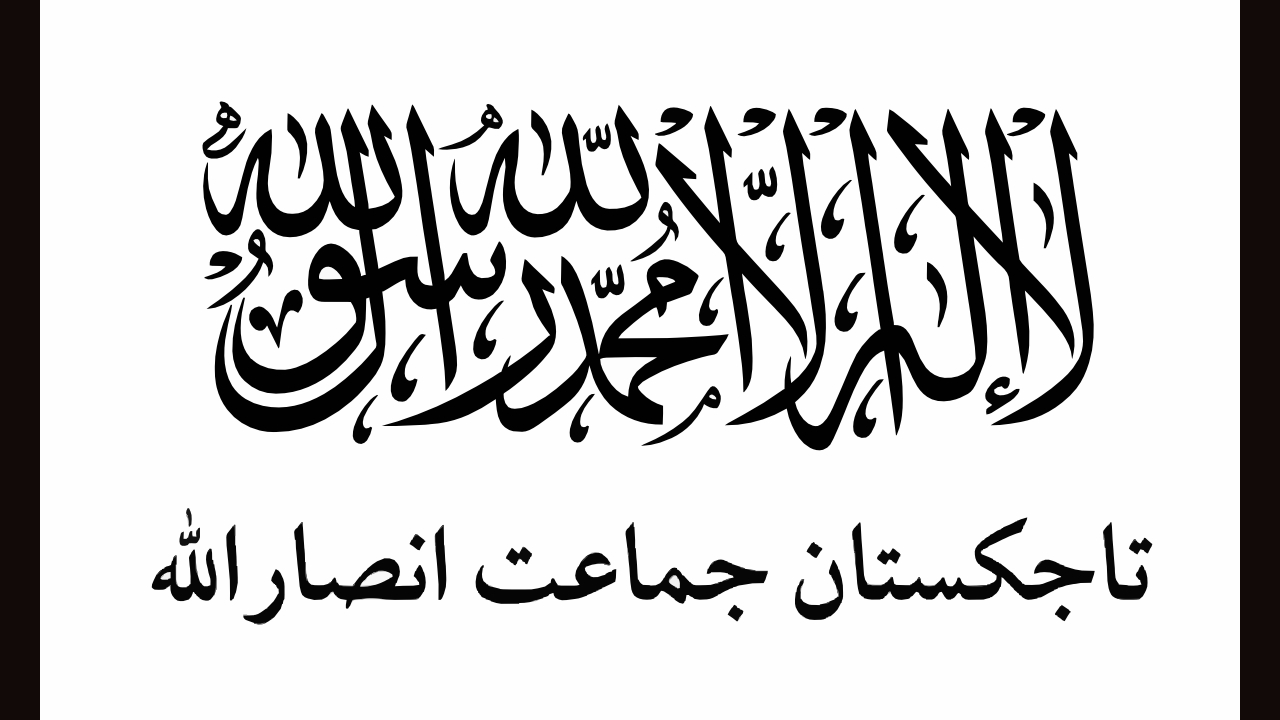
Intelligence Command Center // Terror group profile //

Jamaat Ansarullah (Tajikistan)

Jamaat Ansarullah Tajikistan

area of operation

Specific AOR

Volatility Index

VI-1 – Static

Ideological Alignment

al-Qaeda Central

force strength

Leadership

Headquarters

SIGNATURES //

TECHNICAL PROFILE
Tier 1 - State Actor / Peer Rival
OPERATIONAL SIGNATURE
Conventionalization (State-Model)
SPATIAL PROFILE
State-Level / Fixed Administration

Operational Brief //

A highly specialized ethnic proxy network operating under strict systemic manipulation. Founded in 2006 by Amriddin Tabarov and comprised of dissident Islamist factions who rejected the 1997 armistice ending the Tajikistani Civil War, the group’s strategic utility has fundamentally evolved post-August 2021.

Operating under the current field command of Mahdi Arsalan (Muhammad Sharifov), Jamaat Ansarullah functions as a controlled geopolitical instrument of the de facto authorities in Kabul (IEA). The IEA leverages the group as a deniable cross-border coercive tool against the Republic of Tajikistan while simultaneously enforcing strict spatial limits on them to manage back-channel diplomatic and intelligence negotiations with Dushanbe and Moscow.

Leadership & Command Structure

  • Command Element: Currently directed by senior operational commanders, most notably field leader Mahdi Arsalan (born Amriddin Tobarov’s lineage footprint). The command structure historically transitions from founder Amriddin Tobarov toward specialized young commanders driving front-line deployments in Northern Afghanistan.
  • Leadership Doctrine: Ethno-nationalist Islamist militancy featuring direct integration within larger host networks. The leadership emphasizes absolute tactical loyalty to the Afghan Taliban core while preserving narrow, mono-ethnic operational focus targeting Dushanbe.
  • Regional Management: Operating out of base networks in Northern Afghanistan. The group exercises functional control over assigned security zones, using localized command platforms to manage cross-border infiltration units and courier pipelines bypassing regional counter-terrorism frameworks.

Regional Center-of-Gravity (Current Focus)

  • Primary Growth Theater: The porous, high-altitude Afghanistan-Tajikistan border littoral, specifically exploiting deep historical insurgent networks spanning Badakhshan and the Rasht Valley.
  • Operational Hub: Northern Badakhshan province, Afghanistan. Following tactical alignment shifts, the group’s cadres were entrusted by host authorities with partial border security oversight, using this sovereign interface to run training camps and safeguard logistic assets.
  • Target Theater: The sovereign territory of the Republic of Tajikistan, focusing kinetic and subversive pressure on the border districts of Darvoz, Khatlon, and Sughd to destabilize the central government under Emomali Rahmon.

Intelligence Behavioral Matrix (TRAP-18/VERA-2R)

  • High-Risk Indicators: Advanced conventional military integration, including the absorption of fighters into formal security frameworks and the acquisition of advanced Western weaponry, tactical combat gear, and communications arrays; and a unique ideological pivot that synthesizes strict radical Salafism with intense Tajik ethno-nationalism.
  • Volatility Index: High. The group maintains an active, lethal subversion profile, running high-risk cross-border incursions, smuggling homemade explosives, and preparing sabotage cells for urban deployment inside Tajikistan.

Disruption Vector Matrix //

vector //

vulnerability //

disruption strategy //

logistics //

Absolute dependence on remote, high-altitude training camps in northern Afghanistan and specific infiltration lanes along the non-demarcated border rivers.

Border Cordon & Precision Interdiction: Deploy persistent, low-temperature thermal imaging arrays along the Panj river corridors, combined with fortified border-guard screens to detect and neutralize infiltration cadres before line-crossing.

financial //

Vulnerability to complete isolation within the Afghan theater, relying heavily on host-sanctioned border extraction loops and external diaspora remittance pipelines.

Financial Pipeline Strangulation: Implement strict regulatory audits on cross-border money transfer applications and regional hawala nodes operating between the Khatlon/Sughd regions and foreign logistics centers.

leadership //

Extreme reliance on a small, tight-knit core of veteran commanders (e.g., Mahdi Arsalan), leaving the group highly exposed to command vacuum failures if top-tier personnel are degraded.

SIGINT Targeting & Intelligence Cleavage: Maximize signal intelligence (SIGINT) over border communications lines to locate command cells, while running bilateral intelligence operations to pressure host networks into containing the group’s external activities.

Threat Matrix //

OPERATIONAL REACH: 2 – Low (Provincial/Disrupted)
KINETIC CAPABILITY: 2 – Low (Basic SALW/Sabotage)
LOGISTICAL RESILIENCE: 3 – Medium (Localized Taxation/Smuggling Links)
INFORMATION INFLUENCE: 2 – Low (Localized Printed/Audio Leaflets)

OVERALL THREAT INDEX
2.25

operational reach //

Tactical / Border-Localized. The group’s physical infrastructure is structurally confined to the rugged, porous mountain corridors of northern Afghanistan—specifically the Badakhshan, Kunduz, and Takhar provinces adjacent to the Panj River line. While its strategic objective is the complete overthrow of President Emomali Rahmon’s regime to establish an Islamic emirate in Tajikistan, its actual force projection is strictly modulated by the IEA, limiting operations to sporadic cross-border incursions.

kinetic capability //

Low-Tech Asymmetric / Specialist. Wielding an estimated fighting force of 100 to 400 active cadres—predominantly second-generation Tajikistani citizens—the group cannot execute sustained conventional offensives or capture territory inside Tajikistan. However, its specialist lethality remains potent: the IEA equipped the group with captured Western infantry hardware, night-vision optics, and tactical vehicles. This capability was demonstrated via a high-stakes December 2025 cross-border infiltration attempt in the Shamsiddin Shohin district and coordinated early-2026 drone strikes targeting foreign infrastructure contractors in northern frontier zones.

logistical resilience //

Structured (Host-Dependent). Jamaat Ansarullah exhibits a durable but entirely conditional survival matrix. Following the 2021 Taliban takeover, the group was handed partial de facto border security and custom policing duties along the frontier. The UN verifies that they maintain active training camps in Badakhshan. However, this infrastructure is highly vulnerable to geopolitical bargaining: following back-channel security summits between IEA intelligence and Tajik security services, the IEA selectively restricts the group’s inter-district movements and weapon distribution to prevent them from slipping into the ranks of ISKP.

information influence //

Rudimentary. The group’s independent media operations are restricted, utilizing encrypted Telegram and closed chat syndicates to disseminate propaganda tailored to the ethnic Tajik diaspora in the Rasht Valley and Sughd regions. Their narratives violently ridicule the secular Dushanbe administration as a taghut (idolatrous) puppet of the Russian 201st Military Base. Despite these efforts, their media output has been largely overshadowed by ISKP’s Al-Azaim multilingual architecture, which actively aims to exploit and absorb Jamaat Ansarullah’s radicalized recruitment base.

analytical note //

Jamaat Ansarullah presents a baseline study in the “containment-or-leverage” proxy doctrine of the Islamic Emirate. By placing ethnic Tajik militants directly on the northern frontier, Kabul successfully signals a latent asymmetric threat to Tajikistan, effectively discouraging Dushanbe from providing open material support to anti-Taliban resistance movements like the National Resistance Front (NRF). However, this host dependency acts as a structural ceiling: if the de facto Afghan authorities achieve formal bilateral transit and economic normalizations with Central Asian states, Jamaat Ansarullah’s operational utility will contract, leaving its cadres vulnerable to systemic disarmament or targeted extradition.

Kinetic and Multi-domain capabilities //

Primary adversary//

weaponry focus

DATA PENDING

Geopolitical and Logistics //

financial vectors

DATA PENDING

RESTRICTED: STRATEGIC DISRUPTION //

affiliated entities //