Introduction
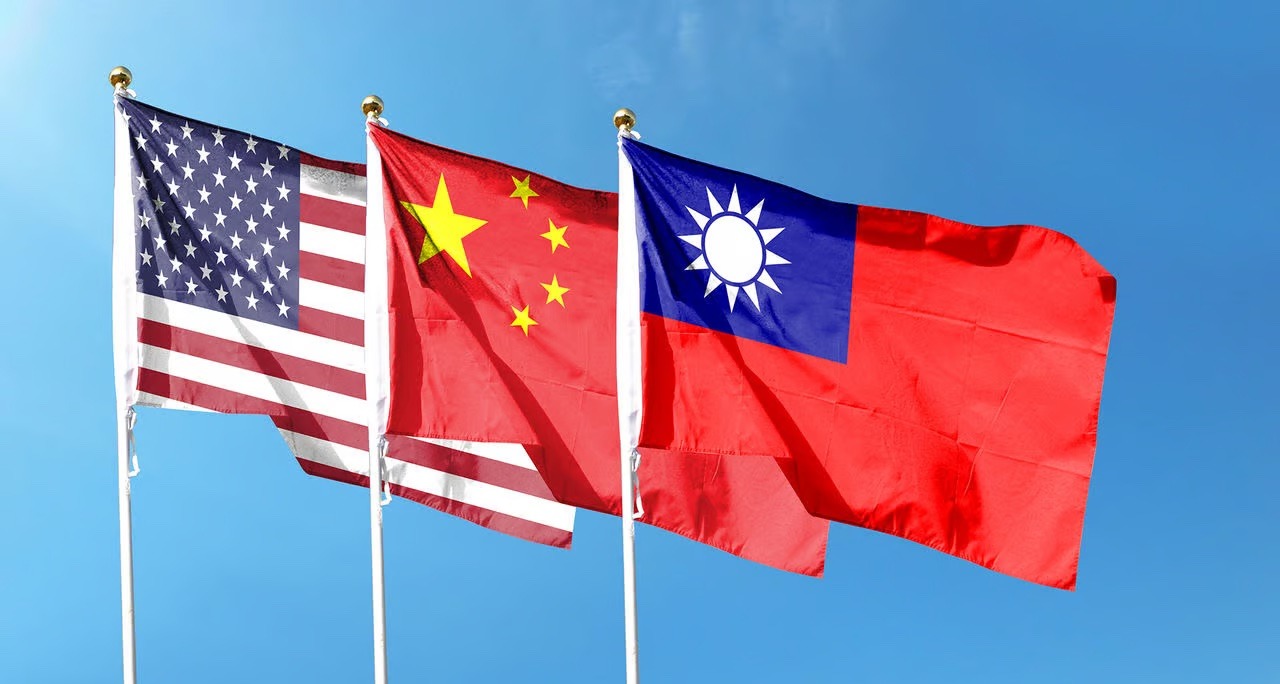
The relations of Taiwan date back historically, as it became an island contested by the Chinese for centuries to bring under its control. The struggle between the two states was a result of two political ideologies, fighting for their righteous claims, in order to prevail in the region. The Taiwan issue has long been a complex and contentious topic in East Asia, due to the conflicting claims of both China and Taiwan.
China considers Taiwan as an integral part of its territory, and has not ruled out the use of force to achieve reunification, while Taiwan operates as a separate, self-governing entity with its own government, military, and international relations.
The United States, as a key player in the region, has a significant interest in the Taiwan issue and has formulated policies to address the conflicts surrounding it.
This paper explores the Taiwan issue and analyzes the United States’ policy towards the conflicts, examining the historical background, contemporary dynamics, strategic implications and potential challenges that encompass the issue. The Taiwan issue has been discussed under the theoretical perspective of Power Transition Theory, as proposed by Kenneth Organski, where powerful states become more powerful and become assertive in the region, in order to become the regional hegemon, therefore changing the dynamics of the region and becoming more and more aggressive.
Background
Historically, the Strait of Taiwan, dating back to the 17th century, has been controlled by imperial dynasties of China, known as the Qing Dynasty. Later, it was controlled by the Japanese, who lost control after being defeated in World War II. The Nationalists lost to the Communists in China after the civil war, and eventually escaped/fled to the Island of Formosa, also known as the Strait of Taiwan. The Island holds a great deal of economic importance, being the bone of contention for both the Communists and Nationalists, where its growing significance was making it more powerful.
East Asia has been home for conflict between Japan and China, which encompassed the issue of China and Taiwan, gaining more potential in every domain to call itself as an independent state, free from the Chinese influence. The tensions started growing increasingly, where Taiwan attempted to move away from China and become more independent, causing great resentment with China. China believes Taiwan is part of China and the People’s Republic of China (PRC) rightly deserves to rule the country.
In the early 1950s, tensions began between China and Taiwan, leading to the People’s Liberation Army of China attacking Taiwan on numerous occasions to capture its territory. The United States has fully supported Taiwan, also known as the Republic of China, both economically and militarily.
This turned East Asia into a power struggle and conflict for regional legitimacy.
Theoretical Framework
Kenneth Organski proposed the power transition idea in his book World Politics.
The theory of power transition focuses on two fundamental postulates that identify the relationship between emerging and hegemonic powers.
The theory of power transfer is concerned with the major increase in national power of a large country, as a result of its genuine and rapid economic development. It also addresses how rising power affects the international order, namely the dominant nation’s hegemonic stance.
Throughout history, conflicts between powerful states have stemmed from the transfer of power and attempts to maintain, or reform, the international order, often leading to catastrophic wars. These clashes have generally resulted in changes in worldwide leadership and the reorganization of global systems.
In his book, War and Change in World Politics, another great strategist, Robert Gilpin, expands on this thesis. He claims as nations grow and develop, they will inevitably come into contact with the dominant nation and its allies, resulting in confrontations over the rules that govern the current international system, the division of influence, and even territorial boundaries. If these conflicts cannot be settled peacefully, war between the dominant power and the challengers may erupt, which Gilpin refers to as “hegemonic war.” This is the fundamental means through which major countries attempt to settle their conflicts or construct a new international order. Unfortunately, throughout history, every global system has been the result of territorial, economic, and diplomatic changes that follow hegemonic struggles.
The conflict between the United States and China over Taiwan is a complex subject that may be examined utilizing power transition theory.
China regards Taiwan as part of its territory, and has long sought reunification with the mainland. The US has maintained a strong relationship with Taiwan and has committed to support it against Chinese aggression. As China’s economic and military might has grown in recent years, so have its territorial claims, raising the prospect of conflict with the US.
According to power transition theory, China’s growth, as a global power, threatens the United States’ supremacy in the international system. As China’s power grows, it may challenge America’s hegemony and strive to control the region. This is already evident in China’s efforts to strengthen its military capabilities and expand its territorial claims in the South China Sea.
In Taiwan’s case, China’s goal to reunify the island with the mainland is motivated partly by the urge to display power and assert regional supremacy. This puts the United States in a difficult position with its pledged support to Taiwan against any Chinese aggression. As China’s military capabilities expand, the possibility of a clash with the United States over Taiwan grows.
According to the power transition theory, the current international order is unstable and prone to violence, as powerful states seek to retain or shift the current balance of power. China’s growth, as a global power, has already strained the existing international order, and its plans to reunify Taiwan could further destabilize the region. It is also possible that a peaceful power transition will take place.
The United States and China might diplomatically participate to resolve the Taiwan issue, such as recognizing Taiwan’s independence or negotiating a peaceful reunification.
China’s Claims Over Taiwan
As China recovered from economic crises caused by civil war and colonization, its next ambition was the integration of Taiwan, Hong Kong, and Macau into the mainland. Hong Kong and Macau were increasingly merged, however an issue occurred during Taiwan’s integration.
The Chinese government established the ‘One China’ policy, and the policy towards Taiwan is based on this premise, which has been in force since 1979. Comrade Deng Xiaoping started the strategy of peaceful reunification, and the concept of “one country, two systems” evolved gradually.
The Chinese government has implemented the basis for peaceful reunification, as well as the policy of “one country, two systems.” It consists of four major clauses, namely:
- China aims to achieve peaceful reunification, but will not rule out the use of force.
- It will vigorously promote economic, cultural, and people-to-people interactions between both sides of the Taiwan Strait, and will develop direct trade, postal, air, and shipping services.
- China intends to achieve reunification by peaceful means, and any issue may be handled under the One-China Principle. Following reunification, the strategy of “one country, two systems” will be implemented, with the Chinese mainland continuing to use its socialist system and Taiwan using its capitalist system for an extended period of time. Taiwan will have a great degree of autonomy, with no Central Government military or administrative personnel stationed there.
- Most importantly, the resolution of the Taiwan issue is a Chinese domestic concern that should be settled by the Chinese alone, and international forces should not intervene.
In recent years, the Chinese government’s “One China” policy has been broadly supported by governments, and regards Taiwan a component of China, represented by the People’s Republic of China (PRC). The PRC accuses the US of abandoning its long-standing acceptance of the PRC position, in order to increase collaboration and engagement with the state of Taiwan. In reality, the “One China” policy does not take a position on Taiwan’s sovereignty, but rather respects the Chinese perspective, recognizing the People’s Republic of China as the Chinese government.
However, the US maintains the right to continue unofficial relations with Taiwan, as Taiwan’s official position is an independent country, the Republic of China (Taiwan), which includes Taiwan, Penghu, Kinmen, Matsu, and other neighboring islands.
US Policy Towards Taiwan: The Shanghai Communiqué
After the 1950 Korean War, United States relations with China deteriorated immensely and later it imposed sanctions over PRC, banned all trade with the country. In the 1960s, the relations got better with time when the Soviets attacked Czechoslovakia and ultimately had border clashes with China. The US took sides with China, in order to counter the growing Soviet threat. The Chinese were more favorable for the US, so they could use it to disentangle itself from the Vietnam War.
In July 1971, Henry Kissinger, as National Security Advisor, visited China, to preface President Richard Nixon’s February 1972 visit to mainland China, signing the Shanghai Communiqué.
In the Shanghai Communiqué, the United States acknowledges that Taipei and Beijing agree that there was only One China. The US also reaffirmed that the two states settle the dispute between them more peacefully where it can ensure its own interests.
The Normalization Communiqué 1979
In the 1970s, due to increasing Soviet influence, the United States and China, in order to curtail the Soviets, partnered to the favor for both their regional interests. That same year, President Jimmy Carter ordered arms sales to China to have self-defense against the Soviets, and vetoed a plan to sell 50 F-4 fighter bomber jets to Taiwan to gain the favor in Beijing. President Carter also declined the request of Taiwan to provide F-5G fighter jets to demonstrate complete loyalty to China.
In 1979, the United States stressed and agreed to establish diplomatic relations in order to reduce the conflict. They made it clear there is one China, and that Taiwan is part of it, while simultaneously maintaining diplomatic relations with Taiwan.
The Taiwan Relations Act and US Policy
In 1979, the US Congress passed the Taiwan Relations Act (TRA) to protect US interests in Taiwan. The TRA provided a coherent framework to assist and review the economic, cultural and other diplomatic relations between the US and Taiwan. The US decision to establish diplomatic relations with the People’s Republic of China rested on the expectation the future of Taiwan will be determined by peaceful means, and considered any effort to determine the future of Taiwan by non-peaceful means – including boycotts or embargoes – a threat to the peace and security of the Western Pacific region, and a grave concern to the United States.
The US Inclination to Taiwan
In 1987, Taiwan’s martial law was lifted, and the country held its first direct democratic presidential election in 1996.
Today, Taiwan is a fully functioning democracy that respects human rights and the rule of law, with an open economy, making it the ninth-largest trading partner of the United States in 2015, with bilateral trade between the two countries reaching $66.6 billion. Taiwan is an important Asian partner for the US, serving as a regional model of a stable, prosperous, free, and orderly society with strong institutions.
Under the Global Cooperation Training Framework, Taiwan and the United States collaborated to strengthen international humanitarian assistance, public health, environmental protection, energy, technology, education, and regional development. The US used innovative diplomatic strategies to establish deeper contact with the people of Taiwan, while retaining a relationship with China. The most innovative diplomatic measure was the United States not attempting to deepen relations between the two countries.
Conclusion
Taiwan has always relied on US security assistance to defend itself against Communist China. Despite the United States changing its formal diplomatic recognition from Taiwan’s Republic of China (ROC) to the People’s Republic of China (PRC) in 1979, Washington maintains strong military alliances with Taiwan. The United States’ security commitment is one of the most major influences on Taiwanese security, which is why President Joseph Biden has spoken on numerous occasions about his commitment to defending Taiwan. The US continues to maintain strong ties with Taiwan to counter any Chinese attempts to destabilize the region. The US has also made it clear to China to focus on the peaceful settlement of long-standing issues, rather than military sales to Taiwan.
Related Reading
- China Strategic Baseline Assessment – Part 2
- America Thinks Pakistan Should Do More
- Rawalpindi, Aabpara & Bani Gala – The PPP Factor
- Rawalpindi, Aabpara & Bani Gala – The New Delhi Factor
Sources
- “Appendix. Joint Communique Issued at Shanghai, 1972.” Island China, 1978, 247–252. doi:10.4159/harvard.9780674283527.c11
- Bellocchi, Nat. “US Policy toward a Changing Taiwan.” PhD diss., Fletcher School of Law and Diplomacy, n.d.
- Chan, Steve. China, the US and the Power-Transition Theory: A Critique. London: Routledge, 2007.
- China’s Already a Very Big Country. What Does It Want with Taiwan? ABC (Australian Broadcasting Corporation), August 11, 2022.
- Gilpin, Robert. War and Change in World Politics. Cambridge: Cambridge University Press, 1981.
- Ian, Chong J. The Many “One Chinas”: Multiple Approaches to Taiwan and China. Carnegie Endowment for International Peace, February 9, 2023.
- Lai, David, and Strategic Studies Institute. The United States and China in Power Transition. 2019.
- Lee, Bernice. The Security Implications of the New Taiwan. London: Routledge, 2013.
- “Normalization of Sino-American Relations.” Survival 21, no. 2 (1979). doi:10.1080/00396337908441803
- Song, Yann-huei. Managing Potential Conflicts in the South China Sea: Taiwan’s Perspective. World Scientific, 1999.
- The One-China Principle and the Taiwan Issue. China.org.cn.
- Williams, Lara. Why Taiwan Matters to China (and the Rest of the World). Investment Monitor, December 9, 2022.