Why This Series, Why Now
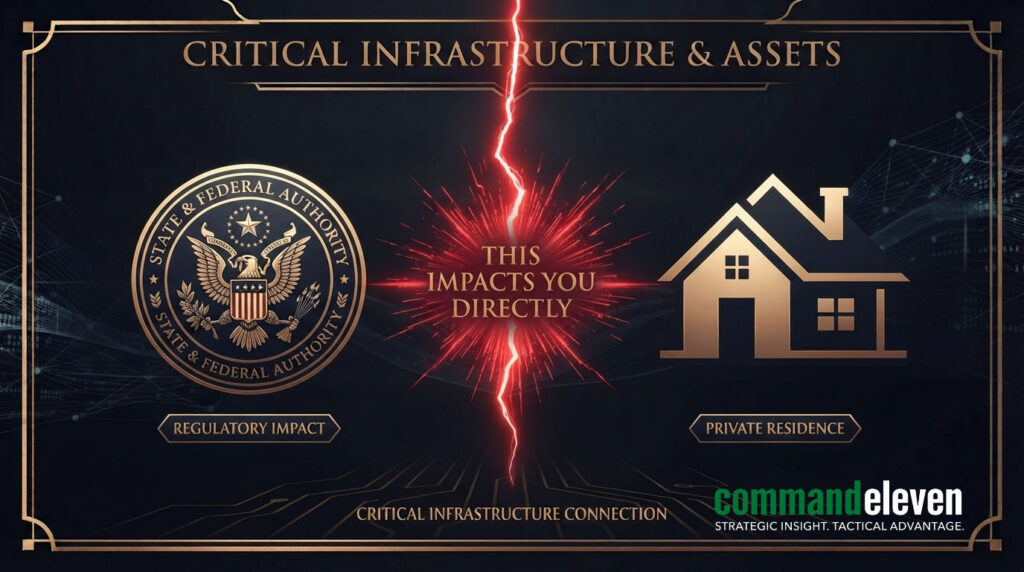
Most of CommandEleven Intelligence’s coverage operates at the state or federal level – proxy networks, sanctions regimes, terrorist financing architecture, the machinery states and organizations use against one another. Critical infrastructure is different. It is the one threat category in our coverage that lands directly on the individual reader: when a water utility, a power grid, or a communications network is compromised, the consequence isn’t an abstraction happening somewhere else – it’s a boil-water notice in your own town, a blackout in your own neighborhood, a bank transfer that doesn’t clear.
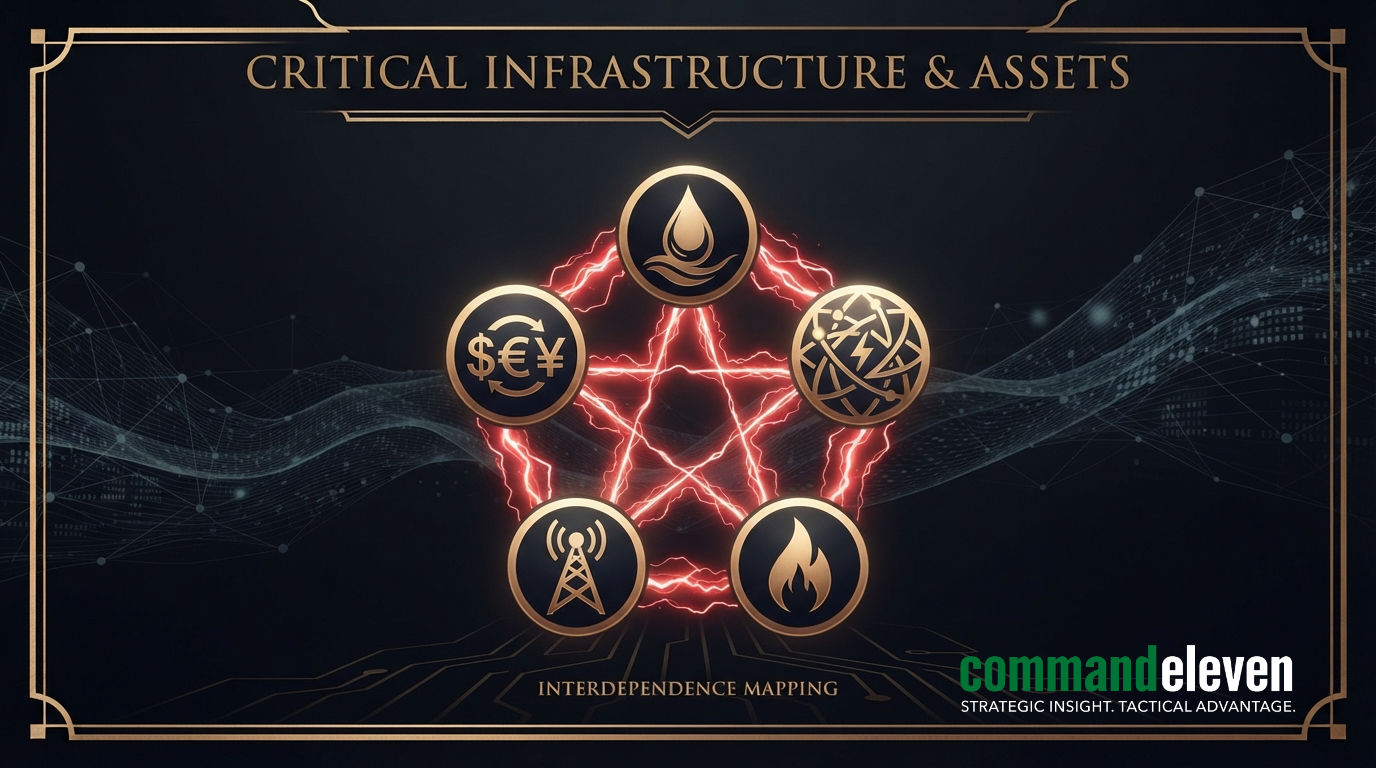
That directness is exactly why this series exists, and why it’s structured differently than a single sweeping white paper could be. Each sector examined here – water, electricity, natural gas, communications, and finance – has its own threat profile, its own attack surface, its own pace of government response, and its own level of documented compromise. Folding all five into one document would force a false uniformity onto systems that don’t actually share a single threat model. Water security concentrates heavily on exposed industrial control systems; the electrical grid faces a broader mix of physical, cyber, and increasingly drone-based threats; each sector in this series gets the space to be examined on its own terms.
What This Series Covers
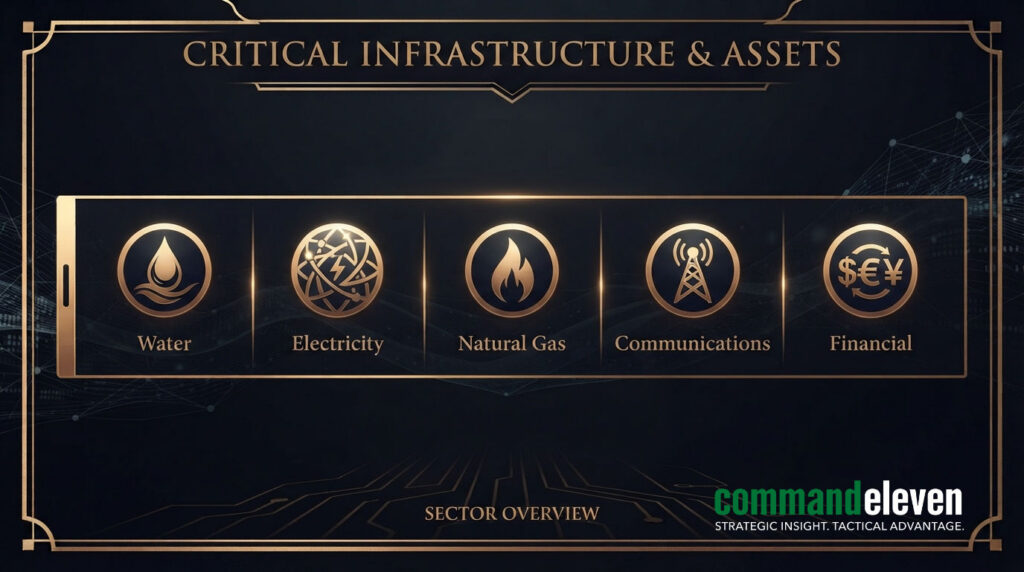
- Water Systems – the sector’s structural fragmentation across 150,000+ independently operated utilities, the confirmed July 2026 cyberattack campaign that hit at least 12 states, and what the government response has and hasn’t addressed.
- Electricity Grid – the documented pattern of physical, cyber, and drone-based attacks on substations and transmission infrastructure, and the aging-infrastructure investment gap underneath it.
- Natural Gas – pipeline and distribution system vulnerabilities, the sector’s own recent compromise history, and how it interacts with the electrical grid it substantially powers.
- Communications – telecommunications and internet backbone infrastructure as both a target in its own right and the enabling layer for coordinated attacks on every other sector in this series.
- Financial – banking and payment-system infrastructure, where the “attack” is as often data-integrity or access-denial as it is physical disruption.
Each installment follows the same structure: the sector’s real current state, where attack risk actually concentrates (not where headlines suggest it does), documented compromise to date, confirmed reporting on who is targeting the sector and how, what government protective measures are actually in place, and a practical, boxed-off section – modeled on standard FEMA and CDC household-preparedness guidance – on how an individual household can build meaningful resilience for a modest, defined budget.
A Note on Method
As with every CommandEleven Intelligence series, every claim here is confidence-tiered – CONFIRMED, ASSESSED, or explicitly excluded where sourcing does not meet either bar. This series draws a firm line between confirmed incidents and rhetorical alarm: critical infrastructure reporting is prone to both understatement (treating serious, documented compromise as routine) and overstatement (treating any reported intrusion as evidence of imminent system collapse), and this series aims to avoid both. The household-preparedness sections in each installment are deliberately kept separate from the threat analysis – general, publicly available emergency-preparedness guidance, not CommandEleven Intelligence’s assessment of any individual reader’s specific risk, and not contingent on any sensitive or classified information.