Key Judgments
- [CONFIRMED] – A single, recurring set of nation-state actors appears across four of the five sectors examined in this series: China-linked Volt Typhoon (electricity, natural gas) and Salt Typhoon (communications), alongside a documented 2011-2013 Chinese campaign against natural gas pipeline operators specifically. In every documented case, the assessed objective was pre-positioning for future disruption capability, not current sabotage, theft, or espionage in the conventional sense.
- [CONFIRMED] – Every sector examined in this series shares a structural fragmentation vulnerability, though the specific form varies by sector: ownership fragmentation in water (150,000+ independent systems) and electricity (3,000+ utilities), regulatory-authority fragmentation in natural gas (split TSA/FERC oversight with no unified framework until 2021), and vendor-ecosystem concentration in finance, where a small number of shared third-party providers create cascading risk across dozens of otherwise-independent institutions.
- [CONFIRMED] – Government response to these risks varies enormously by sector rather than following a consistent maturity curve: NERC’s Critical Infrastructure Protection standards impose mandatory, audited requirements on the electrical grid; water infrastructure operates under a largely voluntary framework; natural gas cybersecurity regulation dates only to a reactive 2021 TSA directive; and communications infrastructure saw its post-Salt Typhoon security rules formally rolled back by the FCC in November 2025 even as the FBI confirmed the underlying threat remained active.
- [CONFIRMED] – This series also documented genuine evidence that coordinated response works: the financial sector’s ALPHV/BlackCat and LockBit enforcement actions drove ransomware incidents from those specific groups down by nearly three-quarters in a single year, and New York’s proactive water-sector security grant program – issued in response to a campaign that did not directly strike the state – represents a genuinely different posture than the reactive spending pattern this series found more common elsewhere.
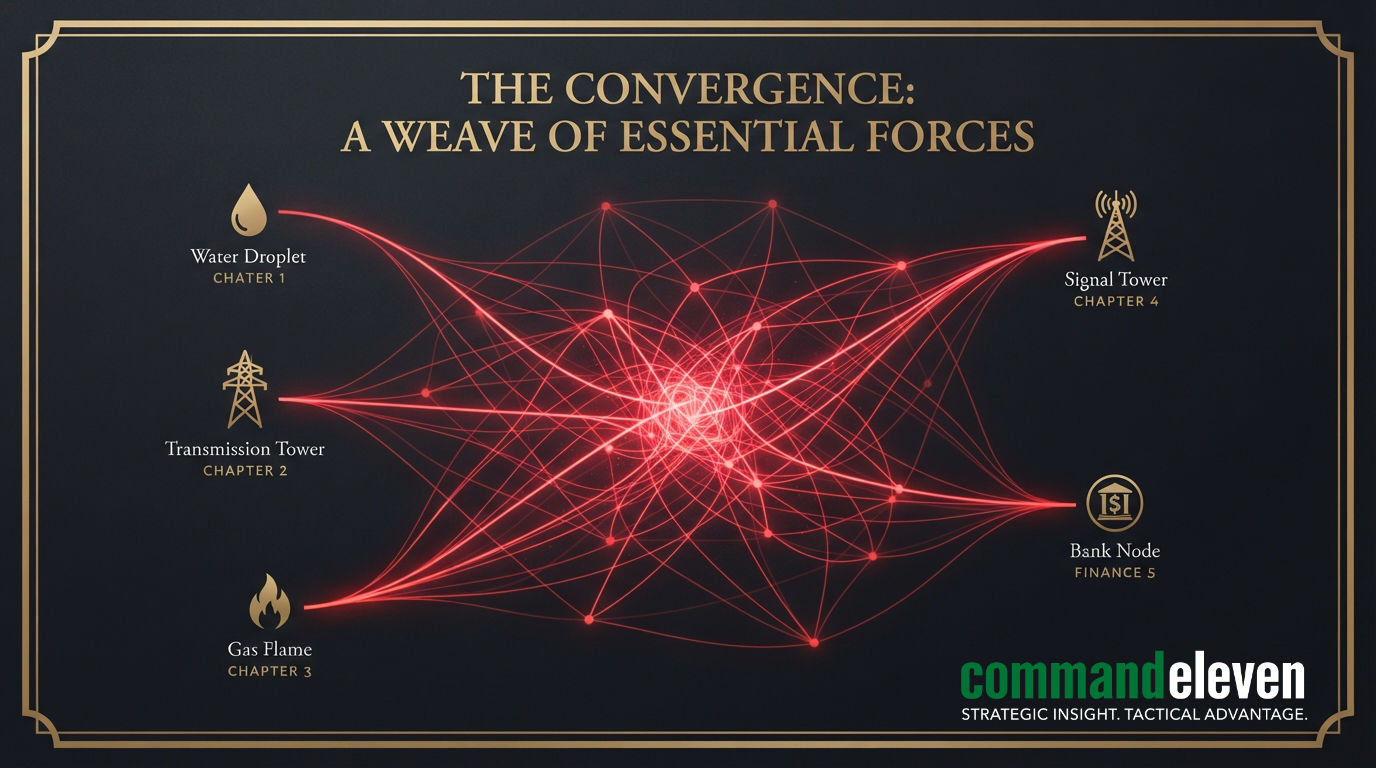
- [ASSESSED] – CommandEleven Intelligence assesses the single most important finding across this series is that these five sectors cannot be fully evaluated in isolation despite the sector-by-sector structure this series used to examine them: natural gas disruption cascades into electricity generation, communications infrastructure underlies the remote-access vulnerabilities documented in water, electricity, and gas alike, and the financial sector’s interconnection is formally significant enough that the Federal Reserve Bank of New York has quantified it directly. A vulnerability in any one sector is, to a meaningful degree, a vulnerability in all of them.
The Throughline: A Familiar Set of Actors
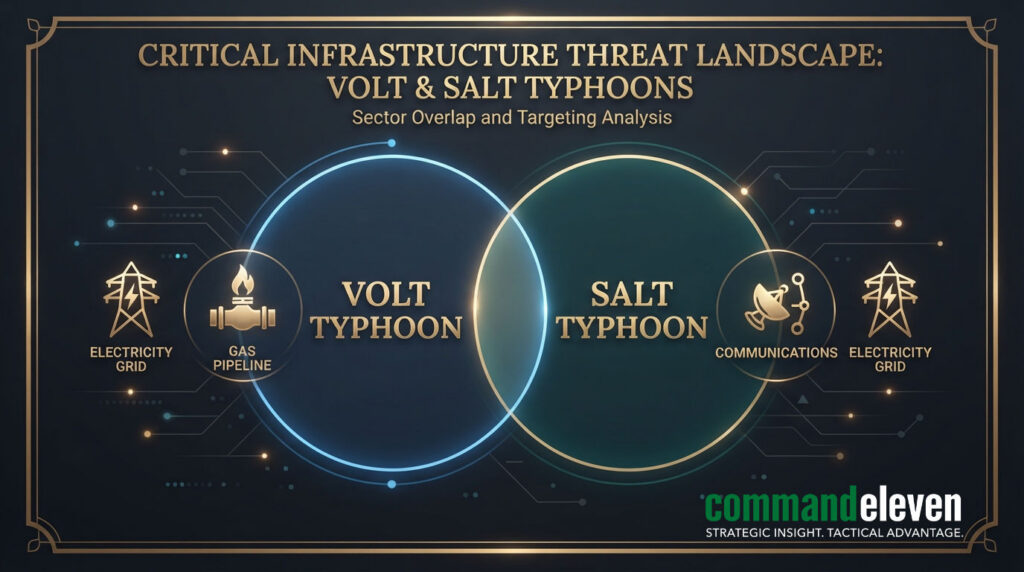
This series’ most striking pattern is how few distinct actors are responsible for how much of the documented threat. Volt Typhoon’s pre-positioning inside electrical grid operational technology and natural gas monitoring systems reflects a single, sustained Chinese state campaign extending across two sectors this series initially examined separately. Salt Typhoon’s compromise of the communications backbone – the enabling layer underlying the remote-access exposure in every other sector this series documented – represents a third major front from the same broad category of actor. And the 2011-2013 Chinese spear-phishing campaign against 23 natural gas operators, confirmed by CISA and the FBI years after the fact, establishes this is not a recent development but a documented pattern extending back well over a decade, with a consistent strategic logic: build standing capability to disrupt American infrastructure during some future crisis, rather than extract value from it now.
Iran’s role, examined in this series’ water-sector installment, is narrower in scope but consistent with the same broader logic – the July 2026 campaign’s apparent objective, per this dossier’s earlier assessment, was disruption and demonstration rather than maximum achievable harm, itself a form of capability-signaling rather than an attempt to cause a genuine public health crisis.
Fragmentation Wears Different Masks
Every sector this series examined shares a fragmentation vulnerability, but the specific mechanism differs meaningfully enough that a single policy response could not address all five simultaneously. Water and electricity share literal ownership fragmentation – tens of thousands of independently operated systems and utilities, with security investment directly tied to each individual operator’s budget and risk tolerance. Natural gas’s fragmentation is regulatory rather than operational: the sector’s physical infrastructure is more consolidated than water’s, but oversight authority was split between TSA and FERC in a way that left cybersecurity specifically unaddressed by any binding framework until a reactive 2021 directive. Communications infrastructure is more consolidated still – a handful of major carriers dominate the market – but the Salt Typhoon case shows consolidation alone does not equal security when the compromised target is shared, sensitive infrastructure (the CALEA lawful-intercept system) rather than the broader network. Finance inverts the pattern entirely: individual institutions are well-resourced and heavily regulated, but a small number of shared vendors create the same cascading exposure fragmentation produces elsewhere, through concentration rather than dispersal.
- [ASSESSED] – This dossier assesses the finance-sector case is the most instructive of the five for policymakers specifically, because it demonstrates that neither extreme – full fragmentation nor full consolidation – eliminates systemic risk on its own. The variable that actually matters, across every sector this series examined, is whether security investment and regulatory oversight scale with the actual interconnection risk a given structure creates, which this series found occurs inconsistently at best.
Interdependency: These Sectors Aren’t Actually Separate
This series adopted a sector-by-sector structure for analytical clarity, but every installment surfaced evidence that the underlying reality is more interconnected than that structure implies. Natural gas explicitly examined its interdependency with electricity generation. Communications explicitly framed the sector as the enabling layer underlying the remote-access vulnerabilities in water, electricity, and gas alike. Finance’s systemic risk is the most formally quantified example in this series – the NY Fed’s finding that a single top-5 bank compromise could disrupt 38% of the national financial network is a government body’s own acknowledgment that sector boundaries do not contain risk the way regulatory categories assume they do.
- [ASSESSED] – CommandEleven Intelligence assesses this interdependency is likely the most significant blind spot in current U.S. critical infrastructure policy, which – reflecting this series’ own findings in Section III above – remains organized around sector-specific regulatory bodies (NERC for electricity, TSA/FERC for pipelines, the FCC for communications, the SEC/FFIEC for finance) with no clearly documented, unified cross-sector coordination mechanism addressing cascading risk directly, despite every sector this series examined showing meaningful dependency on at least one other.
What Works and What Doesn’t
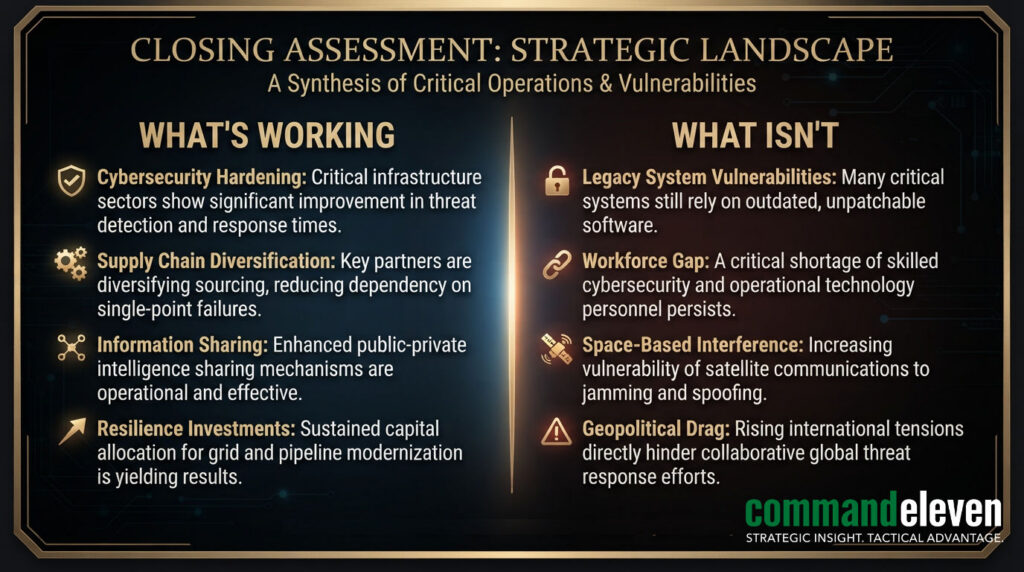
This series did not find a uniformly bleak picture, and it is worth stating plainly what the evidence supports as genuinely effective. Coordinated, well-resourced law enforcement action against specific ransomware infrastructure – the ALPHV/BlackCat and LockBit takedowns examined in the finance installment – produced a measured, significant reduction in incidents attributable to those specific groups, even though total sector-wide threat-actor count continued to grow as new entrants filled the gap. Proactive, upstream security investment – New York’s water-sector grant program, issued without waiting to be directly hit – represents a meaningfully different posture than the reactive pattern this series found more common, and this dossier assesses it as a stronger model worth replicating across sectors rather than an isolated case.
Conversely, this series found real evidence that regulatory response does not automatically track technical threat assessment: the FCC’s November 2025 rollback of post-Salt Typhoon security requirements, occurring after FBI officials had already confirmed the threat remained active, is the clearest documented case in this series of policy moving in the opposite direction from the underlying evidence.
What This Series Does Not Claim
Consistent with CommandEleven Intelligence’s standard across its other major series, it is worth closing with what five installments of sector-specific analysis do not establish.
- does not claim any of the five sectors examined face imminent collapse – in every documented incident across all five installments, from the July 2026 water campaign to Salt Typhoon’s telecom compromise, real-world consequences were contained, detected, and at least partially remediated, even where remediation was incomplete or contested.
- does not claim China or Iran are the only significant threat actors facing U.S. critical infrastructure – criminal enterprises (examined most directly in the finance installment) operate at meaningful scale independent of any state sponsorship
- does not claim the $500 household-preparedness guidance included in each installment substitutes for the institutional-level reform each dossier’s threat analysis argues is actually required – that guidance addresses individual household resilience, a genuinely different problem than the systemic vulnerabilities this series’ threat analysis sections examined.
- does not claim to have identified every significant vulnerability in any of the five sectors – each installment’s own DATA DEFICIT notations mark specific points where this dossier’s confidence was limited by available public sourcing
Closing Assessment
This series’ central finding is that American critical infrastructure security in 2026 is neither the unmanaged crisis alarmist commentary sometimes suggests, nor the well-controlled system regulatory reassurance sometimes implies. It is a genuinely mixed picture: real, documented compromise across every sector examined, alongside real, documented instances of effective response; a small number of sophisticated state actors building patient, multi-year capability across sector boundaries that current regulatory structures address separately rather than jointly; and household-level resilience options that, while genuinely useful, cannot substitute for the institutional and regulatory investment this series’ evidence suggests remains uneven across the sectors that keep the country running. That mixed picture, documented with the same confidence-tiered rigor CommandEleven Intelligence has applied across its other work this year, is what this series set out to establish – not to alarm, and not to reassure, but to describe accurately what the public record actually shows.
Sourcing Base
This closing synthesis draws on the full sourcing base established across all five prior installments in this series (Water Systems, Electricity Grid, Natural Gas, Communications, and Financial Systems); no new primary sourcing is introduced in this synthesis beyond what those installments already documented.