Executive Summary
The Madrassa Pipeline is a sophisticated, high-velocity logistics network designed for the acquisition, processing, and distribution of human capital. This assessment redefines the pipeline as a clinical “Asymmetric Hub” that bypasses state oversight to move personnel across the Pakistan-Afghanistan border. By weaponizing state administrative failures, the pipeline provides shadow logistics – including justice and security – that compete directly with the state’s core utility, inducing permanent Administrative Friction and triggering the Bamako Blueprint of institutional paralysis. Quantifying this threat through the Conflict Premium reveals that narrative-driven security hardening along the N-5 corridor consumes up to 22% of operational capital. Neutralizing this logistics hub requires the deployment of a Mosaic Defense, establishing autonomous Administrative Tiles anchored in Hardware Truth to reclaim the state’s logistical oxygen.
3 Key Takeaways
- Logistics of Human Capital: The pipeline functions as an industrial-scale supply chain, utilizing socioeconomic neglect to acquire “raw material” and processing recruits through a decentralized “Software Update” that replaces national identity with radicalized mandates.
- Inducing Institutional Rupture: By establishing a “Parallel State” that provides superior localized utility, the pipeline “ghosts” the state’s administrative presence, leading to a threshold where the cost of governance outweighs its utility.
- The Mosaic Counter-Logistics: Interdiction must pivot from reactive checkpoints to the 72/48 Resilience Protocol, utilizing autonomous border units and physics-based verification to protect the N-5 artery from narrative-driven blockades.
The Logistics of Human Capital
The Madrassa Pipeline must be audited not as a religious network, but as a sophisticated, high-velocity logistics system designed for the acquisition, processing, and distribution of human capital. In this framework, the recruit is the “raw material” moved through a decentralized supply chain that bypasses state oversight.
The “Raw Material” Phase: Socioeconomic Acquisition
- Psychological Terrain Mapping: Threat actors utilize socioeconomic neglect to identify “acquisition zones” where the absence of state-provided Logistical Oxygen (education, security, and economic utility) creates a vacuum.
- The Recruitment Funnel: Initial engagement is often sparked by a Digital Mirage – propaganda that promises social utility or religious purpose – which is then anchored by physical mentors within the pipeline.
- Engagement Metrics: The pipeline successfully converts high volumes of youth in regions where the state’s administrative presence has reached terminal failure, effectively “outsourcing” the community’s future to extremist nodes.
Processing and Indoctrination: The “Software Update”
- Iterative Indoctrination: Recruits are moved through a series of autonomous cells where they undergo a mechanical “Software Update,” replacing their national identity with a “Global Security Mandate”.
- Pedagogical Mimicry: The processing phase utilizes traditional educational veneers to “launder” kinetic directives, ensuring that the Sanitization Gap remains wide enough to evade detection by conventional intelligence sensors.
- Cognitive Bridge Construction: Each stage of education functions as a “bridge,” moving the recruit from passive sympathy to the physical facilitation of extremist objectives.
Distribution Channels: Transnational Movement
- The Border Conduit: Once “processed,” human capital is distributed across the Pakistan-Afghanistan border to support the operational requirements of transnational groups like the TTP or ISKP.
- Logistical Fluidity: The pipeline’s decentralized nature allows for the rapid rerouting of personnel if one node is interdicted, maintaining a constant flow of “Logistical Oxygen” to the kinetic frontline.
- Asymmetric Advantage: Unlike centralized state military recruitment, the pipeline operates at a fraction of the cost, ensuring a self-sustaining cycle of human capital distribution.
Weaponizing the Logistical Oxygen
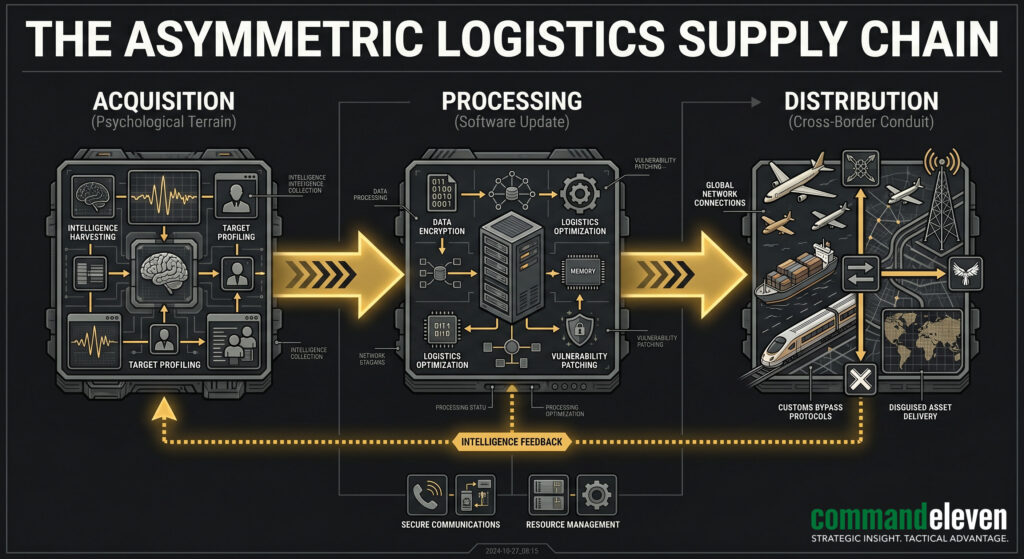
The pipeline’s survival depends on its ability to provide shadow logistics – services, justice, and security – that compete directly with the state’s administrative core. By weaponizing this utility, the pipeline induces Administrative Friction and initiates the Bamako Blueprint of state paralysis.
The Bamako Blueprint in Practice
- Utility Spoofing: By delivering essential services (food, basic literacy, conflict resolution) in neglected sectors, the pipeline “spoofs” the state’s social sensors, making it appear as a benign provider of utility.
- Institutional Hollowing: As the population begins to rely on the pipeline for their daily needs, the state’s administrative presence is “ghosted,” losing its relevance and authority.
- Shadow Governance: The pipeline eventually establishes a “Parallel State” that operates autonomously, hollowing out the state’s sovereign control over provincial territories.
Induced Administrative Friction
- The Checkpoint Paradox: When the state reacts with increased security hardening (checkpoints, surveillance), it inadvertently increases the Conflict Premium for the local population, further driving them toward the pipeline’s shadow logistics.
- Logistical Bottlenecks: Narrative-driven security measures stall the flow of legitimate Logistical Oxygen (trade and transit along the N-5), while the pipeline’s low-signature, informal supply lines remain unimpeded.
- Administrative Asymmetry: The state’s centralized, rigid response mechanisms are consistently outmaneuvered by the pipeline’s decentralized, high-velocity logistical pivots.
The Conflict Premium Surge
- Quantifying the Tax: The constant presence of a radicalized recruitment hub generates a permanent “tax” on regional stability, increasing the cost of every state administrative action.
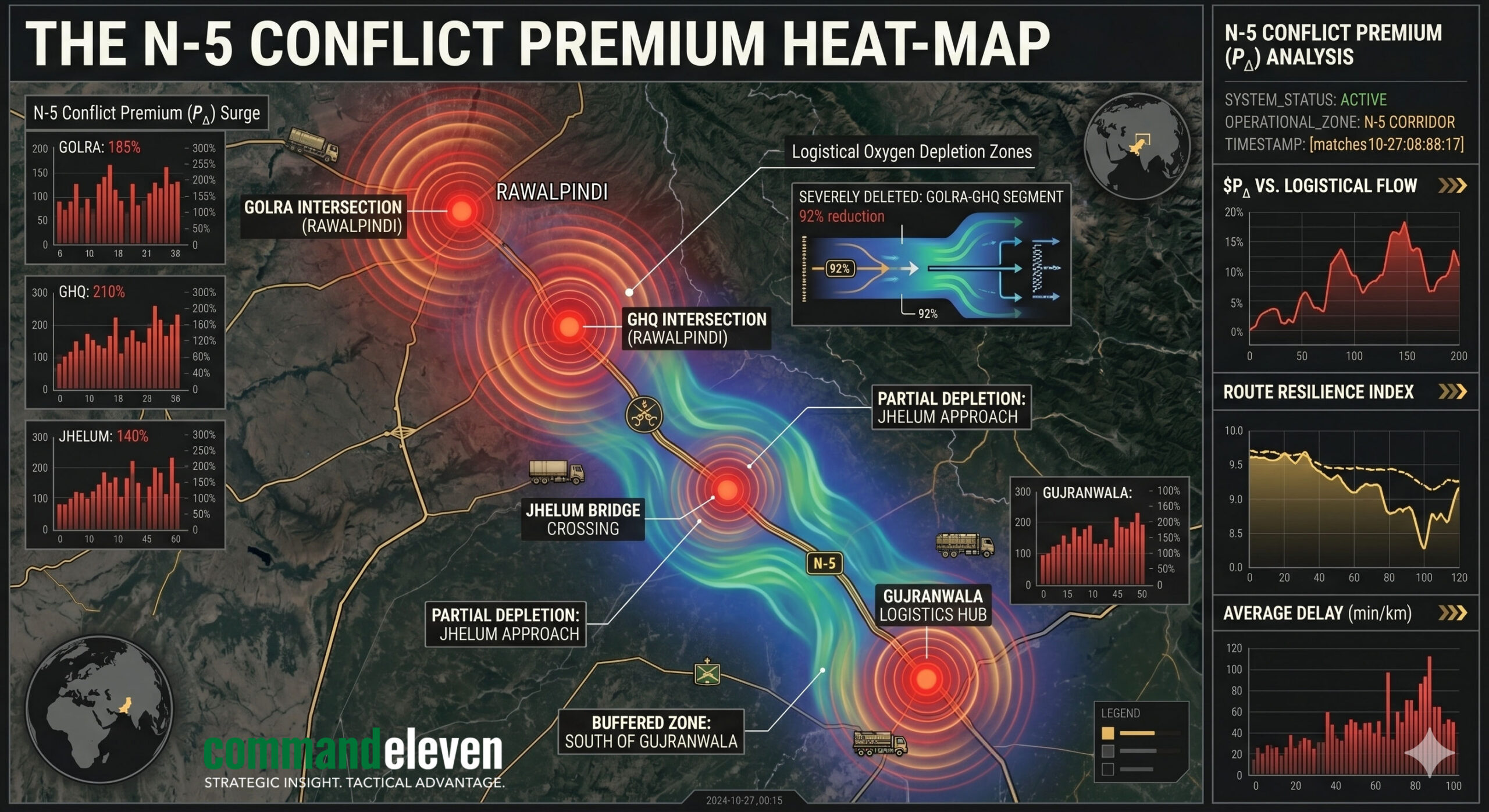
- Operational Consumption: We estimate that in sectors with high pipeline density, up to 22% of state operational capital is consumed by purely reactive, narrative-driven defense.
- The Rupture Threshold: The ultimate objective is to push the Conflict Premium high enough to trigger Institutional Rupture, where the state can no longer afford to govern its own territory.
The Digital-to-Analog Supply Chain
The Madrassa Pipeline operates as a terminal for “Information Laundering,” bridging the gap between a high-velocity Digital Mirage and a localized physical reality. This supply chain ensures that kinetic directives are converted into “Sanitized” educational content before reaching the recruit.
Information Laundering: From Mirage to Curriculum
- Narrative Pre-positioning: Extremist directives often originate as a Digital Mirage – propaganda disseminated through encrypted channels or OSINT priming accounts.
- The Laundering Mechanism: These signals are “cleaned” through a network of third-party aggregators and local influencers who translate kinetic objectives into traditional theological or social grievances.
- The Sanitized Curriculum: By the time the information reaches the classroom, the extremist signature is masked, allowing the pipeline to distribute radical “Software Updates” under the guise of benign pedagogy.
Sanitization Gap Interdiction
- Identifying the Interval: The Sanitization Gap is the critical window where synthetic digital signals are transformed into “geopolitical facts” or religious mandates.
- Proxy Facilitation: Local proxies – often motivated by Analog Liquidity (physical resource sovereignty) rather than ideology – act as the final filter, anchoring the laundered narrative into the community’s worldview.
- Signal Mimicry: The pipeline utilizes traditional linguistic and symbolic markers to mirror authentic community concerns, effectively spoofing the state’s internal “social sensors”.
The Analog Anchor: Physical Validation
- Validating the Mirage: The pipeline provides the physical setting where the Digital Mirage is given weight by “mentors” and peers, moving the recruit toward active facilitation.
- Hardening the Narrative: Once anchored in the analog world, the narrative becomes resistant to digital counter-messaging, as the recruit has been “Sanitized” of their original societal ties.
- Kinetic Transition: The supply chain concludes when the recruit is moved across the Kinetic Gate, transitioning from a consumer of information to a logistical facilitator for transnational threat actors.
Regional Threat Matrix: Critical Nodes
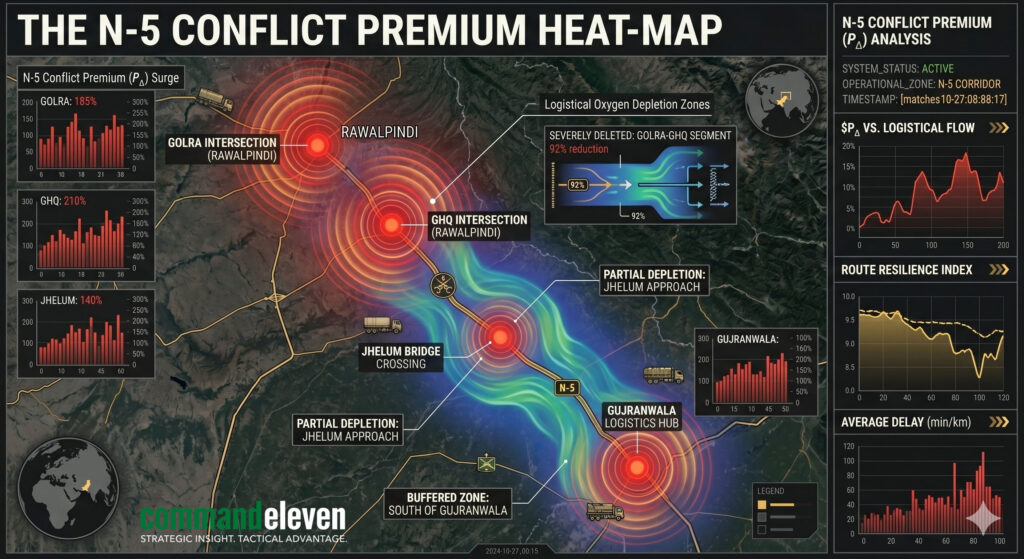
The Madrassa Pipeline is not a uniform network but a collection of “Asymmetric Hubs” strategically positioned to influence critical infrastructure and trade routes.
Node Identification along the N-5 Corridor
- Logistical Proximity: Primary clusters are situated along the N-5 National Highway, the state’s artery for Logistical Oxygen, allowing for the rapid interdiction of trade and transit.
- Asymmetric Hubs: These nodes function as decentralized logistics centers that can coordinate “Flash-Dark” protests or blockades to induce Administrative Friction.
- Strategic Overlap: Many nodes are positioned near border crossings, facilitating the movement of human capital and resources across the Pakistan-Afghanistan border.
The 45-Day Terminal Window for Interdiction
- The Engagement Threshold: We have identified a critical 45-Day Terminal Window – the timeframe between initial indoctrination and the crossing of the Kinetic Gate.
- Interdiction Potential: During this window, the recruit is still susceptible to Hardware Truth – the demonstration of superior state administrative utility and physical reality.
- Institutional Rupture Risk: Failure to interdict within this window increases the risk of Institutional Rupture, as the pipeline’s “Software Update” becomes irreversible.
Logistical Asymmetry and Systemic Fragility
- Low-Cost Resilience: The pipeline’s decentralized structure ensures that the loss of a single “Tile” or node does not paralyze the entire network, providing superior resilience compared to centralized state institutions.
- Hollowing the Core: By diverting human capital away from the state’s intellectual pool, these nodes create a long-term “Conflict Premium” that drains provincial resources.
- Exploiting the Bamako Blueprint: These hubs are designed to trigger institutional paralysis, using narrative-driven friction to stall the state’s ability to project authority.
The Mosaic Defense: Counter-Logistics
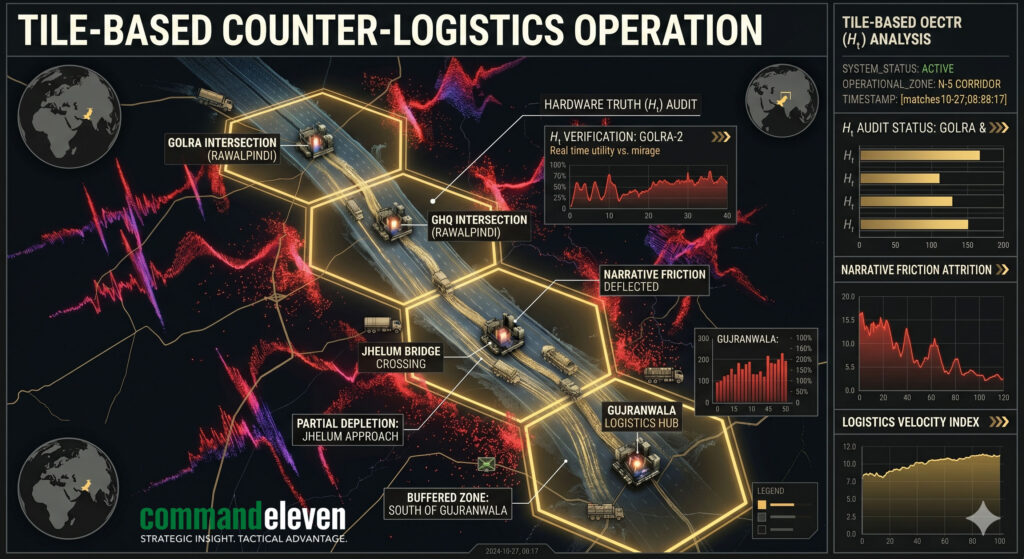
To dismantle an asymmetric logistics hub, the state must transition from reactive interdiction to a Mosaic Defense model that prioritizes Hardware Truth and decentralized resilience. This strategy focuses on severing the “Logistical Oxygen” of the pipeline while restoring the state’s own administrative utility.
Deploying Administrative Tiles for Physics-Based Verification
- Tile Sovereignty: The N-5 corridor and adjacent border sectors must be divided into autonomous Administrative Tiles, each capable of independent governance and verification.
- Hardware Truth Verification: Rather than relying on digital signals or consensus – which are susceptible to HMI Ghosting – Tiles utilize physics-based verification (manual audits, analog ledgers, and physical inspections) to monitor the movement of human capital.
- Neutralizing Narrative Primacy: By providing superior, localized utility (education and security), each Tile effectively blocks the pipeline from anchoring its “Silent Echo” within the community.
The 72/48 Resilience Protocol for Trade and Transit
- Hardening Logistical Nodes: Critical junctions along the N-5 must implement the 72/48 Resilience Protocol to maintain flow during narrative surges or “Flash-Dark” events.
- 72-Hour Hardening: Upon detecting a Single-Trigger Threat or digital mirage, the Tile severs non-essential network links to prevent narrative spoofing while maintaining 72 hours of peak operational readiness.
- 48-Hour Analog Persistence: The Tile relies on Analog Liquidity – physical resource reserves – to sustain trade velocity for 48 hours without centralized C2, ensuring the artery remains open even under cognitive siege.
Reclaiming the Artery: Restoring Logistical Oxygen
- Reducing the Conflict Premium: By replacing sluggish, centralized checkpoints with high-velocity, Tile-based verification, the state lowers the Conflict Premium and restores Logistical Oxygen to the provincial economy.
- Counter-Signaling: Demonstrating the physical efficiency and superior utility of the Mosaic Defense shatters the extremist narrative of a failing state.
Dismantling the Hub
The Madrassa Pipeline is a clinical manifestation of Administrative Asymmetry, designed to induce Institutional Rupture through the Bamako Blueprint of paralysis. Recognizing it as a logistical hub – rather than a purely ideological one – is the first step toward effective interdiction.
The Resilience Mandate
- Systemic Hardening: Survival in the 2026 theater requires the state to prioritize Administrative Persistence over symbolic victories.
- Dismantling via Utility: The pipeline is dismantled not just by kinetic force, but by the state reclaiming its role as the primary provider of Hardware Truth and social oxygen.
- 45-Day Priority: The state must focus its intelligence assets on the 45-Day Terminal Window, intervening before processed human capital crosses the Kinetic Gate.
Final Assessment
The Madrassa Pipeline exploits the Sanitization Gap to hollow out the state’s core. By operationalizing the Mosaic Defense, establishing autonomous Administrative Tiles, and adhering to the 72/48 Resilience Protocol, the state can neutralize the “Silent Echo”. The objective is to restore the N-5 corridor as a protected sovereign asset, ensuring that the state’s administrative utility remains impervious to the digital mirages and asymmetric logistics of its adversaries.