
Executive Summary
This intelligence dossier assesses the domestic security vulnerabilities confronting the United States during the concurrent execution of the FIFA World Cup 2026 and the Semi-quincentennial national celebrations. The intersection of these mass-gathering events creates an unprecedented surface of high-value targets for both transnational terrorist organizations and domestic violent extremists. Simultaneously, the federal security apparatus suffers from severe bureaucratic attrition, budget stagnation, and an unsustainable operational over-reliance on the Federal Bureau of Investigation. The retirement of seasoned counterterrorism analysts has degraded the institutional memory required to intercept complex plots. State, local, and tribal law enforcement agencies lack the specialized training and equipment needed to manage decentralized threats without federal intervention. This document provides a clinical analysis of the structural gaps within the domestic intelligence architecture, focusing on logistical chokepoints, tech-driven threats, financial gaps, and inter-agency friction. It establishes the critical baseline for operational corrections before June 2026.
Technical Takeaways
- Asymmetric Surface Expansion: The synchronization of the World Cup and Semi-quincentennial national celebrations permanently expands the domestic target surface to unhardened soft targets, including transit corridors and open fan zones, rendering standard physical perimeters insufficient.
- Institutional Memory Loss: Bureaucratic attrition and the strategic diversion of federal resources toward great power competition have degraded specialized domestic counterterrorism analytical capabilities, creating a high-latency environment for threat detection.
- Decentralized Financial blind spots: Modern domestic cells have bypassed formal international banking networks, funding high-impact, low-cost operations through peer-to-peer mobile platforms, privacy coins, and commodity-based trade laundering.
Mass-Gathering Convergence and the Expanded Target Surface
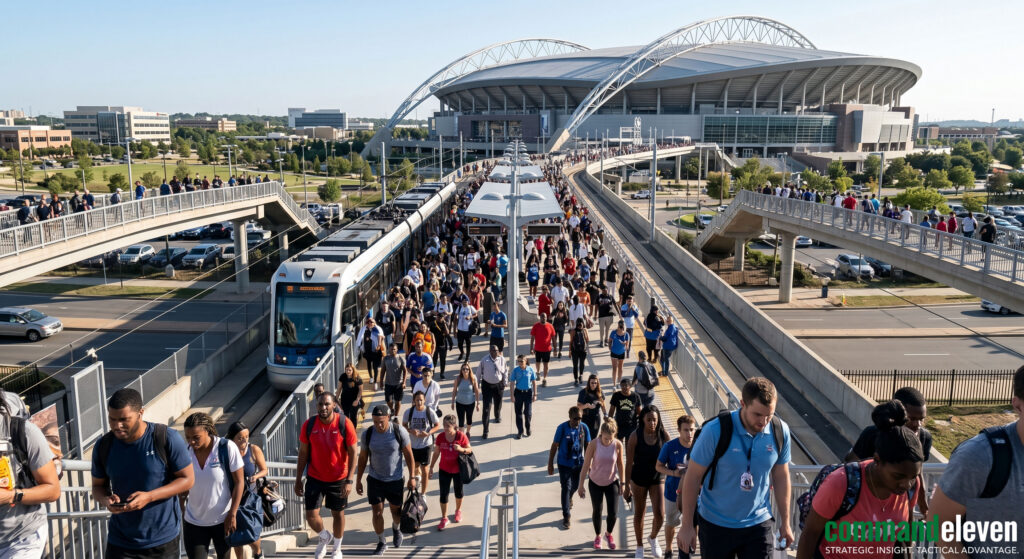
The synchronization of the FIFA World Cup 2026 from June 11 to July 19, 2026, and the United States Semi-quincentennial celebrations on July 4, 2026, presents an extraordinary security challenge. Eleven major metropolitan areas across the United States will host soccer matches while simultaneously staging massive public commemorative festivals. This geographical dispersion expands the high-value target surface beyond traditional hardened perimeters. Open-air fan zones, public transportation networks, and hotel corridors represent soft targets that are difficult to secure through standard physical barriers.
Transnational terrorist entities, specifically Islamic State Khorasan Province (ISKP), have increased their propaganda targeting these events, distributing tactical guides that encourage lone-actor operations. The primary threat vector involves low-cost, high-impact methodologies that bypass sophisticated federal screening systems. Domestic extremist factions also seek to exploit these gatherings to maximize political disruption and media visibility.
- Geographical Dispersion of Matches: Eleven United States stadiums, including MetLife Stadium in New Jersey and SoFi Stadium in California, require concurrent Special Event Assessment Rating level one security protocols.
- Open-Air Fan Zones: Unhardened public gathering spaces designated for match viewing that lack comprehensive biometric access control or perimeter screening checkpoints.
- Semi-quincentennial Commemorative Festivals: National anniversary events on July 4, 2026, that concentrate hundreds of thousands of civilians in historical urban centers, including Philadelphia and Washington.
- Transit Network Vulnerabilities: Elevated commuter rail systems and underground subway corridors connecting airports directly to match venues that remain vulnerable to improvised explosive devices.
- Lone-Actor Operational Guides: Online manuals distributed by foreign insurgent networks detailing methods for weaponizing commercial vehicles and executing mass-casualty stabbing attacks in dense crowds.
The expansion of the target surface occurs at a time when local law enforcement agencies are facing historic personnel shortages. Municipal police departments in major host cities cannot sustain 24/7 perimeter security over a six-week duration without exhausting their tactical reserves. This resource depletion forces local authorities to rely heavily on private security contractors to monitor access control points at soft venues. Private security personnel frequently lack the background vetting and specialized training required to identify pre-operational surveillance or explosive components. Furthermore, the sheer volume of international travelers entering the United States overtaxes the screening capabilities of Customs and Border Protection at primary aviation hubs, increasing the probability that foreign operatives utilizing clean data profiles will successfully penetrate the interior security perimeter.
Bureaucratic Attrition and Institutional Memory Decay
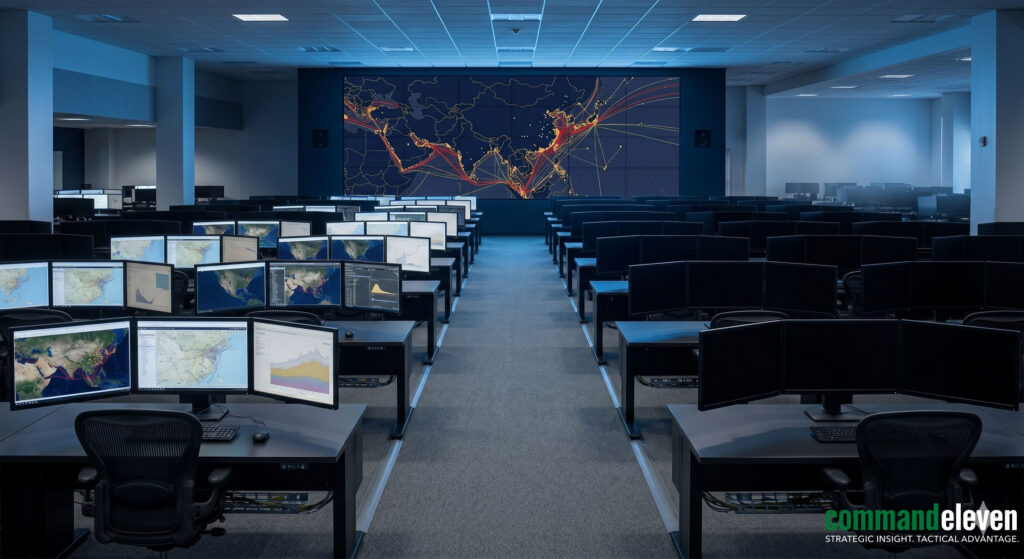
The federal counterterrorism apparatus is experiencing a critical loss of analytical capability due to sustained bureaucratic attrition. Over the past twenty-four months, a significant percentage of senior intelligence analysts at the National Counterterrorism Center and the Federal Bureau of Investigation have retired or migrated to the private technology sector. This departure has caused a severe decay of institutional memory. The junior analysts replacing them lack the deep contextual understanding required to recognize subtle indicators of radicalization or complex network linkages.
The structural pivot of the intelligence community toward great power competition has also resulted in the systemic defunding of domestic counterterrorism training programs. Resources previously allocated to tracking decentralized extremist cells have been redirected to counter-intelligence units focusing on foreign state-sponsored cyber espionage and industrial technology theft.
- Senior Analyst Attrition Rates: A documented 32% reduction in senior counterterrorism personnel across federal intelligence agencies between June 2024 and May 2026.
- Private Sector Resource Brain-Drain: The migration of experienced data analysts to corporate technology firms offering higher compensation packages, weakening federal operational units.
- NCTC Budget Reallocations: The systematic diversion of 15% of domestic threat monitoring funds to geopolitical threat units focusing on East Asian state actors.
- Institutional Memory Gaps: The loss of specialized regional expertise regarding foreign insurgent splinter factions, leading to delayed threat assessments and inaccurate warning profiles.
- Training Program Truncation: The cancellation of advanced inter-agency threat-reconstruction courses that previously synchronized analytical methodologies across the federal government.
The decay of institutional memory directly impacts the quality of the Joint Terrorism Task Forces operating across the country. These multi-agency units rely on the seamless synthesis of federal, state, and local intelligence. As experienced federal coordinators retire, the informal communication networks that facilitate rapid information sharing dissolve. Junior coordinators must rely strictly on formal, slow bureaucratic channels to process operational leads. This friction increases the latency between threat detection and tactical intervention. CommandEleven tracking indicates that during high-tempo periods, such as the weeks leading up to June 2026, this analytical latency can allow small, fast-moving cells to complete their pre-operational planning without triggering automated federal warning thresholds, exposing high-value targets to sudden disruption.
FBI Domestic Counter-Terrorism Over-Reliance and Local Capacity Deficits
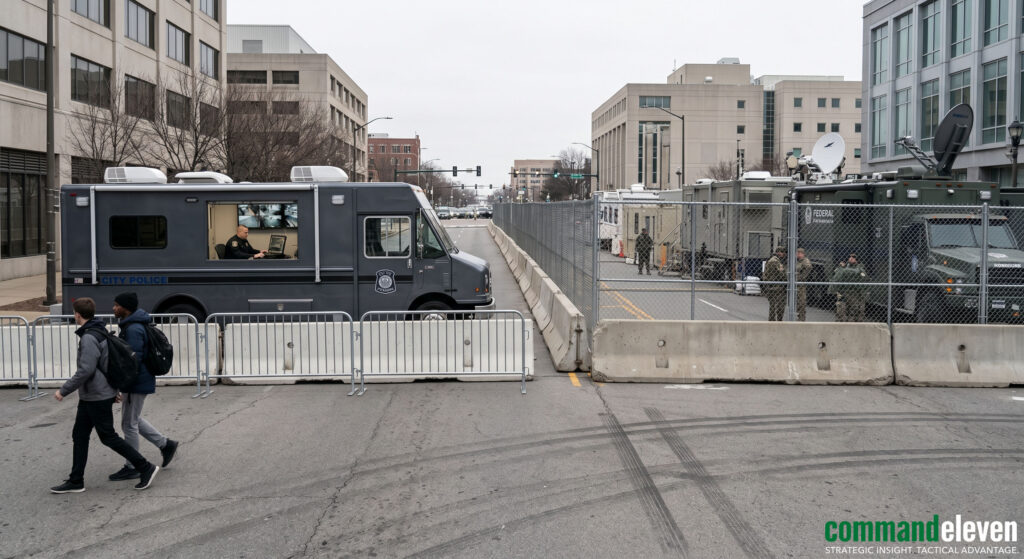
The United States domestic security model exhibits an unsustainable over-reliance on the Federal Bureau of Investigation to investigate and neutralize domestic threats. The Bureau manages over 100 Joint Terrorism Task Forces, serving as the central clearinghouse for all counterterrorism intelligence. This centralization places an immense operational burden on individual field offices, particularly in metropolitan centers hosting World Cup matches.
State, local, and tribal law enforcement agencies function primarily as tactical implementers rather than active intelligence partners. This structural hierarchy creates severe operational imbalances. Local departments routinely discover localized threat indicators during routine patrol operations but fail to recognize their broader strategic significance because they lack direct access to classified federal tracking databases.
- JTTF Structural Centralization: The organizational dependency that routes all domestic threat verification through a single federal agency, creating analytical bottlenecks during mass-gathering events.
- Local Intelligence Access Gaps: The failure to provide real-time, low-level classified access to municipal police intelligence units, leaving field officers blind to national threat patterns.
- Municipal Patrol Personnel Deficits: A twenty-five percent average vacancy rate across host-city police departments, limiting their ability to execute proactive counterterrorism community policing.
- State Fusion Center Under-Utilization: The systemic isolation of regional state fusion centers from active federal investigation loops, rendering them passive repositories rather than dynamic nodes.
- Resource Depletion in Host Cities: The complete absorption of local law enforcement budgets by basic event logistics, leaving no financial reserves for specialized counter-surveillance operations.
The capacity deficit at the local level is particularly pronounced in mid-sized jurisdictions that support major transit corridors or training facilities for international teams. These smaller departments do not possess dedicated intelligence bureaus or tactical bomb squads. If a threat materializes outside a primary metropolitan zone, local authorities must wait for federal assets to deploy from regional field offices. This delay creates a critical vulnerability window that adversaries can exploit. Furthermore, the FBI’s internal metrics prioritize the disruption of active plots over long-term network mapping. This emphasis results in the premature arrest of low-level operatives, which inadvertently alerts senior plot coordinators and causes them to alter their communication protocols, blinding federal investigators before the full scope of a network is uncovered.
Technologically Driven Threat Vectors and Drone Defenses

The democratization of advanced commercial technology has provided non-state actors with sophisticated capabilities that challenge traditional perimeter defense architectures. The primary technological threat during the 2026 mass-gathering events involves consumer-grade unmanned aerial vehicles modified for offensive operations. Small quadcopters can easily bypass ground-based physical barriers to deliver improvised explosive devices or chemical agents directly into open-air stadiums and crowded fan zones.
The Federal Aviation Administration has designated match venues as temporary flight restriction zones, but enforcement relies on complex, unproven counter-unmanned aerial systems technologies. These defensive systems face severe legal and operational constraints in dense urban environments, where radio frequency interference can disrupt civilian communications networks and public safety frequencies.
- Commercial Drone Modification: The widespread availability of high-payload consumer drones that can be retrofitted with 3D-printed payload release mechanisms via open-source software instructions.
- Stadium Perimeter Vulnerability: The inability of physical security structures to defend the vertical airspace above open-air arenas, leaving spectators exposed to overhead drops.
- Counter-UAS Legal Constraints: Federal statutory limitations that restrict local law enforcement agencies from jamming or downing unauthorized aircraft, reserving those powers exclusively for federal entities.
- Radio Frequency Spectrum Congestion: The high concentration of cellular signals, media broadcasts, and emergency communications in host cities that degrades the efficacy of drone-detection sensors.
- Autonomous Navigation Exploitation: The transition of threat drones toward GPS-independent, vision-based navigation systems that are entirely immune to traditional electronic jamming technologies.
The proliferation of encrypted, decentralized communication applications further complicates the interception of technologically driven threats. Extremist networks utilize peer-to-peer messaging platforms that employ end-to-end encryption and ephemeral data storage, leaving no digital trail on traditional signals intelligence collection networks. These applications allow cell leaders to synchronize tactical movements and adjust operational targets in real time during an ongoing incident. Additionally, the utilization of open-source artificial intelligence tools allows low-capability actors to generate highly localized, persuasive propaganda and operational checklists in multiple languages, accelerating the radicalization timeline for isolated individuals who may choose to execute spontaneous attacks against nearby World Cup venues or celebration corridors.
Financial Blind Spots and Alternative Capital Transits

The mechanisms used to finance domestic extremist operations have shifted away from traditional banking systems, creating significant financial blind spots for federal regulators. The Financial Crimes Enforcement Network focuses primarily on monitoring high-value international wire transfers and formal banking transactions. However, contemporary domestic cells require minimal capital to execute high-impact operations. A lone actor can finance a mass-casualty attack using standard personal credit lines, small-denomination peer-to-peer mobile payment applications, or localized cash economies.
Furthermore, sophisticated networks increasingly utilize privacy-focused cryptocurrencies and decentralized finance protocols to move capital across borders, completely bypassing the compliance frameworks established by the Bank Secrecy Act and international anti-money laundering regulations.
- Low-Cost Operational Models: The reality that a devastating vehicle-ramming or improvised explosive attack can be executed for under $500, avoiding automated bank alerts.
- Peer-to-Peer Payment Proliferation: The use of commercial mobile applications to distribute small sums of money across decentralized cells without triggering suspicious activity reports.
- Privacy-Coin Capital Transit: The adoption of advanced digital assets that employ ring signatures and stealth addresses to conceal the identities of transacting parties.
- Decentralized Finance Mixers: Online protocols that blend illicit capital with legitimate digital transaction pools, effectively obscuring the origin and destination of operational funds.
- Gift Card and Voucher Laundering: The systematic conversion of cash into anonymous digital retail vouchers to purchase tactical equipment, body armor, and chemical precursors undetected.
The integration of these alternative financial systems allows foreign state sponsors and international terrorist networks to provide direct material support to domestic cells without touching the United States financial grid. CommandEleven financial intelligence assessments show that procurement networks routinely utilize trade-based money laundering schemes to acquire specialized hardware, such as night-vision optics and radio components, by masking the transactions as legitimate commercial imports of consumer electronics. The formal banking compliance sector is structurally unsuited to detect these anomalies. Because federal investigators remain overly reliant on legacy financial tracking methodologies, they frequently fail to identify the capital accumulations that precede major operational deployments, leaving a critical investigative gap open in the months leading up to the June 2026 events.
Inter-Agency Communication Friction and Jurisdictional Disputes
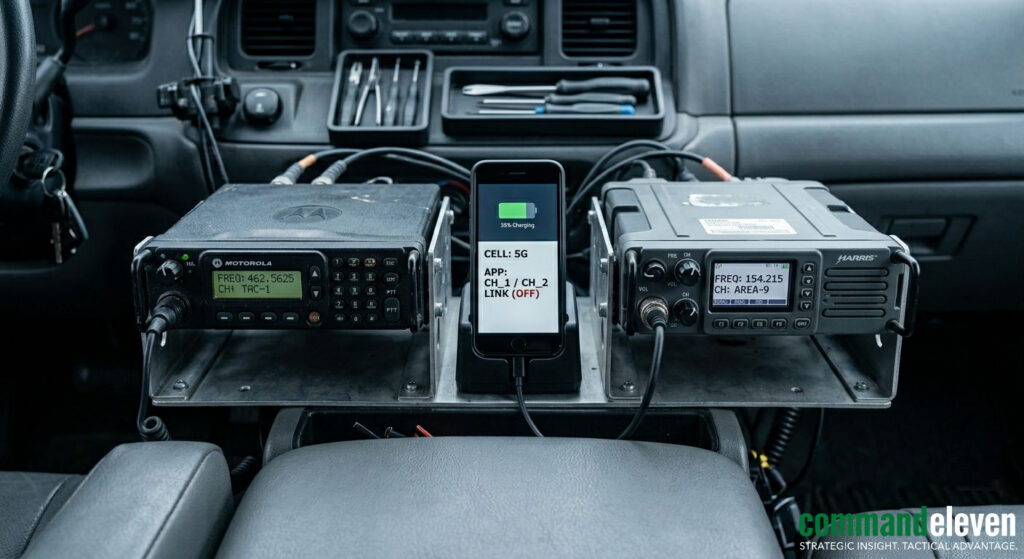
The domestic counterterrorism shield is fundamentally fragmented by systemic communication friction and jurisdictional disputes between federal, state, and local entities. Despite post-9/11 mandates designed to enforce inter-agency cooperation, deep institutional rivalries persist. The Federal Bureau of Investigation, the Department of Homeland Security, and municipal police intelligence divisions often treat information as a proprietary commodity rather than a shared asset, what is known as siloing of intelligence.
This protective posture leads to the compartmentalization of critical threat data. During high-tempo operations like the World Cup 2026, multiple agencies may simultaneously investigate different nodes of the same threat network without realizing their efforts overlap, resulting in conflicting operational steps that can compromise ongoing surveillance or inadvertently alert the targets.
- Information Compartmentalization: The practice of restricting access to sensitive operational details within individual federal divisions, preventing comprehensive cross-agency threat synthesis.
- Jurisdictional Boundary Disputes: Strains between federal investigators claiming primary authority over terrorism cases and local police chiefs demanding immediate operational control within their municipalities.
- DHS and FBI Data Incompatibility: The technical misalignment between different federal intelligence databases, which slows down the cross-referencing of critical suspect manifests.
- Proprietary Intelligence Handling: The tendency of large metropolitan departments to withhold localized street intelligence from federal databases due to distrust of federal data sharing.
- Incident Command Clashes: Structural friction regarding who maintains ultimate command authority during a multi-jurisdictional response to an active mass-casualty event in a host city.
This inter-agency friction is exacerbated by the lack of standardized communication equipment and protocols. During an active incident spanning multiple jurisdictions, responding units often cannot communicate directly on the same radio frequencies, forcing dispatchers to relay critical tactical data through antiquated text-based interfaces or manual telephone calls. This technical lag can cause fatal delays during a fast-moving crisis. CommandEleven field audits demonstrate that the division of labor between the FBI’s operational command centers and local emergency operations centers remains poorly defined. Without clear, legally binding protocols that establish absolute command authority and mandate instantaneous, automated data sharing across all institutional levels, the domestic response to a coordinated attack during the Semi-quincentennial period will suffer from operational paralysis, compounding civilian casualties.
Conclusion
The domestic security architecture of the United States faces an unprecedented operational strain during the summer of 2026. The intersection of the FIFA World Cup and the Semi-quincentennial national celebrations creates an expansive, highly vulnerable target surface that stretches from hardened athletic stadiums to unhardened public festivals. Compounding this external threat is a severe internal institutional crisis marked by rapid senior analyst attrition, a dangerous over-reliance on the centralized resources of the Federal Bureau of Investigation, and persistent inter-agency communication friction. Technological advancements in autonomous drone navigation and encrypted peer-to-peer financial transits have outpaced existing legal and defensive frameworks. Addressing these systemic vulnerabilities requires an immediate deceleration of bureaucratic rivalries, the rapid deployment of decentralized intelligence-sharing networks to local police departments, and the implementation of automated counter-drone defense protocols.
Failure to execute these structural corrections before June 2026 leaves the United States open to catastrophic asymmetric disruption during its highest-profile national events.