Executive Summary
As of May 2026, the Balkan Cartel has consolidated its position as the primary logistical manager of cocaine transshipment from South America into the European theater. Operating as a decentralized network of specialized clans originating from Albania, Montenegro, Serbia, and Croatia, this syndicate has largely displaced legacy Italian organizations in direct, high-volume maritime sourcing. CommandEleven Intelligence assesses that the Balkan Cartel’s operational dominance relies on a highly sophisticated model of Port Infiltration targeting Europe’s primary container hubs, specifically Antwerp, Rotterdam, and Hamburg. By subverting internal port personnel, exploiting vulnerabilities in automated container terminal operating systems (TOS), and utilizing parallel corporate covers, the cartel secures unhindered maritime supply lines that feed a high-purity retail market, presenting a critical threat to Western European border security and judicial integrity.
3 Key Takeaways
- Vertical Supply Integration: The Balkan Cartel has neutralized traditional intermediary networks by establishing a permanent physical procurement presence inside South American launch nodes, cutting direct-risk shipping deals with producers at origin.
- Subversion of Automated Logistics: Ingress at Northern European container hubs relies heavily on cyber-enabled PIN code fraud and the deep systemic corruption of port personnel, allowing the cartel to manipulate digital Terminal Operating Systems (TOS) for rapid cargo extraction.
- Decentralized Operational Resilience: The network’s fluid, clan-based structure functions without a rigid corporate hierarchy, preventing law enforcement from collapsing the broader maritime apparatus when localized extraction cells are compromised.
South American Sourcing and Upstream Integration
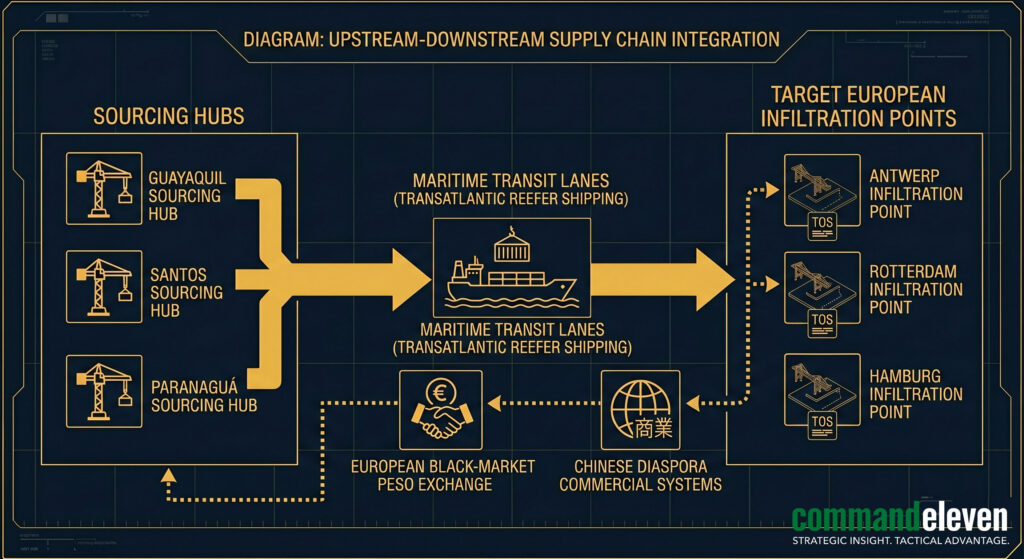
The definitive structural advantage of the Balkan Cartel is its complete vertical integration of the supply chain, cutting out traditional middlemen to maximize profit margins and logistical control.
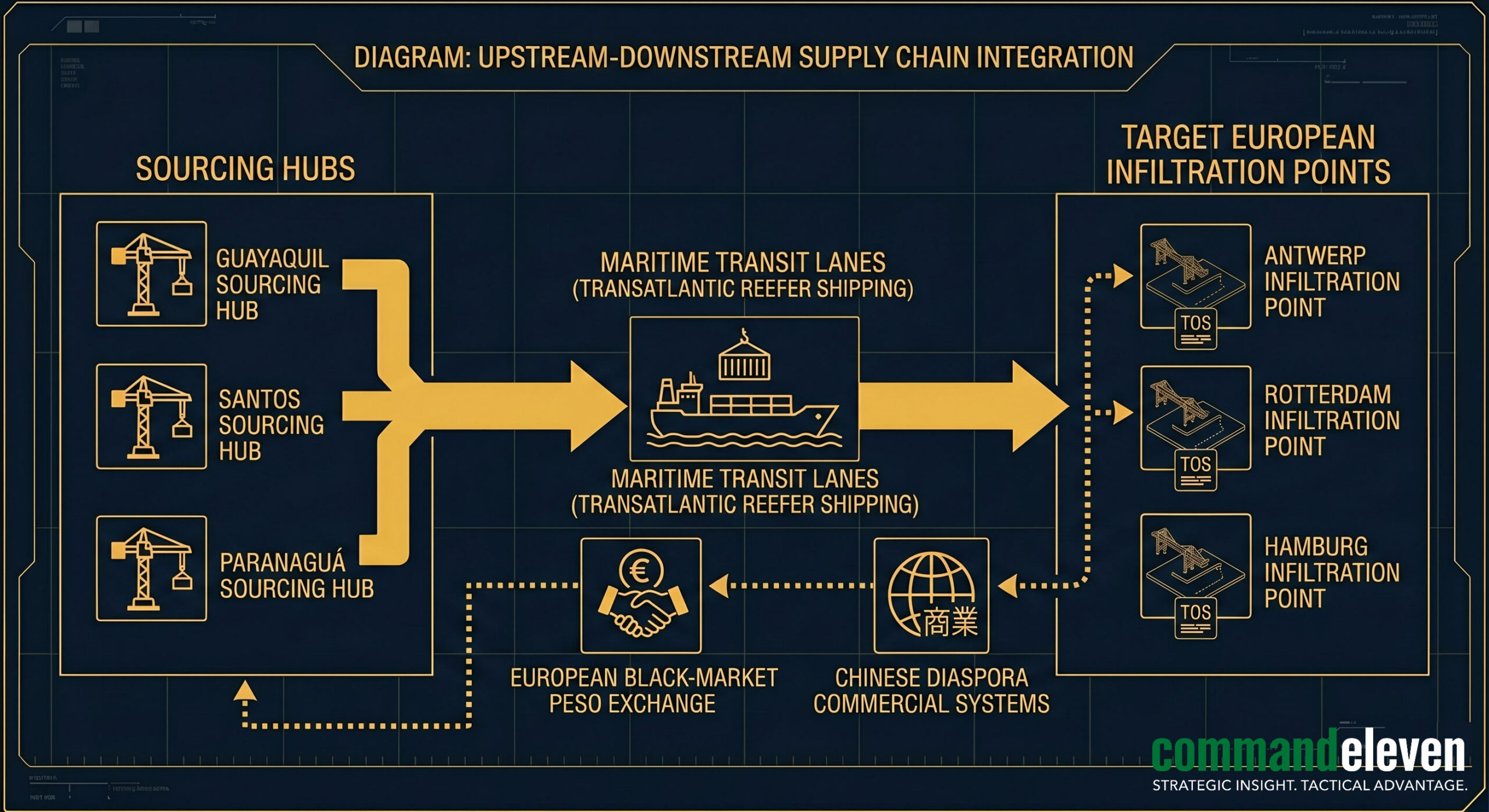
- Direct Sourcing at Origin: Rather than purchasing shipments from brokers in North Africa or the Iberian Peninsula, Balkan procurement cells are permanently embedded within the primary production and transit zones of South America, including Colombia, Peru, and Ecuador. They negotiate directly with local criminal syndicates, such as the Clan del Golfo and specialized Ecuadorian factions operating out of the Port of Guayaquil.
- The Ecuadorian Hub: The Port of Guayaquil has emerged as the primary upstream launching pad for Balkan maritime logistics. Cartel operatives purchase legitimate agricultural and fruit export corporations locally, utilizing these businesses to pack multi-ton quantities of high-purity cocaine directly into commercial refrigerated containers (reefers) prior to port entry.
- Logistical Redundancy: By operating across multiple South American states simultaneously, the cartel maintains high operational redundancy. If interdiction pressure intensifies along Colombian maritime routes, logistics are immediately diverted through western Brazil to the ports of Santos and Paranaguá, ensuring a continuous flow of maritime tonnage.
Technical Infiltration Mechanics at Northern European Hubs
Upon arrival at Western European ports of entry, the Balkan Cartel bypasses traditional physical concealment methods in favor of technical subversion and the manipulation of automated logistics.
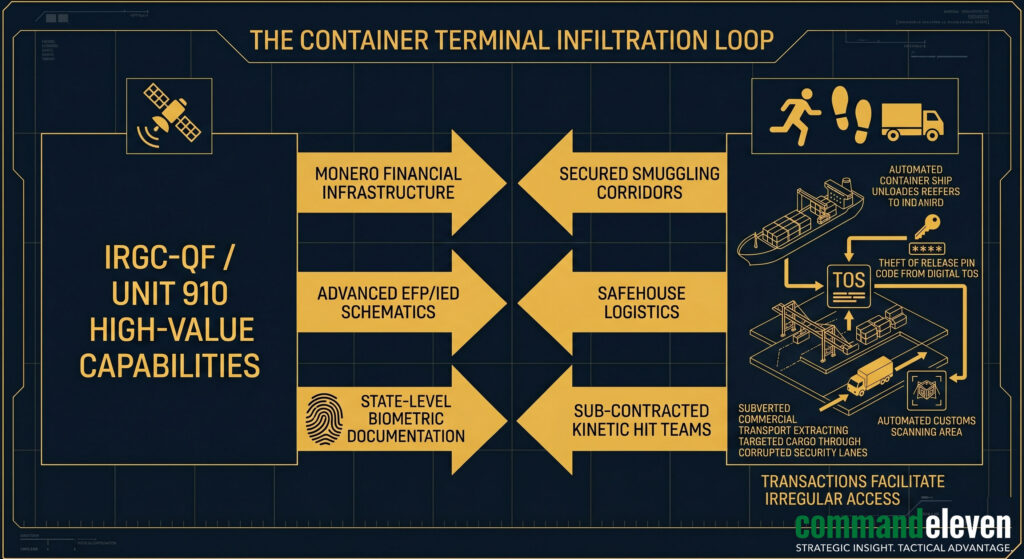
- PIN Code Fraud and Cyber Compromise: The cartel has systematically weaponized PIN code fraud. Operatives deploy targeted spear-phishing campaigns or bribe internal shipping line employees to harvest secure container release PIN codes from the port’s digital Terminal Operating System (TOS). Armed with these codes, cartel-controlled transport companies can legally claim a container at the automated terminal gates before the genuine consignee arrives, driving extraction latency down to near-zero margins.
- The “Trojan Horse” Method: To infiltrate highly secure, automated container yards, the cartel utilizes specialized extraction teams concealed within modified commercial trucks or legitimate maintenance vehicles. These teams enter the port facility under valid corporate covers, locate the target container using real-time GPS tracking devices attached at the origin port, remove the narcotics, and exit the terminal through subverted security lanes.
- Corrupt Inside Networks: Infiltration relies heavily on the systematic corruption of critical port personnel, including crane operators, straddle carrier drivers, customs inspectors, and port authority security officers. These individuals are paid high-value cash sums to intentionally misplace target containers within radar blind spots or ensure specific shipments are routed through automated “green lanes” that bypass physical scanning infrastructure.
Institutional Exploitation and Parallel Financial Rail Consolidation
The massive cash flows generated by the Balkan Cartel’s maritime successes are liquidated and laundered using complex, parallel systems designed to evade European anti-money laundering (AML) frameworks.
- The “Trojan Enterprise” Cover: The cartel reinvests its cash reserves directly into Western European real estate, luxury automobile logistics, and construction firms across Germany, Spain, and the Benelux nations. These cash-heavy industries serve as highly effective vehicles to absorb illicit capital, blending it with legitimate commercial revenue streams.
- The Black-Market Peso Exchange (BMPE) Adaptation: Balkan networks have adapted the BMPE model to the European context. Illicit Euro cash reserves held in Western Europe are exchanged with legitimate Chinese diaspora business owners requiring local currency for wholesale trade purchases. In return, equivalent values are settled in South America or the Western Balkans via parallel trade clearing systems or industrial purchases, completely avoiding formal bank wire transfers.
- Feudal Autonomous Clan Structure: Unlike rigid corporate mafias, the Balkan Cartel operates as a fluid constellation of autonomous cells bonded by regional or familial ties. This decentralized structure ensures high resilience against state law enforcement operations; if a single extraction cell is compromised and dismantled in the Port of Rotterdam, the broader logistical network remains functional, instantly routing follow-on shipments through adjacent networks in Germany or Southern Europe.
Intelligence Assessment & Forecasting (2026–2030)
CommandEleven Intelligence forecasts that the Balkan Cartel will expand its maritime domain dominance through 2030 by shifting its geographical and technical operations dynamically.
- Diversification to Secondary Ports: As interdiction and automated screening technologies intensify at major hubs like Antwerp and Rotterdam, the cartel will systematically divert high-volume maritime traffic to secondary European ports, including Le Havre, Gioia Tauro, Vigo, and emerging Baltic sea hubs, exploiting lower customs capabilities.
- Integration of Autonomous Maritime Vehicles: By 2028, the cartel will likely operationalize autonomous, low-profile semi-submersible drone vessels attached to the hulls of standard commercial container ships. These automated parasite pods can be detached remotely via satellite link prior to port entry, allowing local maritime cells to recover payloads outside port security perimeters.
- State-Level Structural Corruption: The massive capital accumulated by these syndicates will increasingly transition from buying local port workers to purchasing high-level political, judicial, and law enforcement figures within the Western Balkans, entrenching de facto criminal safe havens that are completely insulated from international extradition treaties.