

Intelligence Command Center // Terror group profile //

al Qaeda in the Arabian Peninsula (AQAP)

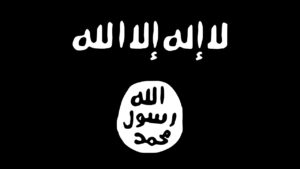
AQAP Flag

area of operation

Middle East & North Africa (MENA)

Specific AOR

Abyan, Shabwa, and Al-Bayda governorates (Yemen)

Volatility Index

VI-3 – Moderate

Ideological Alignment

al-Qaeda Central

force strength

2,000-3,000

Leadership

Led by Sa’ad bin Atef al-Awlaqi (since March 2024)

Headquarters

Wadi Awimran, Abyan

SIGNATURES //

TECHNICAL PROFILE
Tier 3 - Mid-Tier / Standard Insurgent
OPERATIONAL SIGNATURE
Asymmetric / Terror-Focused
SPATIAL PROFILE
Maritime / Littoral / Coastline Influence

Operational Brief //

Long considered al-Qaeda’s most lethal external operations (ExOps) node, AQAP has suffered severe attrition due to prolonged U.S. counterterrorism pressure, internal factionalism, and aggressive ground campaigns by the UAE-backed Southern Transitional Council (STC) and Houthi forces.

Under the leadership of Sa’d bin Atef al-Awlaki (who assumed command in March 2024 following the death of Khalid Batarfi), the group has pivoted sharply toward localized asymmetric warfare within Yemen, specifically targeting the STC in Abyan and Shabwah, while temporarily de-prioritizing global spectaculars due to degraded technical assets.

Leadership & Command Structure

  • Command Element: Following a sustained period of attrition,punctuated by the March 2024 verification of the death of former Emir Khalid Batarfi,the group is led by Sa’id bin Ali al-Shihri’s legacy networks and current Emir Khaled al-Batarfi’s successor, Saad bin Atef al-Awlaki. Al-Awlaki’s elevation signals a deliberate return to tribal-centric operational command.
  • Leadership Doctrine: Shift from centralized, heavy command structures to a dual-layered management model: maintaining a highly insular, ideological core while granting absolute operational autonomy to regional sectors and tribal combat cadres.
  • Regional Management: Executed via specialized regional councils (Shura) across Yemeni governorates, structurally reporting to the group’s central military committee. Command lines remain closely linked to the Hittin Committee to preserve transnational strategic alignment.

Regional Center-of-Gravity (Current Focus)

  • Primary Growth Theater: The rugged, interior hinterlands and lawless spaces of central and southern Yemen, specifically focusing on the Shabwah, Abyan, and Al-Bayda governorates.
  • Operational Hub: The strategic transit corridors and energy infrastructure axes running through Al-Bayda and Marib, utilizing these spaces to position asymmetric strike teams and maintain logistical lines.
  • Secondary/Support Theaters: Global digital networks and localized smuggling routes crossing the Gulf of Aden and the Red Sea, maintaining support structures into East Africa and the Horn.

Intelligence Behavioral Matrix (TRAP-18/VERA-2R)

High-Risk Indicators: Deep integration within powerful southern Yemeni tribes (Social Context); rapid adoption of evolving technological tools for decentralized operational planning; and a clear focus on recruiting high-capacity technical operatives over standard foot soldiers to restore external operations capacity.

Volatility Index: Moderate to High. The group balances localized, attritional guerrilla warfare against the Houthis and Southern Transitional Council (STC) forces with a sustained intent to execute external transnational operations.

Disruption Vector Matrix //

vector //

vulnerability //

disruption strategy //

logistics //

Dependence on porous internal lines of communication and rugged fallback sanctuaries across Abyan and Shabwah.

Targeted Interdiction & Reconnaissance: Deploy persistent, high-altitude ISTAR platforms to monitor known safe zones and disrupt operational staging points before forces move.

financial //

Reliance on fuel and commodity smuggling, local extraction (protection taxes on transit lines), and decentralized funding mechanisms.

Financial Architecture Interdiction: Map and disrupt local informal cash trading hubs and maritime smuggling networks, targeting the commercial fronts that fund operations.

leadership //

Internal ideological rifts between the older, global-facing core leadership and younger, locally focused tribal field commanders.

Information Operations: Run targeted counter-narrative and cyber operations to amplify internal strategic splits, undermining command cohesion and encouraging defections.

Threat Matrix //

OPERATIONAL REACH: 2 – Low (Provincial/Disrupted)
KINETIC CAPABILITY: 3 – Medium (IED/Targeted Assassinations)
LOGISTICAL RESILIENCE: 3 – Medium (Localized Taxation/Smuggling Links)
INFORMATION INFLUENCE: 3 – Medium (Basic Digital Presence/Uncoordinated Channels)

OVERALL THREAT INDEX
2.75

operational reach //

Theater/Regional (Diminished). AQAP’s operational space has contracted significantly from its historical peak when it controlled continuous territory in Hadramawt (Mukalla). Its active presence is currently restricted to rugged, interior sanctuaries in southern and central Yemen (primarily rural zones of Abyan, Shabwah, and parts of Marib). While the group maintains the strategic intent for transnational attacks against Western targets, its actual ExOps capability is severely constrained by localized survival mandates.

kinetic capability //

Advanced Asymmetric (Degraded). The group retains the capability to execute highly lethal localized operations, evidenced by complex suicide assaults and car bombings against STC barracks and Security Belt Forces (such as the major attacks in late 2024 and late 2025). However, the loss of master bomb-makers like Ibrahim al-Asiri has structurally degraded their ability to bypass international aviation security regimes, forcing a shift back to tactical ambushes, landmines, and low-tier uncrewed aerial systems (UAS).

logistical resilience //

Structured. AQAP maintains a stable core of approximately 2,000 to 3,000 fighters, sustained by deep tribal integration—particularly within al-Awlaki’s native networks. Financing relies on a decentralized mixture of local extortion, kidnapping for ransom, smuggling pipelines across coastal lanes, and occasional strategic accommodation/prisoner exchanges with the Houthis. It is no longer capable of extracting massive state-level customs revenues from major port cities.

information influence //

Institutionalized (Legacy-Driven). The group’s primary media wing, Al-Malahim, alongside its historically influential English-language Inspire brand, continues to publish ideological appeals and explicit threats against Western and regional state leaders. However, the contemporary media ecosystem is highly saturated, and AQAP’s digital footprints face aggressive platform moderation, limiting its current recruitment efficacy primarily to localized Yemeni audiences rather than driving global mobilization cycles at its previous scale.

analytical note //

AQAP under Sa’d bin Atef al-Awlaki represents a highly resilient, localized insurgent force adapting to a multi-polar conflict zone. While its global projection assets are currently dormant or disrupted, its baseline infrastructure is actively sustained by the ongoing security vacuum in southern Yemen, preventing total eradication.

Kinetic and Multi-domain capabilities //

Primary adversary//

STC (Security Belt Forces), Houthis, US (Drone program)

weaponry focus

Rpg
Comm Drones
Sniper Special

Geopolitical and Logistics //

financial vectors

Extortion
Kfr
Smuggling Protect

RESTRICTED: STRATEGIC DISRUPTION //

Targeting of the 2026 drone-expertise migration and tribal de-confliction programs

affiliated entities //