
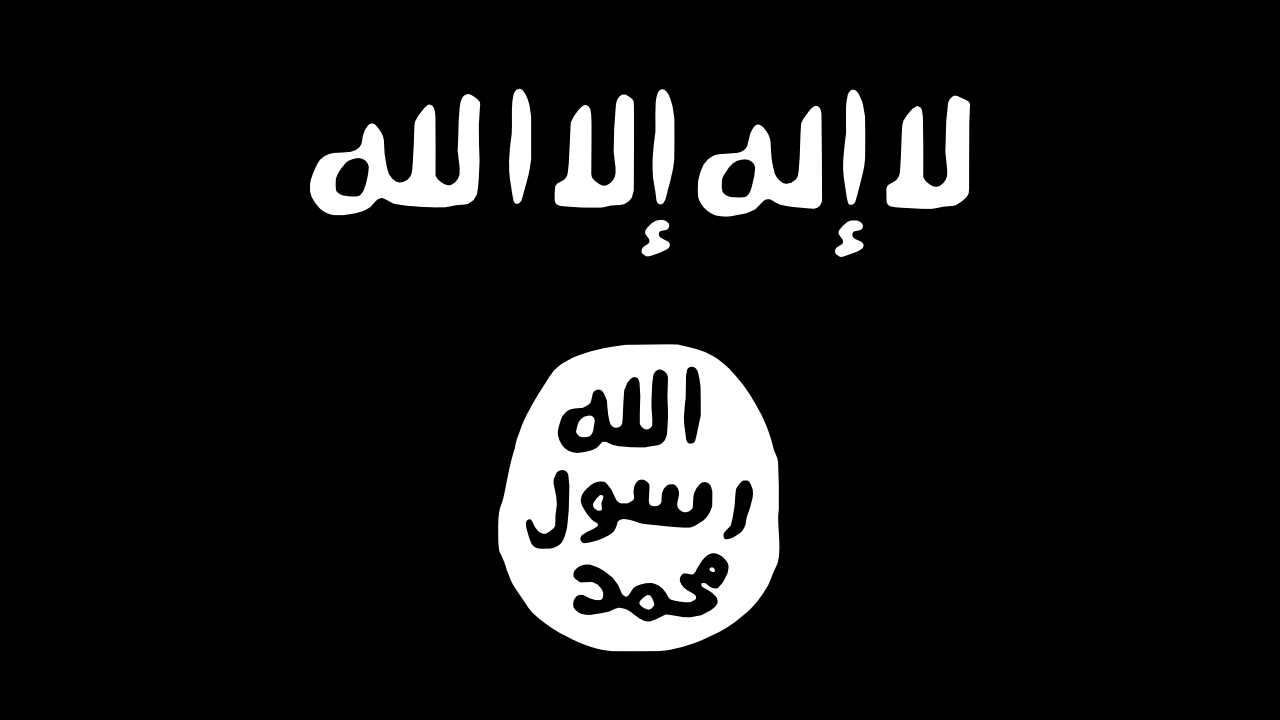
Intelligence Command Center // Terror group profile //

al Shabaab (Harakat al-Shabaab al-Mujahideen)

Islamic State

area of operation

East Africa

Specific AOR

Southern and Central Somalia; incursions into North-Eastern Kenya.

Volatility Index

VI-4 – Unstable

Ideological Alignment

al-Qaeda Central

force strength

7,000-12,000

Leadership

Shura Council headed by Ahmed Diriye (Abu Ubaidah)

Headquarters

Jilib, Somalia

SIGNATURES //

TECHNICAL PROFILE
Tier 2 - High-Tier / Professionalized
OPERATIONAL SIGNATURE
Hybrid Warfare / Guerrilla Ops
SPATIAL PROFILE
Rural / Contested Governance

Operational Brief //

A highly institutionalized, entrenched insurgent organization that effectively acts as a shadow state across significant portions of central and southern Somalia. It remains al-Qaeda’s wealthiest and most militarily potent global affiliate.

While the Somali Federal Government (FGS) launched a major counter-offensive in 2022, Al-Shabaab has demonstrated immense strategic durability, recapturing vital logistics hubs and re-encircling government-held centers.

Leadership & Command Structure

  • Command Element: Operating under the centralized authority of Ahmed Diriye (alias Abu Ubaidah), who maintains absolute command alongside a highly structured executive council (Amniyat,the group’s specialized intelligence and security wing).
  • Leadership Doctrine: Strict institutional military discipline utilizing a centralized high command combined with highly disciplined regional administrative sectors. Command lines emphasize institutional continuity to survive targeted leadership attrition.
  • Regional Management: Managed through specialized shadow governing shadow ministries (Wilaayaat) that oversee judicial courts, military deployment, and systemic tax extraction across south-central Somalia, maintaining direct communication lines with al-Qaeda’s central Hittin Committee.

Regional Center-of-Gravity (Current Focus)

  • Primary Growth Theater: East Africa, with the primary kinetic footprint focused on the Shabelle Offensive across south-central Somalia. The group maintains deep operational control over agricultural riverine sectors and interior trade corridors.
  • Operational Hub: Strategic interior zones flanking Mogadishu, leveraging these positions as primary tax extraction barriers, weapons assembly nodes, and launchpads for continuous urban suicide operations and high-profile visual assaults.
  • Secondary/Support Theaters: The Boni Forest border region between Somalia and Kenya, utilized as a cross-border sanctuary to plan, coordinate, and execute asymmetrical hit-and-run operations into Kenya’s Lamu and Garissa counties.

Intelligence Behavioral Matrix (TRAP-18/VERA-2R)

High-Risk Indicators: Systemic implementation of localized “Light Administration” models,dispensing swift tribal justice and levying institutional taxes (Zakat); deep infiltration into commercial municipal economies; and advanced paramilitary capacity to execute multi-pronged, coordinated visual assaults on fortified installations.

Volatility Index: High. The group maintains an aggressive, continuous kinetic operations cycle, combining conventional guerrilla warfare maneuvers in rural sectors with complex, mass-casualty urban suicide incursions.

Disruption Vector Matrix //

vector //

vulnerability //

disruption strategy //

logistics //

Dependence on absolute spatial access across critical choke points along major riverine shipping valleys and interior highway corridors to move personnel and weapon components.

Persistent Aerial Overwatch & Kinetic Interdiction: Deploy persistent ISTAR assets to monitor interior transit routes, executing precision strikes on known material caches and blocking strategic movement axes.

financial //

High reliance on localized extraction, formal protection extortion of commercial shipping lines, agricultural trade taxes, and systematic misuse of regional charitable networks.

Economic Interdiction & Asset Freezing: Map the commercial front companies, transport cartels, and banking interfaces laundering extracted funds into legitimate regional financial centers to sever the economic pipeline.

leadership //

Underlying factional tensions between nationalist elements focused strictly on domestic Somali politics and the transnational al-Qaeda-aligned core driving external regional expansion.

Information Operations: Deploy aggressive counter-narratives and psychological operations to exploit strategic splits, breaking internal institutional cohesion by amplifying rifts over funding and regional priorities.

Threat Matrix //

OPERATIONAL REACH: 4 – High (National/Cross-Border Infiltration)
KINETIC CAPABILITY: 4 – High (Advanced SALW/Thermal Optics/Coordinated Ambushes)
LOGISTICAL RESILIENCE: 5 – Critical (State-Permissive Sanctuary/Deep Financial Infrastructure)
INFORMATION INFLUENCE: 4 – High (Centralized Media Wing/Multi-Lingual High-HD Video)

OVERALL THREAT INDEX
4.25

operational reach //

Theater/Regional. Al-Shabaab maintains total dominance over vast rural swaths of southern and central Somalia (such as the Juba and Shabelle valleys) and effectively projects force into Mogadishu via urban assassination and bombing squads. It possesses proven cross-border projection capabilities, executing high-impact attacks, recruitment campaigns, and tactical incursions into Kenya’s coastal and northeastern provinces, alongside persistent structural plotting inside Ethiopia.

kinetic capability //

Advanced Asymmetric. The group routinely executes highly complex, multi-pronged assaults (swarming tactics using motorcycle and vehicle-borne suicide squads) capable of overrunning heavily fortified African Union and Somali National Army (SNA) forward operating bases. They have integrated commercial drone technology for reconnaissance and battlefield coordination, possess large stockpiles of heavy standoff weaponry (mortars, artillery, anti-aircraft systems), and run highly professionalized specialized infantry units like the Jaish Ayman.

logistical resilience //

Self-Sustaining / Competitive Governance. Al-Shabaab is financial-infrastructure secure, generating an estimated $100 million annually through a highly systematic, centralized shadow taxation matrix. It extorts commercial shipping at ports, major corporations, agricultural output, and checkpoints along primary trade routes—frequently displaying higher tax-collection efficiency than the federal government. It operates a secure, parallel judicial network that enforces compliance, utilizes local hawala networks for fluid capital movement, and runs domestic weapon-manufacturing and IED production labs.

information influence //

Institutionalized. Operating primarily through its sophisticated media apparatus, Al-Kataib Foundation, the group produces high-production-value, multi-lingual propaganda (Somali, Arabic, Swahili, English). It seamlessly exploits local clan fractures and socioeconomic grievances to position itself as an alternative provider of security, justice, and predictable governance against a fractured and corrupt federal architecture. It maintains significant radio networks (Radio Al-Andalus) to control the information ecosystem across rural theaters.

analytical note //

Al-Shabaab exemplifies the limits of purely kinetic counter-terrorism strategies. Its deep financial integration into the legitimate Somali commercial economy, paired with its capacity to execute competitive shadow governance, ensures that even when the group suffers tactical setbacks or loses town centers, its underlying administrative and logistical framework remains intact to launch rapid, territory-reclaiming counter-offensives.

Kinetic and Multi-domain capabilities //

Primary adversary//

Somali National Army (SNA), ATMIS, US AFRICOM

weaponry focus

Hmg
Rpg
Mortar
Ieds Efp

Geopolitical and Logistics //

financial vectors

Port Tax
Charcoal Trade
Protect Fees

RESTRICTED: STRATEGIC DISRUPTION //

Precision drone strikes on leadership (HVT) and financial interdiction

affiliated entities //