To analyze Pakistan’s counter-terrorism trajectory over the past quarter-century is to trace the violent, necessary deconstruction of a Cold War military paradigm. Between 1989 and 2001, the state operated under the strategic delusion that ideologically motivated proxy networks could be perpetually managed without compromising internal sovereignty. The subsequent reversal forced an existential shift from “Reactionary Kineticism” to a “Zero-Trust” preemptive doctrine.
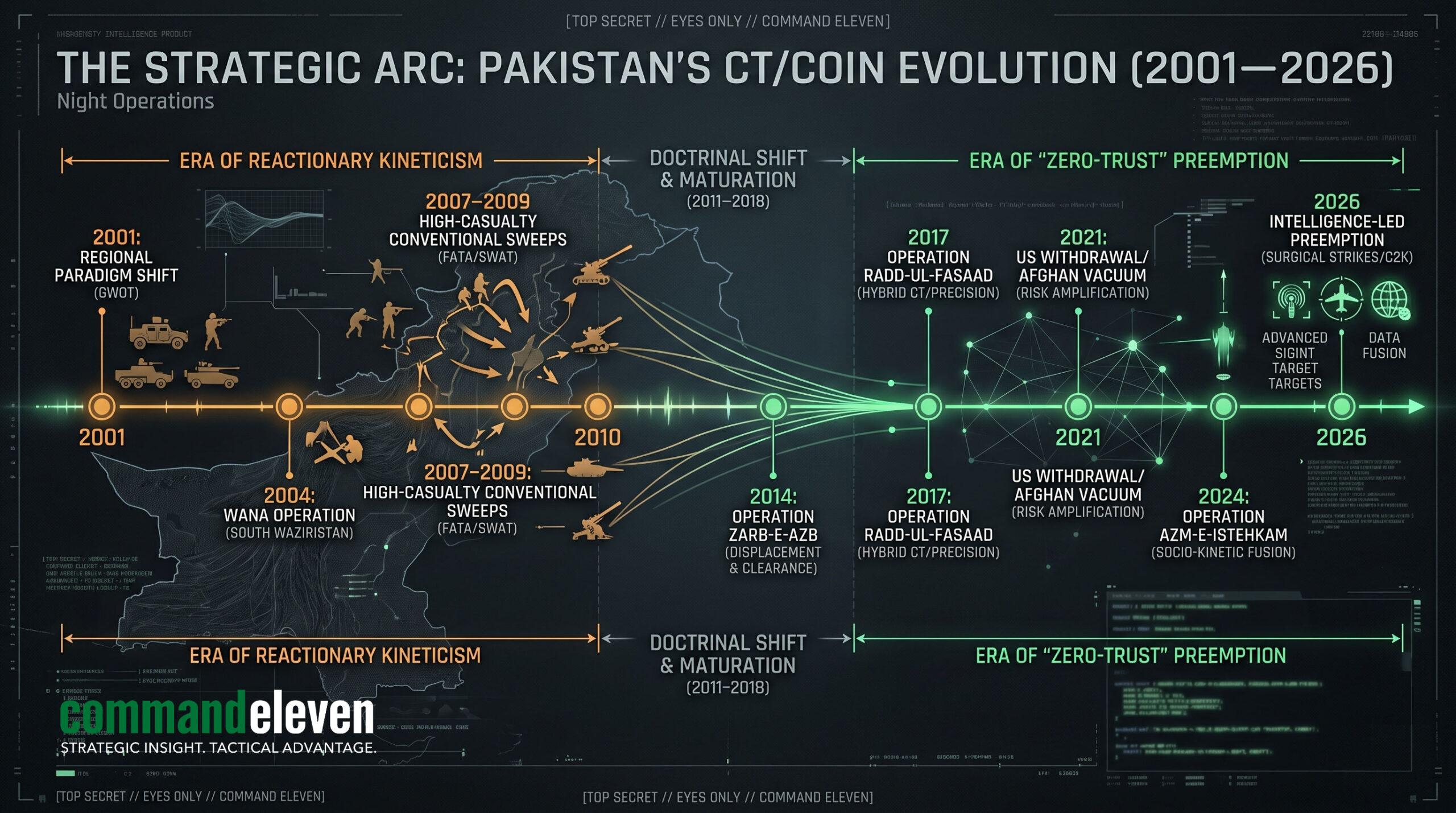
The Strategic Arc: From Reaction to Preemption
The 25-year period between 2001 and 2026 represents the most significant doctrinal evolution in the history of the Pakistani security apparatus. Initially, the state engaged an asymmetric threat using conventional, India-centric mechanized warfare frameworks. This mismatch resulted in a decade of high-casualty conventional sweeps and fluctuating territorial control.
The transition from the Kinetic Escalation Era (2007–2016) to the Hybrid/Preemptive Era (2017–2026) marks the maturation of the state’s intelligence architecture. The current 2026 posture identifies the three critical pillars of modern survival:
- Administrative Persistence: Moving beyond the “Clear-Hold-Build” model, the state now prioritizes Logistical Oxygen—the delivery of functional justice and utilities—to prevent the re-emergence of shadow administrative nodes.
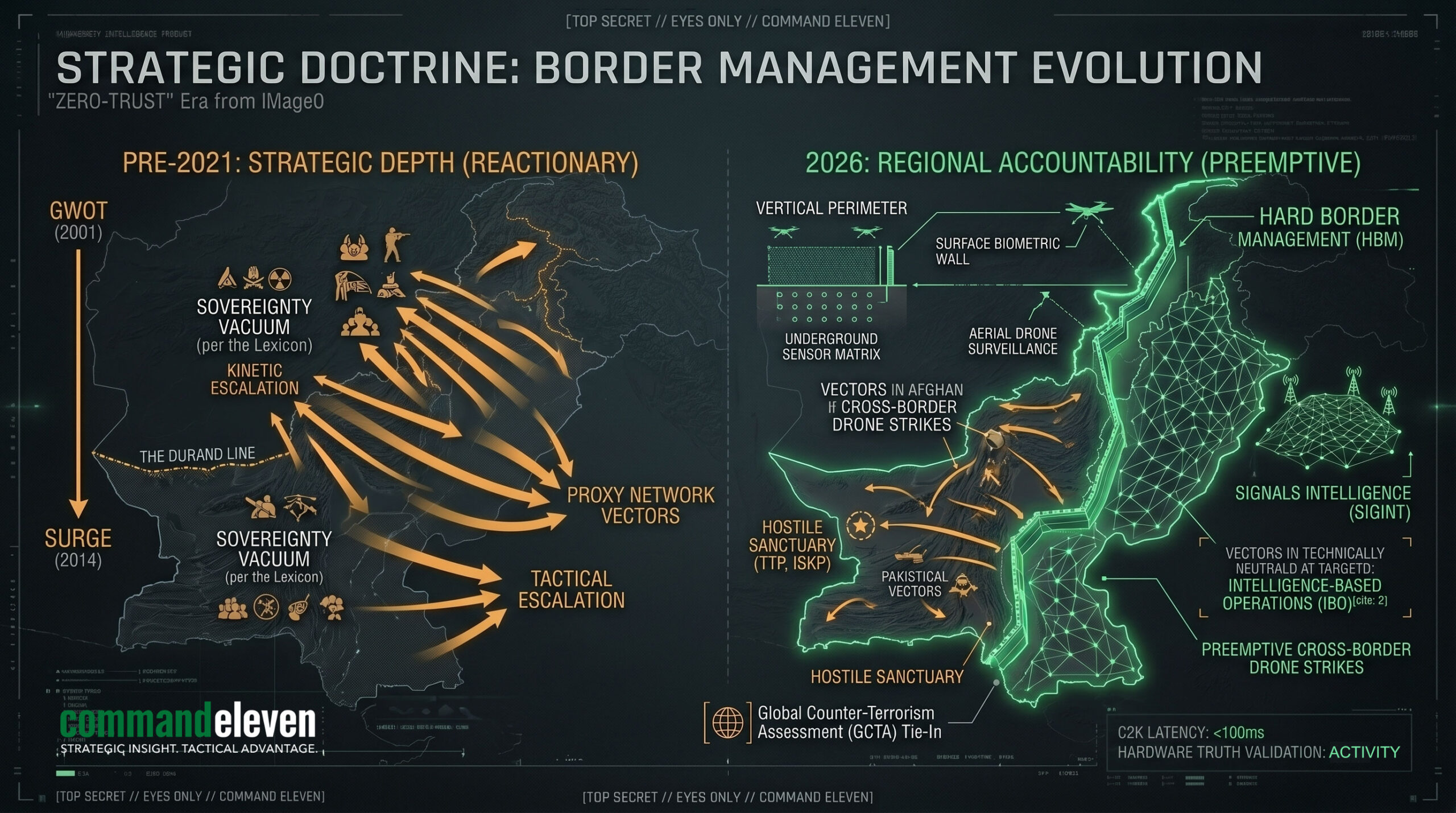
- Hard Border Management: The delusion of “Strategic Depth” has been dismantled. The state now treats the Pakistan-Afghanistan border as a hostile, heavily contested frontier requiring advanced signal intelligence (SIGINT) nets and preemptive drone strikes.
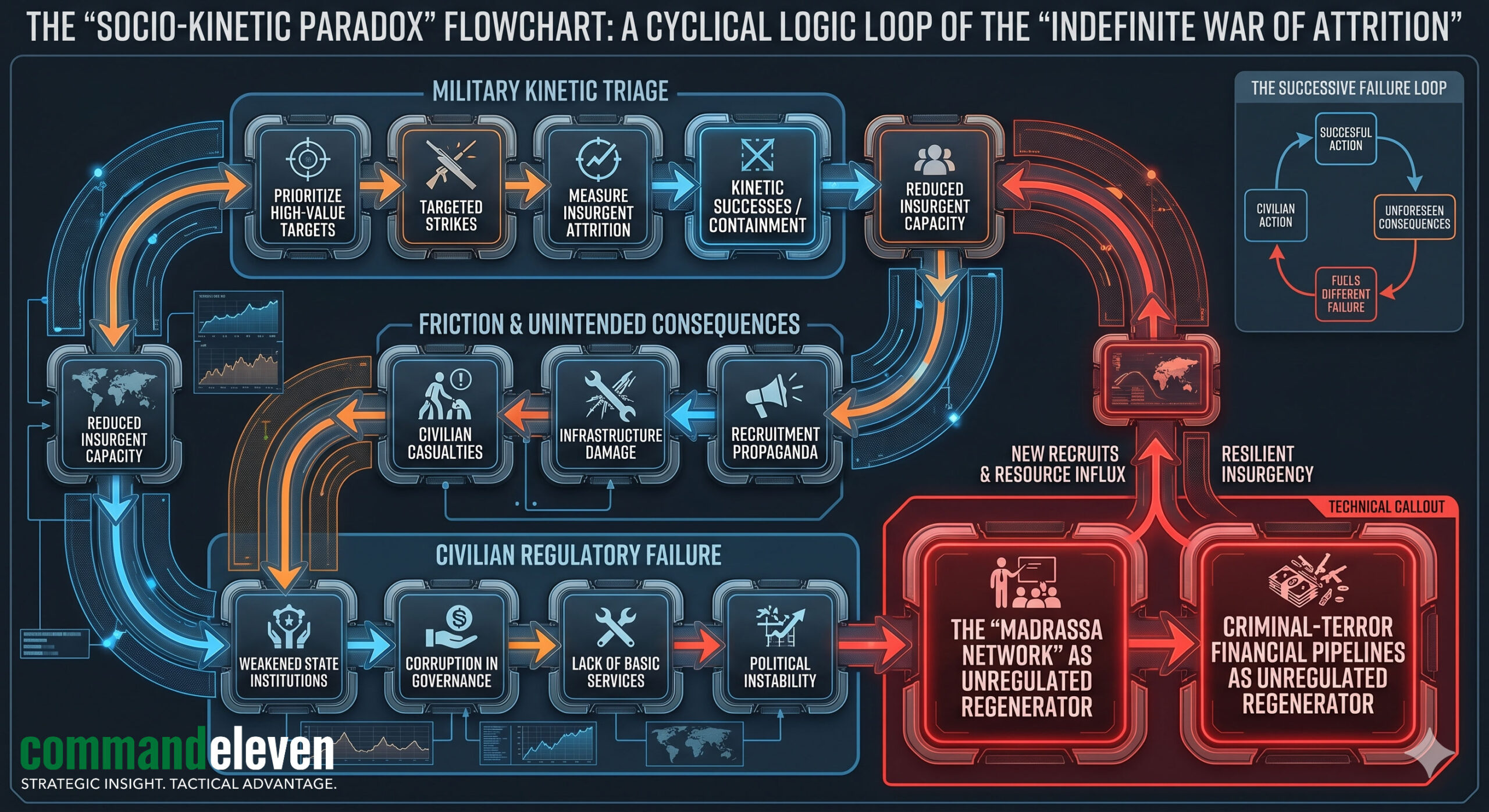
- The Socio-Kinetic Paradox: While operations like Azm-e-Istehkam attempt to fuse military action with socio-economic uplift, the 2026 policy remains a reliance on kinetic triage to compensate for the civilian failure to aggressively audit the madrassa network or sever criminal-terror financial pipelines.
Macro-Economic and Institutional Toll
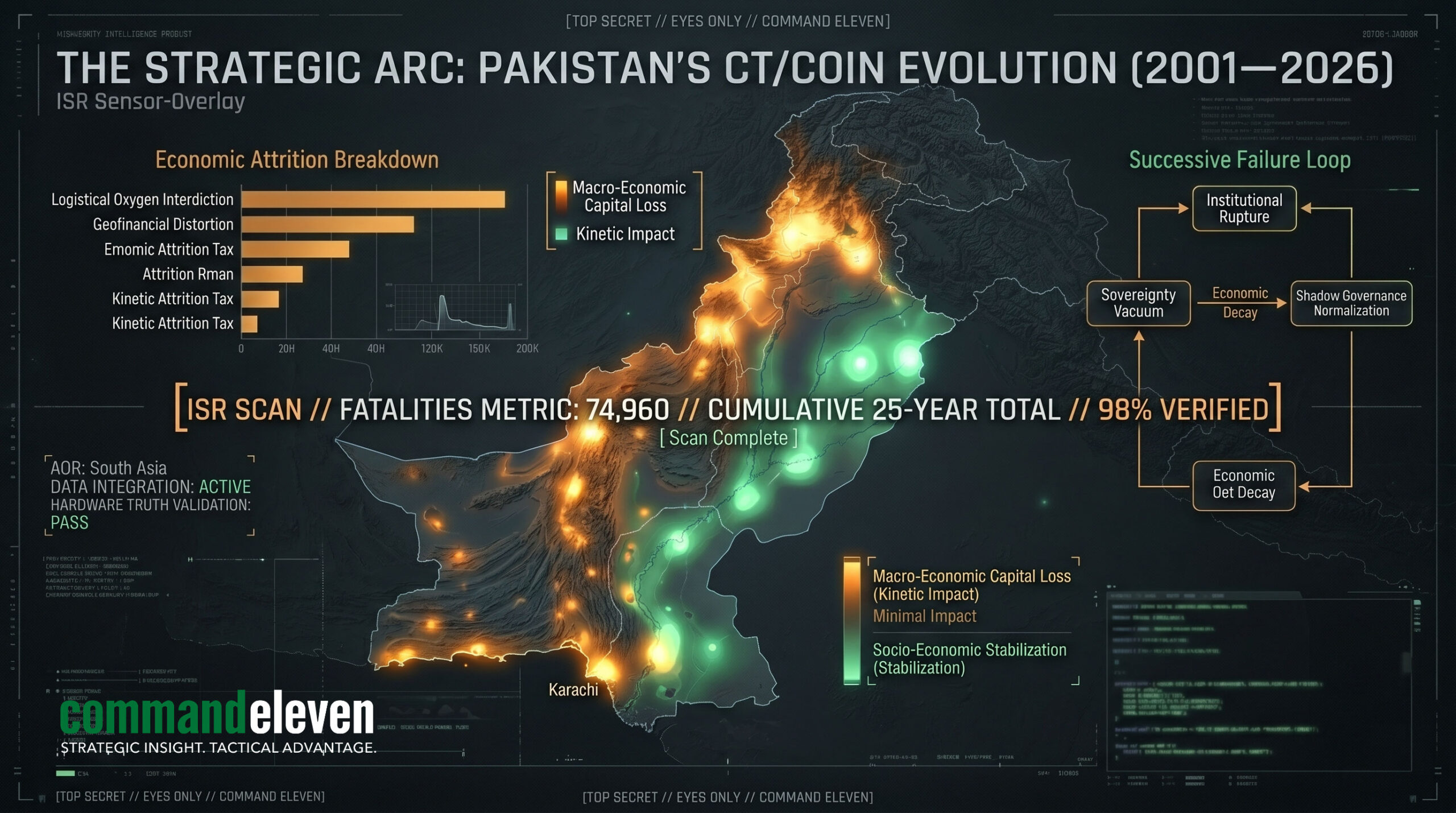
The 25-year conflict has extracted a staggering toll: $150.5 Billion in cumulative economic capital loss and over 74,960 total fatalities. Beyond the quantitative metrics, the conflict catalyzed a deep institutional maturation. The Frontier Corps (FC) has transitioned from a border constabulary to an elite offensive force, while the ISI’s Counter Terrorism Wing (CTW) has become the primary architect of national stability through global intelligence fusion.
The 2026 Global Counter-Terrorism Assessment (GCTA) Tie-In
The historical baseline established in this whitepaper is the prerequisite for understanding the 2026 Global Counter-Terrorism Assessment. The operational realities in Pakistan today are no longer isolated domestic issues; they are the direct precursors to the next wave of global terrorism.
The catastrophic US withdrawal from Afghanistan in 2021 erased the geopolitical deterrence that kept transnational networks in check. It flooded the Af-Pak theater with billions of dollars in advanced NATO-grade weaponry, granting groups like the TTP technological parity with state security forces. More critically, the resulting strategic vacuum facilitated ISKP’s elevation to the ISIS Core Shura. Operating from the ungoverned spaces along the Durand Line, these networks have transitioned from regional insurgencies back to entities capable of projecting terror globally. Consequently, the lessons forged by the Pakistani military’s successes and failures are now the foundational data points for predicting and neutralizing the global threat matrix of 2026 and beyond.
Defining the Current (2026) CT/COIN Policy of the Pakistani State
The 2026 doctrine is an indefinite war of attrition. It maintains a state of highly localized, lethal readiness to suppress the insurgency’s operational capability faster than the unregulated war economy can regenerate it. By shifting the focus from “Reaction” to “Preemption,” the state seeks to manage the symptoms of radicalization through superior hardware and technical interdiction, acknowledging that the underlying socio-economic “disease” remains untreated by the civilian executive.
VERIFIED AND APPROVED BY:
Syed Khalid Muhammad
Executive Director
HASH: 5911-C2K-GCTA-2026