Executive Summary
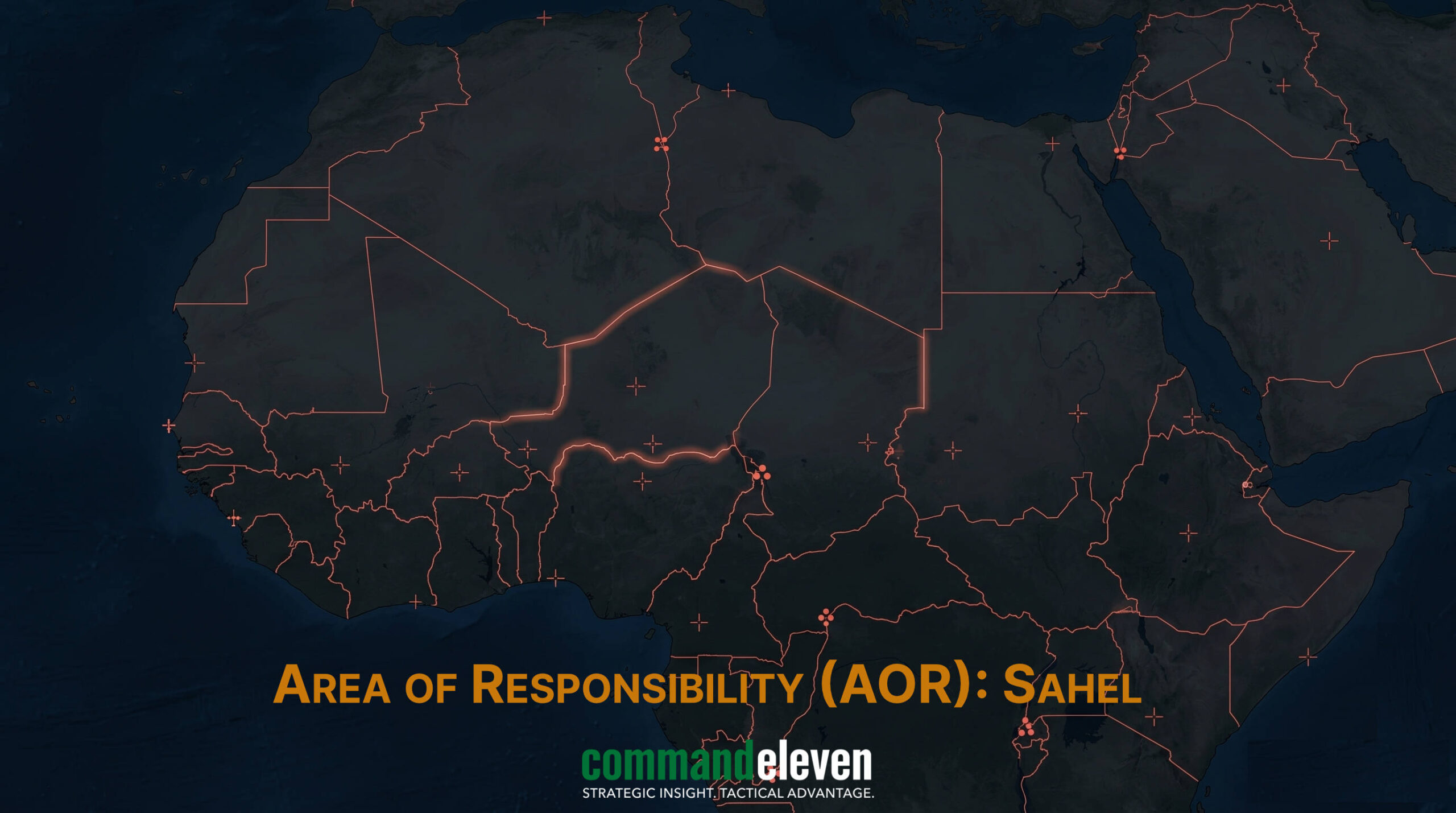
The systemic retraction of sovereign state military and administrative presence from peripheral rural zones has created a critical authority vacuum across the Sahelian belt. This structural deficit has been rapidly occupied by violent non-state actors (VNSAs), which have transitioned from predatory insurgent factions into institutionalized, alternative administrative entities.
By strategically exploiting localized agrarian-pastoralist frictions and ethnic marginalization, VNSAs have dismantled customary dispute-resolution channels to force communal dependency on their own command structures.
Through the implementation of swift, mobile judicial tribunals and the institutionalization of diverse fiscal logistics – including the regulation of artisanal gold-mining nodes, cross-border transit tolling, and zakat tax collection – these actors have normalized their presence.
Contemporary operations rely on a hybrid model that co-opts sub-state traditional authorities and deploys targeted local information networks to project bureaucratic competence. This cross-border integration allows VNSAs to navigate unilateral state actions fluidly, presenting a profound challenge to traditional regional security frameworks.
3 Key Takeaways
- Institutional Stabilization via Alternative Justice: VNSAs derive baseline popular legitimacy by establishing predictable, mobile judicial courts that resolve local property and resource disputes rapidly, contrasting sharply with corrupt or absent state legal apparatuses.
- Diversified Fiscal Independence: Non-state governance models are sustained by structured informal economies, directly taxing artisanal gold extraction and cross-border commercial transport corridors rather than relying solely on external or illicit donor funding.
- The Friction of the Kinetic Fallacy: Unilateral state military operations that focus exclusively on neutralizing insurgent combatants fail to dismantle non-state authority, as the state lacks the immediate civil, judicial, and administrative logistics required to fill the resulting vacuum.
Phase I: Kinetic Infiltration and Authority Vacuum (2012–2018)
Sovereign Fractures and Tactical Retrenchment
The evolution of non-state governance across the Sahelian belt was initiated by the rapid degradation of sovereign state presence in peripheral rural zones. Facing structural logistical deficits, institutional corruption, and overextended supply lines, central military forces in Mali, Burkina Faso, and Niger executed tactical withdrawals to highly fortified urban hubs.
This security retrenchment left expansive borderlands entirely unmonitored. The state’s retreat did not simply eliminate security enforcement; it dissolved the administrative framework responsible for managing public registries, basic infrastructure maintenance, and essential public services, effectively creating a critical authority vacuum.
Strategic Exploitation of Localized Grievances
Violent non-state actors (VNSAs) did not establish territorial control solely through kinetic dominance; they integrated into the local socio-economic fabric by exploiting long-standing, unaddressed grievances.
- Agrarian-Pastoralist Frictions: In regions like the Inner Niger Delta and the tri-border Liptako-Gourma zone, VNSAs systematically mediated escalating resource disputes between nomadic Fulani pastoralists and sedentary Dogon or Bambara agriculturalists.
- Ethnic and Class Marginalization: Insurgent networks positioned themselves as armed protectors for historically marginalized groups, framing the central state as an predatory, distant elite that extracted local wealth without providing representation.
- Economic Invalidation: VNSAs weaponized state-enforced conservation laws and anti-poaching regulations, which had criminalized traditional hunting and grazing practices, by unilaterally declaring these lands open to local communal use.
Systemic Eradication of Traditional Contenders
To consolidate an absolute monopoly on local authority, VNSAs executed targeted operations to dismantle indigenous, competing power structures.
- Neutralization of Sub-State Elites: Mobile insurgent squads targeted traditional village chiefs, respected religious scholars, and local municipal councilors who refused to align with the incoming militant apparatus.
- Destruction of Indigenous Dispute Channels: By executing or exiling customary leaders, VNSAs intentionally broke the historical, lineage-based judicial mechanisms of the communities.
- Forced Authority Dependency: The systematic elimination of alternative leadership forced local populations into an isolated position where the insurgent command structure became the sole viable provider of order, safety, and arbitration.
Phase II: Institutional Consolidation and Structural Administration (2018–2023)
The Justice Matrix: Alternative Jurisdictions and Tribunals
Between 2018 and 2023, VNSAs transitioned from fluid insurgent cells into institutionalized administrative entities, using the systematic application of swift, predictable justice as their primary tool for normalization.
- Mobile Sharia Tribunals: Recognizing that local populations favored efficiency over corrupt, multi-year state legal battles, VNSAs deployed mobile courts to resolve property thefts, land-boundary disputes, and marital conflicts.
- Enforcement Dynamics: Decisions rendered by these tribunals were backed by immediate physical enforcement, introducing a level of civil predictability that peripheral populations had not experienced under state governance.
- Anti-Corruption Narrative: Insurgents leveraged their rigid legal framework to contrast themselves directly with state judges, who routinely demanded bribes, thereby anchoring non-state judicial legitimacy in practical execution rather than ideological alignment.
Resource and Fiscal Logistics
The survival and institutionalization of non-state governance models required a robust, diversified economic engine to fund expanding administrative and military operations.
- Artisanal Gold Node Extraction: VNSAs secured physical control over major artisanal gold-mining sites throughout Burkina Faso and Niger. Instead of directly operating the mines, they instituted an organized regulatory framework: charging entry fees, taxing individual miners, and providing armed security against local banditry.
- The Zakat Tax Infrastructure: The collection of zakat (religious taxation) was institutionalized from an irregular extraction into a structured, bureaucratic process. Wealthier merchants, livestock owners, and agricultural collectives were issued physical or digital tax receipts, with non-compliance resulting in asset seizure.
- Transit Tolling and Customs Corridors: VNSAs established permanent, manned checkpoints along cross-border smuggling routes and commercial arteries. Commercial trucks carrying livestock, consumer goods, and fuel were systematically taxed based on cargo volume, creating a stable stream of liquid revenue.
Public Goods Provision and Market Regulation
To solidify localized control, VNSAs took on core state responsibilities, establishing a visible regulatory presence in daily commerce and communal life.
- Market Stabilization and Weight Verification: In major rural markets under their jurisdiction, VNSAs deployed market inspectors to enforce standardized weights and measures, prevent price-gouging on essential grains, and punish traders dealing in counterfeit goods.
- Conditional Security Duress: Populations that paid taxes and complied with cultural edicts received comprehensive security guarantees against external banditry, cross-border cattle rustling, and state military incursions.
- Border and Infrastructure Maintenance: While advanced public services remained absent, VNSAs organized local labor details to repair critical dirt corridors, secure well sites, and maintain functional informal communication channels, proving their capability to manage rudimentary logistics networks.
Phase III: The Contemporary Hybrid Governance Model (2024–2026)
Co-optation vs. Substitution: Sub-State Bureaucracy
By 2024, violent non-state actors (VNSAs) across the Sahel shifted from an escalatory model of total institutional substitution to a highly calculated strategy of bureaucratic co-optation. Recognizing that completely dismantling pre-existing local administrative frameworks triggered prolonged friction and required unsustainable manpower, VNSAs began subverting existing sub-state structures.
Traditional custom positions, municipal councils, and local land-management committees were kept physically intact but structurally co-opted. Local administrators were forced to handle day-to-day administrative tasks – such as updating birth registries, tracking real estate transactions, and managing communal agricultural schedules – under direct non-state oversight.
This hybrid arrangement allows VNSAs to project a false sense of administrative continuity to the population while exploiting established, indigenous civil compliance networks to enforce their strategic mandates.
Information Warfare and Cognitive Control
The contemporary Sahelian non-state governance architecture relies on sophisticated information logistics to reinforce its administrative authority and isolate populations from sovereign state messaging.
- Localized Audio Networks: High-frequency, mobile FM transmitters and WhatsApp audio distribution networks are utilized to broadcast administrative edicts, court schedules, and market pricing updates in local languages (such as Fulfulde, Tamasheq, and Bambara).
- Counter-State Narratives: Media outputs are heavily optimized to systematically frame central state militaries and foreign security partners as external destabilizing forces. In contrast, the VNSA is framed as an objective, indigenous arbiter of security and stability.
- Digital Public Services: Strategic communication units post structured digital manifests detailing tax collections, public market rules, and infrastructure maintenance schedules, deliberately projecting the bureaucratic transparency of a functioning sovereign state.
The Tri-Border Security Dilemma
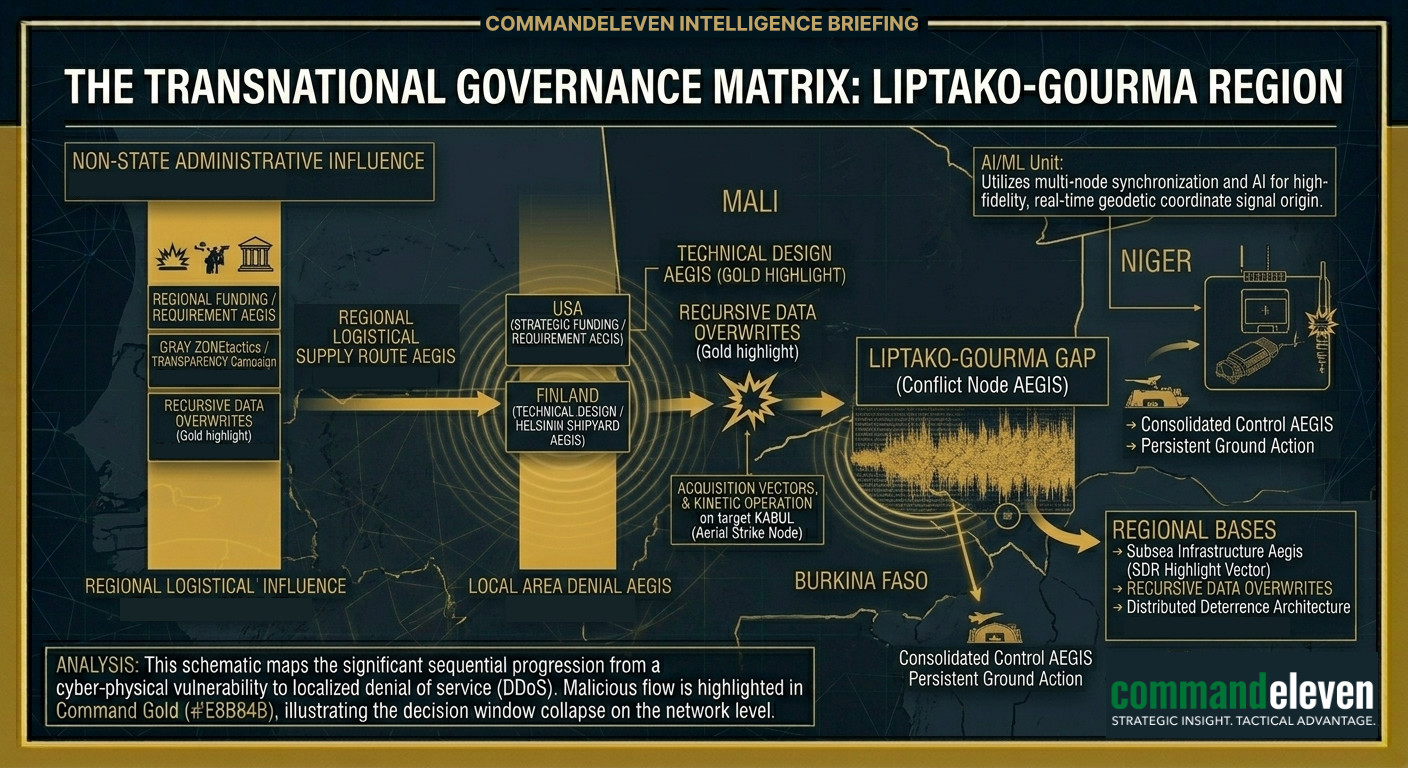
The entrenchment of hybrid governance is reinforced by its cross-border configuration within the Liptako-Gourma tri-border region. VNSAs have successfully established integrated administrative commands that span the borders of Mali, Burkina Faso, and Niger.
When unilateral state military forces conduct kinetic operations in one country, the non-state administrative and logistics hubs simply relocate across the immediate border line. This geographic mobility creates a profound security dilemma: while sovereign states remain restricted by international borders and formal bilateral friction, non-state governance networks operate on a unified, transnational plain. This disconnect renders isolated, state-centric kinetic sweeps structurally ineffective at disrupting the underlying administrative matrix.
Strategic Foresight Audits & Analytical Projections
The Legitimacy Trap: Structural Fragilities
The long-term viability of non-state governance models is bound to an analytical vulnerability termed “The Legitimacy Trap.” While VNSAs successfully build baseline legitimacy through predictability and anti-corruption measures, their governance structures are highly susceptible to acute external pressures.
- Macro-Economic Inability: VNSAs lack the institutional mechanism to counter macroeconomic shocks, such as regional currency devaluations, severe climate-driven agricultural collapses, or major transit blockades of imported medical supplies.
- The Shift to Predatory Extraction: When external resource constraints lower revenue from gold mining or transit tolls, VNSAs are forced to increase direct internal taxation (zakat) on impoverished local populations.
- Fracturing of Compliance: This shift from service-oriented governance to aggressive, predatory resource extraction undermines the group’s baseline popular support, triggering internal factionalism and exposing their administrative lines to local counter-insurgent actions.
The Kinetic Fallacy: Why Military Responses Fail
Sovereign states and international coalitions consistently fall victim to the “Kinetic Fallacy” – the operational assumption that dismantling a non-state actor’s military capability automatically restores state authority.
When a military operation successfully eliminates a localized VNSA command cell, it addresses the immediate security threat but leaves the underlying structural vacuum untouched. Because the state has spent years absent from the peripheral zone, it lacks the immediate judicial personnel, physical resource logistics, and trusted local administrators required to replace the removed non-state apparatus.
As a result, the local population experiences the return of the state not as the arrival of governance, but as an unstructured security vacuum. This instability inevitably invites the re-infiltration of alternative insurgent governance cells, locking the theater into a continuous cycle of stabilization failure.