
Intelligence Command Center // Terror group profile //

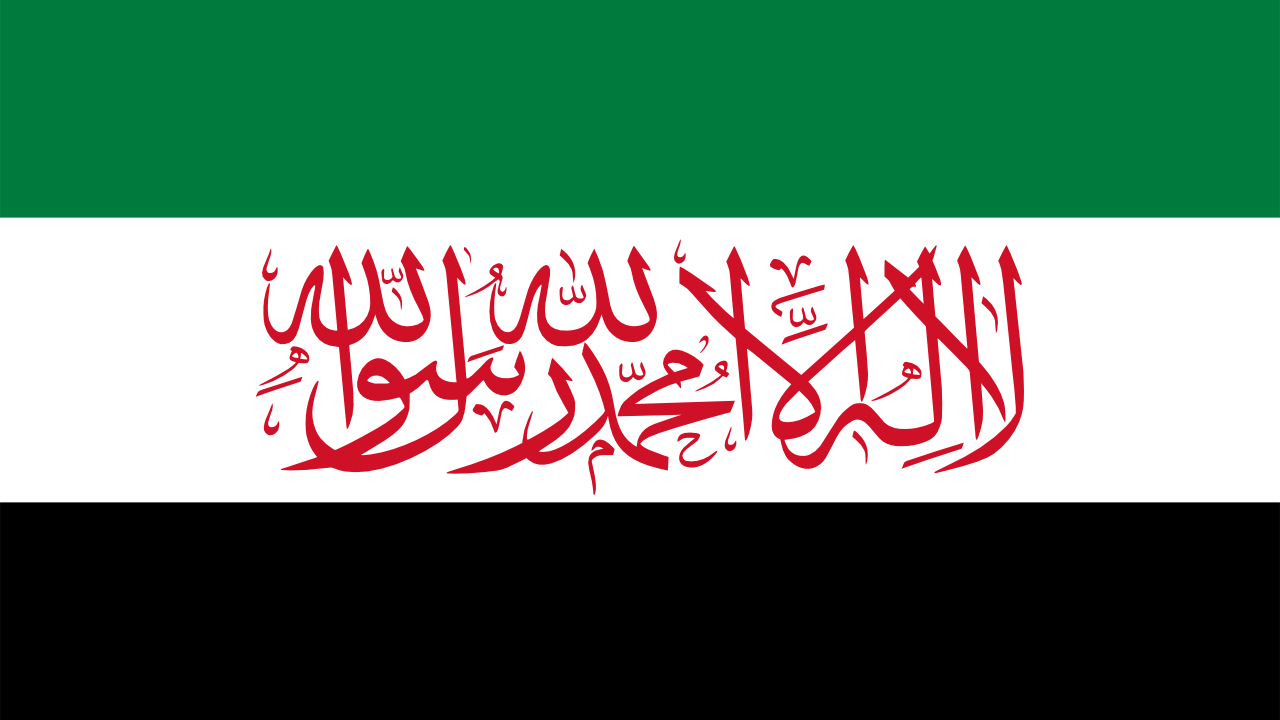
Syrian Salvation Government

Syrian Salvation Government

area of operation

Middle East & North Africa (MENA), Levant

Specific AOR

Volatility Index

VI-1 – Static

Ideological Alignment

al-Qaeda Central

force strength

Leadership

Headquarters

SIGNATURES //

TECHNICAL PROFILE
Tier 1 - State Actor / Peer Rival
OPERATIONAL SIGNATURE
Conventionalization (State-Model)
SPATIAL PROFILE
State-Level / Fixed Administration

Operational Brief //

Originally established in November 2017 in the northwestern province of Idlib, the SSG functioned for over seven years as the civilian, technocratic state-building project of the Islamist militant coalition Hay’at Tahrir al-Sham (HTS). Led covertly by HTS commander Ahmad al-Sharaa (formerly known as Abu Mohammad al-Jolani), the SSG systematically built a functional proto-state, mastering municipal taxation, civil registries, judicial enforcement, and basic services for over four million displaced Syrians.

The organization’s status completely transformed following the dramatic collapse of the Bashar al-Assad regime in December 2024. Upon capturing Damascus, HTS systematically dissolved its own armed faction alongside the localized SSG structure to erect a centralized, internationally recognized Syrian Transitional Government.

Through mid-2026, functioning under President Ahmed al-Sharaa within a five-year Constitutional Declaration (2025–2030), the technocrats, administrative codes, and ministerial structures developed under the SSG have been absorbed into the national ministries in Damascus, serving as the blueprint for an authoritarian, technocratic rebuilding phase.

Leadership & Command Structure

  • Command Element: Historically led by a succession of Prime Ministers (including Ali Keda and Mohammad al-Bashir) operating under the legislative oversight of the General Shura Council. De facto strategic, theological, and military authority was derived completely from Ahmad al-Sharaa (formerly known under the nom de guerre Abu Mohammad al-Julani), the leader of Hay’at Tahrir al-Sham (HTS).
  • Leadership Doctrine: Authoritarian technocratic governance. The SSG was explicitly built as al-Sharaa’s long-term “state-building project,” designed to institutionalize civilian administration, maintain a facade of operational autonomy from HTS’s military command, and professionalize governance mechanisms.
  • State Transition Matrix: Following the dramatic collapse of the Bashar al-Assad regime, the SSG served as the institutional and bureaucratic backbone for the immediate takeover of national ministries. SSG cadres formed the core of the initial national caretaker government led by Mohammad al-Bashir, before being officially integrated into the formalized 23-member Syrian Transitional Government under the strong presidential authority of President Ahmad al-Sharaa.

Regional Center-of-Gravity (Historical vs. Contemporary)

  • Primary Growth Theater: Northwest Syria, historically establishing a complete monopoly on administrative, judicial, and civic power across the Idlib Governorate and adjacent sectors of Aleppo, Hama, and Latakia.
  • Historical Operational Hub: Idlib City served as the de facto administrative capital. Within this enclave, the SSG managed ten distinct functional ministries (including Interior, Economy, Justice, and Health), regulating the day-to-day survival of over four million displaced and resident civilians.
  • Contemporary Expansion Theater: The national capital of Damascus. The administrative tradecraft developed within the Idlib enclave has been scaled nationally to overhaul the centralized state apparatus, absorb legacy ministry assets, and project power from the Presidential Palace across central Syria.

Intelligence Behavioral Matrix (TRAP-18/VERA-2R)

  • High-Risk Indicators: Advanced administrative infiltration capacity,demonstrated by the rapid absorption of overstaffed civil services and the immediate enforcement of the five-year Constitutional Declaration; execution of a calculated market-economy shift to court regional investments from Turkey and the Gulf states; and the continuous application of strict internal security parameters to suppress pro-Assad coup remnants and tightly regulate media or activist boundaries under the guise of “national security”.
  • Volatility Index: Moderate (Strategic/Institutionalized). The network has successfully transitioned from a localized insurgent wing into an incumbent governing authority, executing deliberate tactical restraint to secure international and regional legitimacy.

Disruption Vector Matrix //

vector //

vulnerability //

disruption strategy //

logistics //

Severe domestic economic fragility, staggering civil destruction, and critical infrastructure deficiencies across the energy, housing, and educational sectors.

Conditional Reconstruction Assistance: Leverage international financial assistance packages (such as European Commission funds) and humanitarian aid delivery to enforce compliance on human rights, civilian protection, and inclusive governance.

financial //

Extreme dependence on securing external capital injections, foreign direct investment, and normalized trade corridors with Turkey and regional powers to stabilize the currency and fund public sector payrolls.

Strict Anti-Money Laundering (AML) & Asset Monitoring: Maintain rigorous technical tracking over regional banking channels, monitoring state-level integration of former gray-market revenue loops to ensure transparent resource allocation.

leadership //

Significant domestic socio-political friction, emerging intercommunal tensions, and systemic governance gaps driven by the exclusion of Kurdish-led blocks (SDF) and localized Druze factions.

Political Integration & Decentralization Demands: Maximize diplomatic leverage to tie international political normalization to concrete progress on decentralized state frameworks, robust judicial oversight, and genuine minority representation in the new People’s Assembly.

Threat Matrix //

OPERATIONAL REACH: 5 – Critical (Transnational/Multi-Theater)
KINETIC CAPABILITY: 4 – High (Advanced SALW/Thermal Optics/Coordinated Ambushes)
LOGISTICAL RESILIENCE: 4 – High (Sustained Cross-Border Safe Havens/Diversified Revenue)
INFORMATION INFLUENCE: 3 – Medium (Basic Digital Presence/Uncoordinated Channels)

OVERALL THREAT INDEX
4.00

operational reach //

National Realignment (From Enclave to Sovereign Capital). The SSG’s legacy as a localized northwest Syrian administrative shell (anchored in Idlib, Aleppo, and Hama countrysides) has been completely superseded. Through mid-2026, its systemic administrative machinery has been scaled nationally to Damascus. While peripheral territories—specifically the Kurdish-led SDF east of the Euphrates and localized Druze factions in Suweida—continue to negotiate for a highly decentralized or federal model, the central state framework developed during the Idlib era now projects administrative and civil authority over Syria’s major urban centers.

kinetic capability //

Conventional Transition / Institutional Counter-Coup. The separate militia wings that originally enforced the SSG’s mandates—predominantly the al-Quds and security brigades of HTS—were formally disbanded and integrated into a unified National Army and General Security Forces. This newly institutionalized force maintains substantial kinetic capability. Its operational capacity was demonstrated on April 16, 2026, when the Ministry of Interior successfully thwarted a coordinated coup attempt by legacy Assad-regime officers in Damascus, proving that the transitional security apparatus can defend its newly captured state architecture.

logistical resilience //

State-Sustained / Reconnected Bilateral Flows. The financial architecture of the old SSG—which relied on border crossing fees (Bab al-Hawa), localized monopolies, and grey-market fuel transit—has transitioned into formal state macroeconomics. The transitional government has systematically dismantled Assad-era crony-capitalist import monopolies, favoring an open market model to attract Gulf and Turkish infrastructure investment. This normalization achieved a major milestone on January 9, 2026, when European Commission President Ursula von der Leyen visited Damascus to announce a €620 million financial assistance package for 2026–2027, structurally backstopping the state’s recovery.

information influence //

Structured (Technocratic Inclusion vs. Executive Centralization). The state’s narrative strategy has shifted from localized Islamist administration to a nationalist, inclusive state-building project. To secure international legitimacy, the March 2025 Constitutional Declaration instituted a presidential system that abolished the prime minister post and explicitly included minority representation, placing Alawite, Druze, Kurd, and Christian ministers into the cabinet. However, human rights monitors remain cautious through mid-2026; while old Assad-era media controls were suspended, the interim constitution centralizes massive power in the executive branch, allowing restrictions on expression under broad “national security” provisions.

analytical note //

The Syrian Salvation Government represents perhaps the most successful contemporary example of an insurgent-backed civilian front executing a covert transition from a designated terrorist affiliate into a recognized sovereign state framework. By forcing its fighters to disarm and merge into a national army while scaling its technocratic administrative core from Idlib to Damascus, the al-Sharaa administration has successfully neutralized traditional international counter-terrorism frameworks. The primary security challenge through late 2026 rests on civil peace and internal justice; as the May 9, 2026 partial cabinet reshuffle indicates, the executive is prioritizing mundane economic stabilization and agricultural recovery, but the lack of a finalized, permanent constitution and unresolved transitional justice demands from minority communities leave the centralized state vulnerable to sudden intercommunal fractures.

[!] CLASSIFICATION: SUCCESSION NOTICE The Syrian Salvation Government (SSG) has been formally succeeded by the Syrian Transitional Government (STG). Administrative frameworks, local governance protocols, and technocratic personnel have transitioned to the national authority in Damascus.

Kinetic and Multi-domain capabilities //

Primary adversary//

weaponry focus

DATA PENDING

Geopolitical and Logistics //

financial vectors

DATA PENDING

RESTRICTED: STRATEGIC DISRUPTION //

affiliated entities //

CYBER & TECHNICAL ASSESSMENT //
  1. PROTO-STATE FISCAL GATEWAY: Implementation of the “Unified E-Tax” and NGO registration portals. These systems allowed HTS to monitor foreign aid flows and domestic commerce, providing the financial data necessary to fund the 2024 Damascus campaign.
  2. DOMESTIC SPECTRUM MONITORING: Deployment of localized signal intercept units to monitor rival militias (SNA/SDF) and internal “Loyalist” nodes. This technical architecture ensured a sterile rear area during the transition to national governance.