
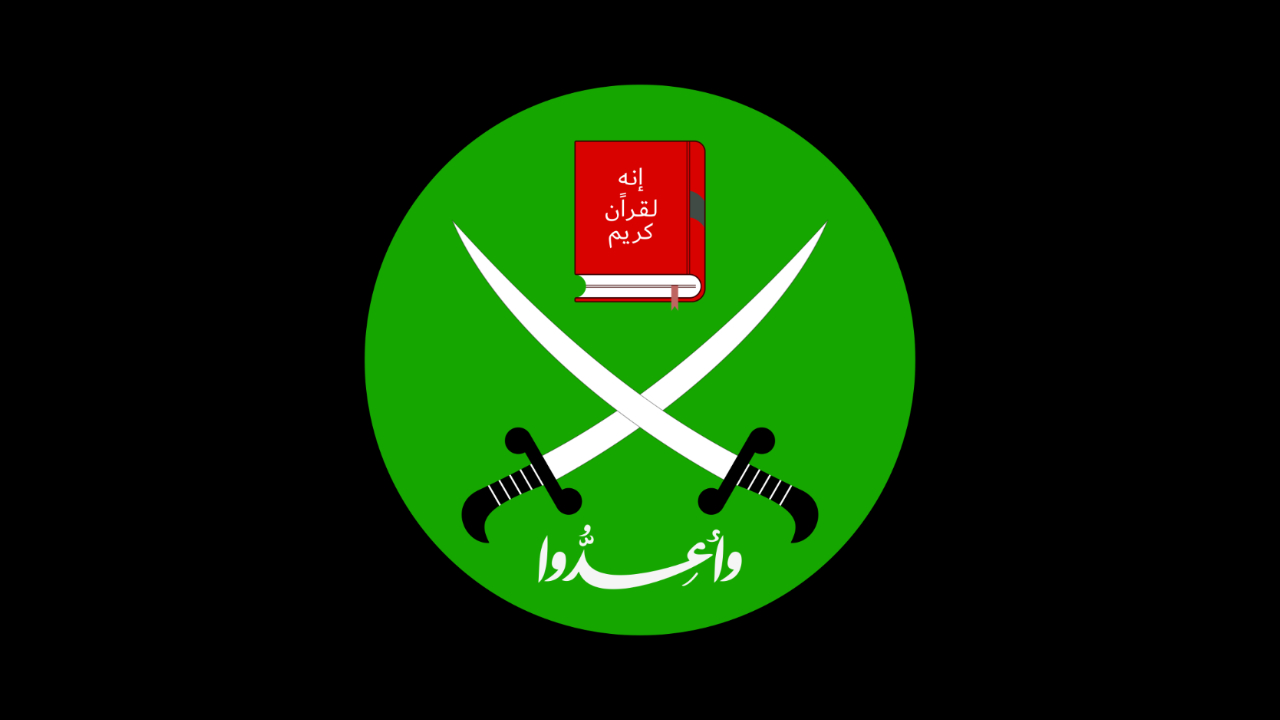
Intelligence Command Center // Terror group profile //

Muslim Brotherhood (Ikhwan al-Muslimun)

Muslim Brotherhood

area of operation

Specific AOR

Volatility Index

VI-1 – Static

Ideological Alignment

al-Qaeda Central

force strength

Leadership

Headquarters

SIGNATURES //

TECHNICAL PROFILE
Tier 1 - State Actor / Peer Rival
OPERATIONAL SIGNATURE
Conventionalization (State-Model)
SPATIAL PROFILE
State-Level / Fixed Administration

Operational Brief //

Unlike highly centralized, purely kinetic franchises such as Daesh or al-Qaeda, the Muslim Brotherhood functions as a global ideological, socio-political, and institutional network.

Founded in Egypt in 1928 by Hassan al-Banna, the movement pioneered mainstream Sunni Islamism. Following the 2013 ouster of the Morsi administration and a decade of severe domestic crackdowns, the organization fractured into competing geographical command structures,primarily divided between the London faction and the Istanbul faction (historically led by Mahmoud Hussein).

The group’s operational matrix experienced a severe, structural escalation following Executive Order 14362 and subsequent joint U.S. Treasury and State Department designations on January 13, 2026, which formally designated the Egyptian, Jordanian, and Lebanese branches as Specially Designated Global Terrorists (SDGTs) for providing material and logistical support to Hamas. This was followed on March 9, 2026, by the formal designation of the Sudanese Muslim Brotherhood as an SDGT and Foreign Terrorist Organization (FTO), stripping the movement of its legacy political and civic deniability.

Leadership & Command Structure

  • Command Element: Structurally governed by the General Guidance Office (Maktab al-Irshad), historically headed by the General Guide (Murshid al-Amm). Following extensive state-level crackdowns, mass incarcerations of core cadres, and the deaths of successive leadership figureheads, the global command architecture has split into bitter, competing factional networks operating from external safe havens.
  • Leadership Doctrine: Methodical, multi-tiered vertical bureaucracy designed for generational endurance. The group balances rigid ideological adherence to its foundational vanguard principles with dynamic, localized political adaptation to exploit shifting governance vacuums.
  • Factional Breakdown: The contemporary global matrix is fractured into three primary competing command nodes:
    • The London Front: Led by veteran ideologues and diplomats, prioritizing international political lobbying, media management, and the preservation of global financial assets.
    • The Istanbul Front: Backed by younger, more confrontational cadres and media networks, focusing on active political subversion and retaining links with regional state sponsors.
    • The Change Current / Bureaucrats: An insular, subterranean faction within Egypt advocating for more aggressive, direct action against state infrastructure, rejecting the traditional pacified approach of the aging exile leadership.

Regional Center-of-Gravity (Current Focus)

  • Primary Growth Theater: Transnational political and digital ecosystems, with physical coordination hubs established across Europe (specifically the United Kingdom), Turkey, and Qatar.
  • Operational Hub: Insular diaspora networks, specialized human rights front organizations, and multi-lingual media conglomerates. The group utilizes these platforms to mount sophisticated information operations against Middle Eastern state institutions while shielding its core structural network from regulatory asset forfeiture.
  • Subterranean Theaters: Legitimate civil society organizations, charitable trusts, and educational platforms across North Africa, Western Europe, and parts of South Asia, where cells focus on the slow, systemic radicalization and recruitment of professional middle-class demographics.

Intelligence Behavioral Matrix (TRAP-18/VERA-2R)

  • High-Risk Indicators: Deep integration within localized socio-economic, legal, and academic frameworks under the guise of charitable outreach; highly sophisticated dual-use financial structures designed to bypass international anti-money laundering (AML) controls; and a continuous, calculated use of democratic processes to capture state machinery and systematically dismantle secular institutional safeguards.
  • Volatility Index: Moderate (Strategic Restraint / Long-Term Subversion). The mainstream organization formally rejects overt kinetic violence in favor of gradual social infiltration and political patience (Gradualism). However, its ideological framework provides the foundational justification that regularly triggers violent splinter factions (such as Hasm or Liwa al-Thawra).

Disruption Vector Matrix //

vector //

vulnerability //

disruption strategy //

logistics //

Dependence on complex networks of non-profit entities, civil rights fronts, and alternative educational hubs to recruit, indoctrinate, and mobilize cadres.

Institutional Auditing & Structural Decoupling: Enforce rigorous transparency requirements and regulatory compliance audits on non-governmental organizations (NGOs) and charities suspected of acting as structural front companies for the group.

financial //

High reliance on a massive, opaque global portfolio of offshore shell companies, real estate investments, and informal cash clearing networks (Hawala) to transfer capital between exile fronts and domestic hubs.

Forensic Asset Mapping & Sanctions Enforcement: Deploy advanced financial intelligence to map complex corporate ownership structures, executing targeted asset freezes and blocking international remittance channels tied to the core leadership fronts.

leadership //

Intense, unyielding ideological and generational friction between the London and Istanbul leadership fronts regarding the allocation of financial assets and the future political direction of the movement.

Cognitive Operations & Amplification of Rifts: Execute targeted information and psychological operations to widen existing factional splits, exposing internal financial corruption and tactical failures to permanently degrade structural unity.

Threat Matrix //

OPERATIONAL REACH: 5 – Critical (Transnational/Multi-Theater)
KINETIC CAPABILITY: 3 – Medium (IED/Targeted Assassinations)
LOGISTICAL RESILIENCE: 4 – High (Sustained Cross-Border Safe Havens/Diversified Revenue)
INFORMATION INFLUENCE: 5 – Critical (Global Information Operations/Dominant Strategic Narrative)

OVERALL THREAT INDEX
4.25

operational reach //

Global (Transnational Bureaucratic Matrix). Despite the near-total destruction of its overt administrative capabilities inside Egypt, the Brotherhood commands an unmatched transnational footprint. It operates through autonomous national branches, political parties, and charitable trusts spanning the Middle East, Europe, and North America. The 2026 Western and Latin American (Argentina) designations highlight its role as a strategic coordination vector, facilitating cash movement, logistical safe havens, and political lobbying networks that link disparate regional theaters.

kinetic capability //

Advanced Asymmetric (Proxy & Derivative Hub). The Brotherhood’s central leadership formally renounced violence in the 1970s to pursue a strategy of gradual, bottom-up institutional Islamization. However, its kinetic capability remains highly dangerous through its direct incubation of, and material support to, militant offshoots. The 2026 designations exposed active coordination between the Egyptian branch and Hamas’s military wing to launch destabilization operations. In East Africa, the newly designated Sudanese branch actively deploys the armed al-Baraa Bin Malik Brigade in conventional-asymmetric warfare, backed by direct training from Iran’s IRGC.

logistical resilience //

Structured (Deep Corporate & NGO Camouflage). The group commands a highly resilient parallel economy. While legacy state backers like Turkey and Qatar have systematically constrained the movement’s public operational latitude to secure wider regional diplomatic normalization, the Brotherhood maintains a highly complex network of front companies, legitimate real estate syndicates, and educational charities. The January 2026 OFAC sanctions targeting its Egyptian and Jordanian nodes are actively disrupting these lines, forcing remaining cells to rely heavily on underground hawala networks and secure, peer-to-peer cryptocurrency assets.

information influence //

Institutionalized (Socio-Political Hegemony). The Brotherhood remains the foundational intellectual source for modern mainstream Sunni Islamism. Operating through advanced media conglomerates, satellite television networks based in Europe, and vast digital echo chambers, the group skillfully adapts its messaging. In Western capitals, it presents its agenda using the language of civil rights, political pluralism, and democratic participation; conversely, in regional arenas, it utilizes highly potent pan-Islamist and anti-Zionist narratives to drive ideological mobilization and radicalize younger demographics.

analytical note //

The Muslim Brotherhood represents a highly complex “chameleon” within the global threat matrix. For decades, the group successfully preserved its international infrastructure by exploiting the legal boundaries between legitimate socio-political activism and clandestine support for armed vanguards. However, the comprehensive multilateral sanctions wave of early 2026 has effectively shattered this legal shield. By formally linking the group’s mainstream Egyptian, Jordanian, Lebanese, and Sudanese chapters to hard-line kinetic actors like Hamas and the IRGC, international intelligence architectures have signaled a decisive shift: treating the Brotherhood not as a political opposition movement, but as a primary, deniable logistical conveyor belt for regional destabilization.

Kinetic and Multi-domain capabilities //

Primary adversary//

weaponry focus

DATA PENDING

Geopolitical and Logistics //

financial vectors

DATA PENDING

RESTRICTED: STRATEGIC DISRUPTION //

affiliated entities //