
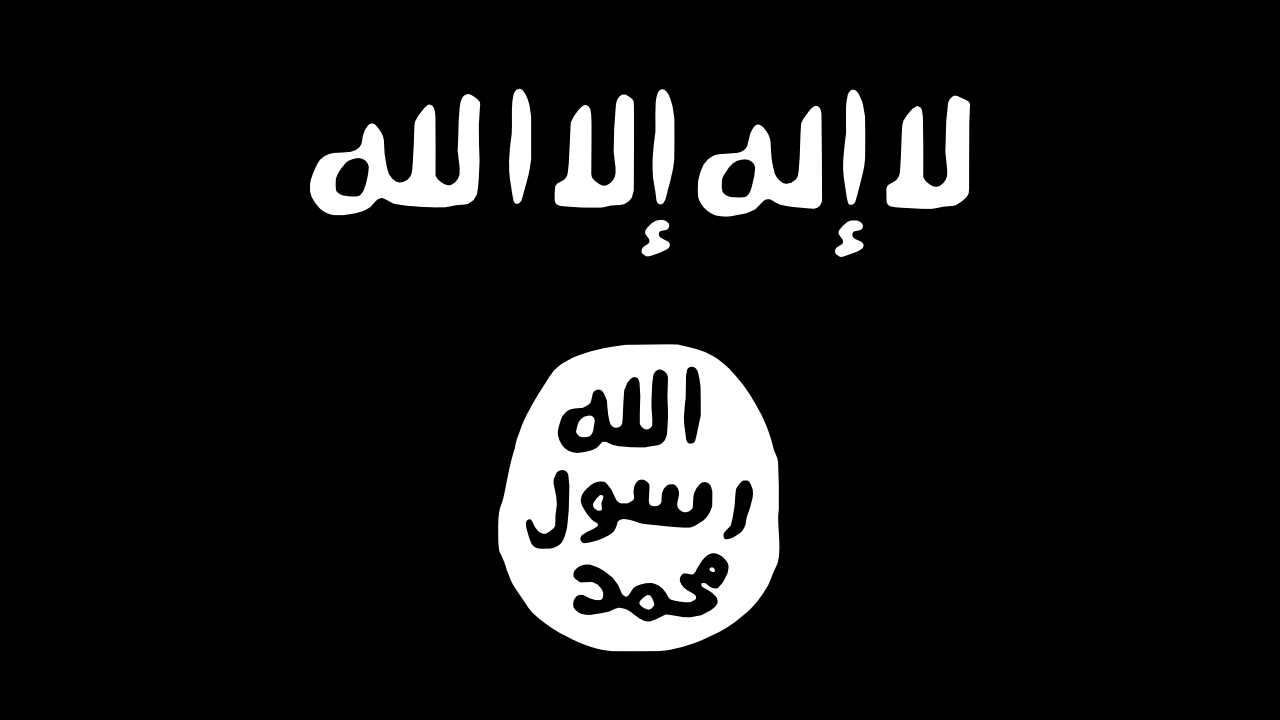
Intelligence Command Center // Terror group profile //

Islamic State – Tunisia Province

Islamic State

area of operation

Specific AOR

Volatility Index

VI-1 – Static

Ideological Alignment

al-Qaeda Central

force strength

Leadership

Headquarters

SIGNATURES //

TECHNICAL PROFILE
Tier 1 - State Actor / Peer Rival
OPERATIONAL SIGNATURE
Conventionalization (State-Model)
SPATIAL PROFILE
State-Level / Fixed Administration

Operational Brief //

Leadership & Command Structure

  • Command Element: Operating under a highly fractured, insular tactical command. Following relentless state counter-terrorism campaigns that eliminated successive top-tier leadership cadres, the group is directed by decentralized field commanders operating with complete tactical autonomy in the mountain interiors.
  • Leadership Doctrine: Highly compartmentalized, survival-oriented cell architecture. Day-to-day command is dictated by strict operational security, moving away from centralized vertical command lines to prevent total structural collapse from state intelligence penetrations.
  • Regional Management: Geographically restricted and operationally isolated. The group functions primarily through autonomous, localized military and logistics units embedded within specific mountain hideouts, relying on decentralized courier networks to maintain ideological and baseline strategic alignment with the global Islamic State core.

Regional Center-of-Gravity (Current Focus)

  • Primary Growth Theater: Western Tunisia, specifically focusing on the rugged, non-demarcated mountain ranges running adjacent to the Algerian border.
  • Operational Hub: The high-altitude, heavily mined sanctuaries of the central-western ridge,specifically Mount Chaambi, Mount Salloum, and Mount Mghila. This unforgiving terrain serves as the primary defensive shield, staging ground for low-tech improvised explosive device (IED) assembly, and tactical fallback zones.
  • Secondary/Support Theaters: Clandestine urban sleeper cells and digital recruitment nodes situated within marginalized municipal peripheries (such as Kasserine, Sidi Bouzid, and sectors of Tunis), utilized for baseline supply runs, intelligence-gathering loops, and radicalization.

Intelligence Behavioral Matrix (TRAP-18/VERA-2R)

  • Volatility Index: Moderate to High. While state interdiction has significantly degraded the group’s capacity to launch mass-casualty urban spectaculars, its operational intent remains highly volatile, focusing on resource-extraction raids and attritional asymmetric tactics.
  • High-Risk Indicators: Continuous deployment of low-tech, high-discrimination tactics, including the extensive placement of pressure-plate IEDs to deny military access to mountain sectors; targeted kidnappings and beheadings of local shepherds accused of state collaboration; and opportunistic ambushes against security patrols.

Disruption Vector Matrix //

vector //

vulnerability //

disruption strategy //

logistics //

Critical dependence on local rural border networks and coerced civilian populations to source basic sustenance, water, lithium batteries, and raw IED precursors.

Rural Supply Cordon & Community Engagement: Enforce strict technical monitoring of agricultural supplies in border towns, step up intelligence-led checkpoints around mountain approaches, and provide economic support to vulnerable rural populations to dry up coercion channels.

financial //

Severe financial isolation, relying almost exclusively on opportunistic armed robberies of rural homesteads, small-scale local extortion, and fragmented digital transfers.

Border Commerce Auditing: Implement rigorous monitoring on informal currency markets and local mobile transfer loops in the western governorates to prevent the conversion of illicit funds into logistics material.

leadership //

Intense operational friction and ideological competition with rival Al-Qaeda in the Islamic Maghreb (AQIM) affiliates—specifically the Uqba ibn Nafi Brigade—co-located in the same geographic theater.

Information Operations: Deploy targeted cognitive operations and disinformation vectors to exacerbate the long-standing strategic, theological, and resource conflicts between the IS and AQIM cadres, destroying localized operational truce frameworks.

Threat Matrix //

OPERATIONAL REACH: 2 – Low (Provincial/Disrupted)
KINETIC CAPABILITY: 2 – Low (Basic SALW/Sabotage)
LOGISTICAL RESILIENCE: 2 – Low (Basic Extortion/Transient Safe Havens)
INFORMATION INFLUENCE: 2 – Low (Localized Printed/Audio Leaflets)

OVERALL THREAT INDEX
2.00

operational reach //

Topographical Isolation / Mountain Enclaves. The operational reach of Jund al-Khilafah in Tunisia (JAK-T) is geographically constrained, with its remaining cells permanently bottlenecked within the rugged, mountainous interior border zones with Algeria—primarily anchoring operations within the Mount Chaambi, Mount Salloum, and Mount Mghila ecoregions. The group acts as an isolated insurgent nucleus, completely cut off from urban centers by the Tunisian Armed Forces’ tight security cordons, preventing the establishment of formal territorial control.

kinetic capability //

Low-Intensity Guerrilla / Improvised Mine Warfare. JAK-T’s kinetic capability has been systematically degraded by prolonged military counter-insurgency pressure. The group is incapable of executing mass-casualty urban operations. Instead, its combat profile is restricted to low-intensity asymmetric attrition: deploying improvised landmines and pressure-plate IEDs along mountain transit corridors to deter military patrols, conducting isolated sniper actions, and executing targeted raids on rural civilian populations to seize agricultural supplies and livestock.

logistical resilience //

Fragile (Sub-Tactical Foraging & Border Smuggling Networks). The group operates under an acute logistical squeeze, possessing zero formal corporate front lines or industrialized financial revenue streams. Its material survival relies on sub-tactical foraging, armed robberies of local rural communities, and small-scale extortion. For advanced weapons procurement, the group is entirely dependent on its ability to interface with transnational arms-smuggling syndicates operating across the porous Libyan and Algerian desert borders, making its supply line vulnerable to state border electronic surveillance.

information influence //

Muted / Fractional Messaging & Total Security Interdiction. JAK-T’s domestic information footprint is severely restricted, lacking an independent production platform. Its claim communications are mediated exclusively through IS Central’s core apparatus. Ideologically, the group seeks to capitalize on Tunisia’s severe economic stagnation and youth unemployment; however, its hardline, hyper-violent sectarian messaging struggles to gain structural traction within broader civil society, while state-level communication blackouts systematically neutralize its digital propagation efforts.

analytical note //

Kinetic and Multi-domain capabilities //

Primary adversary//

weaponry focus

DATA PENDING

Geopolitical and Logistics //

financial vectors

DATA PENDING

RESTRICTED: STRATEGIC DISRUPTION //

affiliated entities //