
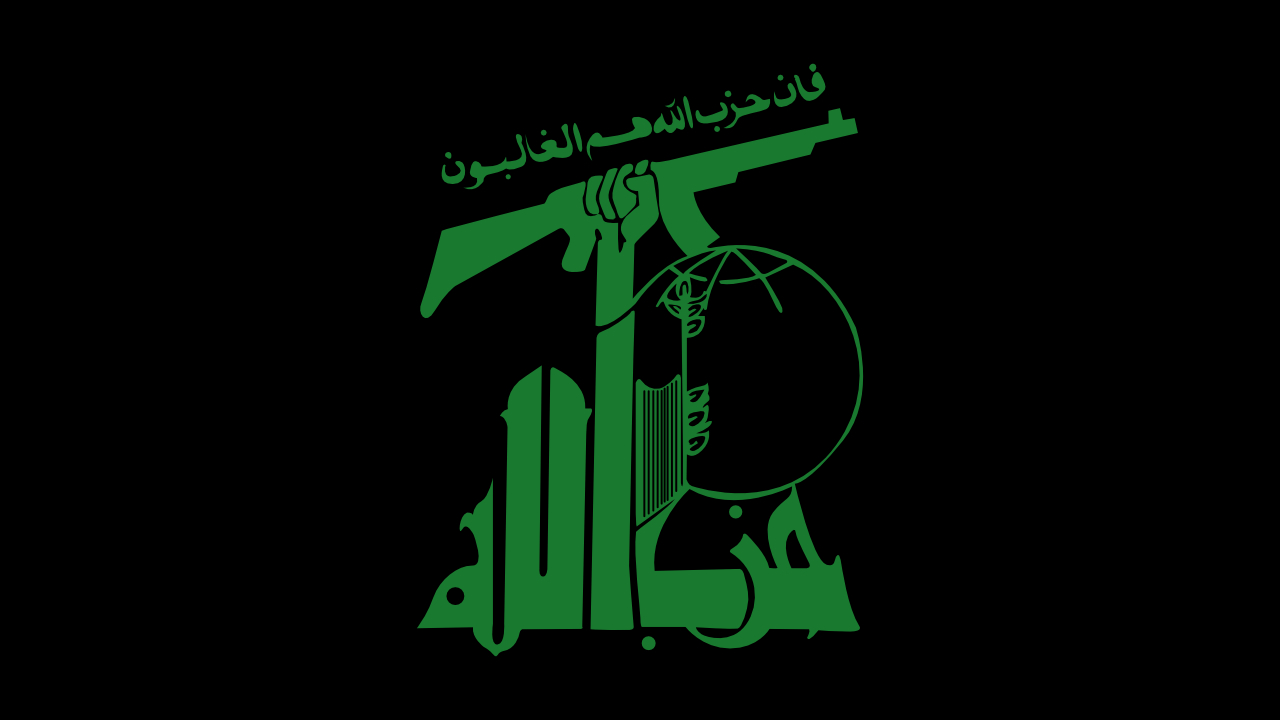
Intelligence Command Center // Terror group profile //

Hezbollah

Hezbollah

area of operation

Global, Middle East & North Africa (MENA)

Specific AOR

Southern Lebanon, Beqaa Valley, and southern suburbs of Beirut (Dahiyeh)

Volatility Index

VI-4 – Unstable

Ideological Alignment

Shia Khomeinist

force strength

25,000-50,000 (Active + Reserve)

Leadership

Naim Qassem is the current Secretary-General of Hezbollah, appointed on October 29, 2024.

Headquarters

Beirut (Dahiyeh)

SIGNATURES //

TECHNICAL PROFILE
Tier 1 - State Actor / Peer Rival
OPERATIONAL SIGNATURE
Hybrid Warfare / Guerrilla Ops
SPATIAL PROFILE
Subterranean / Tunnel-Network Infrastructure

Operational Brief //

A premier non-state military actor whose infrastructure is structurally integrated into a sovereign state. Operating as the anchor of Iran’s “Axis of Resistance,” Hezbollah functions as a hybrid state-level political entity and a formidable conventional fighting force. Following the intense conflict in late 2024 and the subsequent adoption of UN Security Council Resolution 1701 (2024),which enforced a critical monitoring and verification mechanism,Hezbollah has adapted its operational posture. Despite severe leadership attrition, including the elimination of long-time Secretary-General Hassan Nasrallah and succession crises, the group has consolidated its remaining assets under Naim Qassem. It has systematically adapted to a post-conflict political stabilization phase while vigorously safeguarding its strategic missile reserves and sovereign autonomy within Lebanon.

Leadership & Command Structure

  • Command Element: Operating under a highly institutionalized and robust decision-making matrix. Following historic waves of attrition targeting its traditional apex leadership, strategic and ideological guidance is driven by the Supreme Shura Council, heavily synchronized with external state sponsors to preserve regional command continuity.
  • Leadership Doctrine: State-tier institutional military and political discipline. The organization utilizes a dual political-military command structure that features absolute top-down strategic alignment, paired with highly resilient, compartmentalized field commands capable of autonomous tactical execution under protracted communications blackout conditions.
  • Regional Management: Managed through highly specialized functional councils (Jihad Council for military operations; Political, Parliamentary, and Executive Councils for civil governance). Field operations are divided into distinct geographic commands (e.g., South Litani, North Litani, Bekaa, and Beirut sectors) backed by elite specialized formations.

Regional Center-of-Gravity (Current Focus)

  • Primary Growth Theater: The Levant littoral and border frontiers, transforming its defensive networks into a high-density, multi-layered conventional and asymmetric battle space to maintain regional deterrence.
  • Operational Hub: The Bekaa Valley and the southern suburban networks of Beirut. The Bekaa serves as the strategic depth, logistics spine, and primary domain for deep subterranean ballistic missile storage and training facilities, while the urban hubs handle executive command and intelligence processing.
  • Secondary/Support Theaters: Global operational networks spanning the Syrian desert corridor for regional material transit, alongside highly lucrative, transnational financial and logistics networks operating throughout Western Europe, West Africa, and Latin America’s Tri-Border Area.

Intelligence Behavioral Matrix (TRAP-18/VERA-2R)

  • Volatility Index: High. The organization maintains an aggressive, highly sophisticated kinetic deployment cycle, utilizing state-tier precision weapons arrays, extensive drone swarms, and massive rocket artillery barrages alongside specialized anti-tank guided missile (ATGM) defenses.
  • High-Risk Indicators: Sovereign control over a parallel state infrastructure, including independent, encrypted fiber-optic telecommunications networks; acquisition and domestic modification of advanced precision-guided munitions (PGMs) and air defense systems; and the capacity to project institutional hybrid warfare capabilities globally.

Disruption Vector Matrix //

vector //

vulnerability //

disruption strategy //

logistics //

Dependence on a continuous, highly exposed land-and-air supply corridor running through Iraq and Syria to import advanced defense components and precision guidance kits.

Corridor Interdiction & Precision Denial: Execute persistent, multi-tiered electronic warfare and signal jamming over transshipment nodes, combined with targeted kinetic interdictions at border transit facilities and weapon staging hubs along the Syrian axis.

financial //

High reliance on a multi-billion-dollar dual-use financial network combining state cash inputs, illicit global narcotics/smuggling syndicates, real estate fronts, and systematic diversion of municipal public utility assets.

Transnational Blockchain & Corporate Interdiction: Deploy advanced financial intelligence and blockchain analytics to track crypto-asset routing, aggressively clamp down on exchange houses in regional banking sectors, and enforce secondary sanctions on international front enterprises.

leadership //

Significant institutional friction caused by intense counter-intelligence gaps, combined with deep political pressure from domestic factions blaming the group’s regional actions for national socioeconomic ruin.

Information Operations & SIGINT Countermeasures: Maximize signal intelligence (SIGINT) to intercept and compromise elite command vectors, while running localized cognitive warfare campaigns to exploit the class divide between wealthy political elites and frontline combatants.

Threat Matrix //

OPERATIONAL REACH: 5 – Critical (Transnational/Multi-Theater)
KINETIC CAPABILITY: 5 – Critical (Complex VBIED/Mass-Casualty/CBRN Posturing)
LOGISTICAL RESILIENCE: 5 – Critical (State-Permissive Sanctuary/Deep Financial Infrastructure)
INFORMATION INFLUENCE: 5 – Critical (Global Information Operations/Dominant Strategic Narrative)

OVERALL THREAT INDEX
5.00

operational reach //

Transnational/Global. Hezbollah maintains a dual-layer projection framework. Regionally, its expeditionary forces operate actively across Syria, Iraq, and Yemen as strategic advisors and combat commanders. Globally, its Unit 910 (External Security Organisation) manages highly sophisticated, dormant operations networks, financial hubs, and logistical facilitation pipelines stretching across South America (the Tri-Border Area), West Africa, and Europe.

kinetic capability //

Conventional Convergence. The group possesses a military arsenal that eclipses that of most sovereign states in the region. Wielding an estimated pre-war inventory of over 150,000 rockets, its current force posture is defined by advanced anti-access/area-denial (A2/AD) assets: precision-guided munitions (PGMs), land-attack cruise missiles, Yakhont supersonic anti-ship missiles, and massive loitering munition swarms. Its elite infantry unit, the Radwan Force, is highly specialized in mechanized warfare, modern anti-tank guided missile (ATGM) operations, and deep tactical defense.

logistical resilience //

State-Sustained / Institutional Sovereign Capture. Hezbollah operates a highly secure, multi-layered survival economy. Beyond direct state-level funding and hardware pipelines managed by the IRGC-QF through secure Syrian corridors, the group has captured significant revenue engines inside the Lebanese state architecture (airports, ports, and ministries). This is reinforced by a massive parallel global black economy involving narcotics smuggling (Captagon pipelines), money laundering syndicates, and a robust domestic network of banks and social institutions (Al-Qard al-Hasan) that bypasses international tracking.

information influence //

Strategic Narrative Dominance. Operating via its main satellite television network, Al-Manar, alongside a highly institutionalized digital propaganda apparatus, Hezbollah maintains a dominant grip on regional media cycles. Despite continuous Western digital platform bans, its communication strategy effectively positions the group as a legitimate national resistance movement and alternative provider of state services. This narrative architecture secures deep compliance among its core demographic while out-navigating the communications of its fragmented domestic political opponents.

analytical note //

Hezbollah presents a critical model of “sovereign insulation.” Because its military apparatus is deeply intertwined with Lebanon’s political, social, and economic infrastructure, it cannot be disrupted by standard counter-terrorism measures. While the post-2024 diplomatic agreements have re-arranged its overt border presence south of the Litani River, its underground tunnel architectures, domestic manufacturing facilities, and precision missile arrays remain intact, maintaining its capability to project strategic deterrence across the Levant.

Kinetic and Multi-domain capabilities //

Primary adversary//

Israel (IDF), Lebanese political rivals (LF/Kataeb)

weaponry focus

Kornet Atgm
Uas Soph
Burkan Srm
Precision Munitions

Geopolitical and Logistics //

financial vectors

Zakat
Iran Subsidies
Comm Fronts

RESTRICTED: STRATEGIC DISRUPTION //

Targeted strikes on “The Corridor” (supply lines through Syria) and financial sanctions on the Al-Qard al-Hassan bank

affiliated entities //