
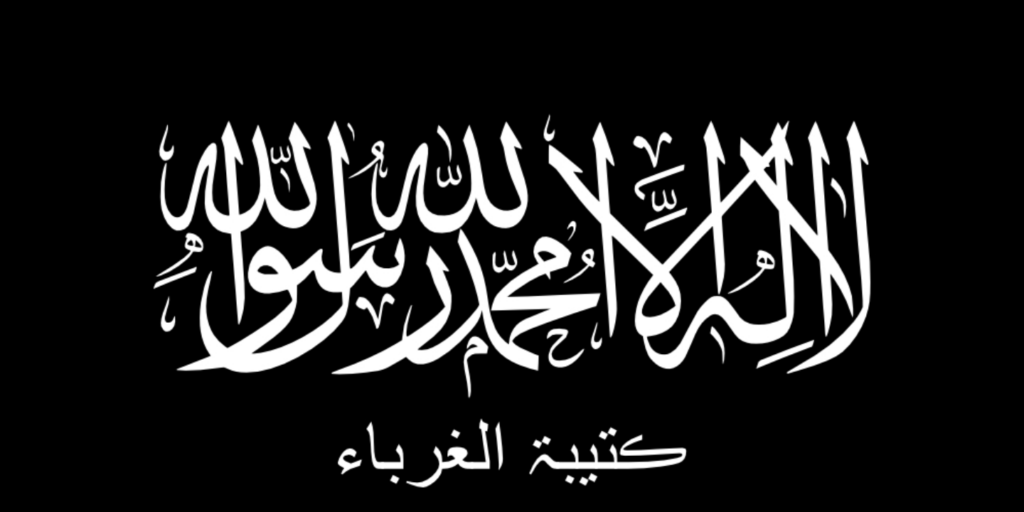
Profile Overview //
Operational Brief //
Originally founded in 2013 by Chechen commander Tarkhan Batirashvili (Abu Omar al-Shishani) as a vanguard for elite fighters from Chechnya, Dagestan, and Ingushetia, the group later split, with its remnant core pledging allegiance to al-Nusra/HTS under the leadership of veteran Chechen emirs.
Following the collapse of the Ba'athist regime, LMA followed the path of other foreign battalions like the Turkistan Islamic Party (TIP), formally dismantling its autonomous insurgent infrastructure. Through mid-2026, the group is completely integrated into the 84th Division of the new Syrian Army, transforming its remaining North Caucasian veteran core into state-salaried specialized infantry units while operating under tight state-surveillance parameters.
Threat Matrix //
Operational Reach
Highly Localized (State-Bounded). Historically capable of drawing recruits directly from the Russian Federation’s North Caucasus region and coordinating logistical pipelines through Turkey, LMA’s modern physical reach is entirely restricted to its state-assigned deployment zones in northwestern Syria. Operating under the structural command of the 84th Division, its personnel are garrisoned along coastal defense lines and rugged mountain positions. The group possesses no independent external operations (ExOps) planning apparatus.
Kinetic Capability
Conventional Convergence (Integrated). Wielding a compact, highly disciplined force estimated at 300 to 500 active combatants, LMA’s legacy value was its elite shock-troop (inghimasi) capabilities and urban warfare expertise honed during the Chechen wars. Following its formal state integration between 2025 and 2026, the unit achieved conventional convergence, trading asymmetric insurgent mobility for regularized access to state military hardware, heavy weaponry, and unified command-and-control infrastructure.
Logistical Resilience
State-Sustained (Sovereign Shielding). The group’s financial foundation has successfully transitioned from wartime dependency on war spoils, localized agricultural extortion, and covert crowdfunding channels inside the Russian Federation to a completely state-salaried model. Compliant LMA cadres receive direct stipends and logistical equipment from the transitional Syrian Ministry of Defense. This official integration grants them deep legal protection, shielding the North Caucasian fighter core from direct international counter-terrorism interdiction or Russian extradition requests.
Information Influence
Rudimentary / Suppressed. LMA’s historically potent media organs, which produced high-yield Russian-language recruitment videos and ideological publications targeting Russian-speaking audiences, have been systematically decommissioned. In compliance with Damascus’s strict state broadcasting mandates, independent media output has been completely suppressed. The group’s communications are limited to private, insular channels, rendering their independent ideological influence across the post-Soviet space virtually non-existent in 2026.
Analytical Note
Liwa al-Muhajireen wal-Ansar presents the definitive study of the neutralization of North Caucasian militancy via sovereign institutionalization. By transforming an elite, highly volatile independent jihadist formation into a regularized, state-salaried battalion, the Syrian transitional government has effectively blunted its wild-card operational risks. However, this absolute state dependency creates a permanent strategic vulnerability: any future diplomatic normalization or intelligence-sharing agreements between Damascus and Moscow will immediately place these integrated North Caucasian units on the geopolitical chessboard, leaving unintegrated or disenfranchised elements vulnerable to targeted internal purges or clandestine migration toward emerging external operations platforms like ISKP.