
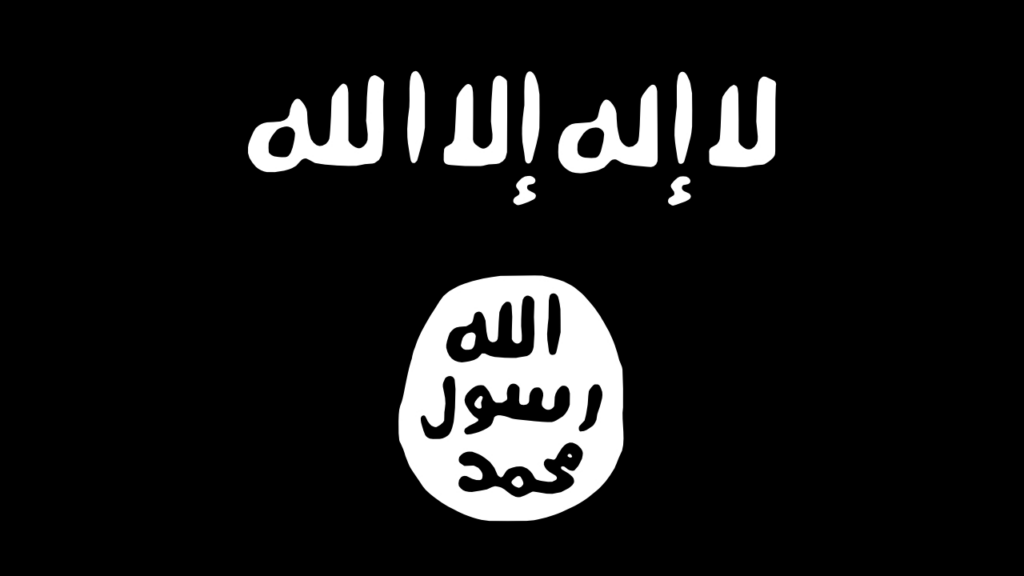
Profile Overview //
Operational Brief //
First revealed by Daesh central in April 2019 during a video appearance by Abu Bakr al-Baghdadi, ISTP has historically occupied a unique position. Unlike combat-heavy African or South Asian provinces, ISTP's primary value to the global network is its position as a transcontinental gateway between Europe, the Levant, and Central Asia.
However, through 2025 and into mid-2026, intense pressure from Turkey’s National Intelligence Organization (MİT) and the General Directorate of Security has led to fierce tactical escalations. ISTP has shifted from low-profile logistical facilitation to direct, defensive armed confrontations against state security forces, combined with high-impact urban operations.
Leadership & Command Structure
- Command Element: Governed by a sophisticated, deep-cover bureaucratic directorate that interfaces directly with ISKP external operations handlers and the global IS financial office (Al-Ardi Office). The command element operates via highly compartmented urban cells to evade the National Intelligence Organization (MİT).
- Leadership Doctrine: Employs a highly structured, corporate-style management model. Focuses strictly on operational security, financial management, documentation forgery, and facilitating transnational transit rather than pursuing local territorial control.
- Regional Management: Manages an extensive underground network distributed across major Turkish urban centers, with critical logistics and financial clearinghouses concentrated in Istanbul, Ankara, Izmir, Konya, and the southern border hubs of Gaziantep and Hatay.
Regional Center-of-Gravity (Historical Focus)
- Primary Growth Theater: Turkey’s major industrial and border cities, systematically exploiting the country’s extensive international travel infrastructure and large migrant/diaspora populations.
- Operational Hub: The sprawling metropolitan underground of Istanbul and the border logistics grids of southeastern Anatolia. These urban environments allow cells to hide within dense populations, operate front businesses, and manage transnational financial networks.
- Strategic Isolation: Exceptionally Low. Functions as the premier transcontinental bridge for the global IS network, maintaining active, high-volume logistical and financial connections that link Europe, Central Asia, the Caucasus, and the Levant.
Intelligence Behavioral Matrix (TRAP-18/VERA-2R)
- Volatility Index: Calculated / High Strategic Risk. Avoids frequent low-level tactical skirmishes, prioritizing long-term logistical survival punctuated by rare, high-impact external operations or mass-casualty strikes.
- High-Risk Indicators: Industrialized capability to manufacture high-grade forged travel documentation and identities; management of multi-million-dollar transnational cryptocurrency and hawala laundering networks; and the assembly of deep-cover operational cells to launch mass-casualty firearm or suicide assaults on high-value targets.
Threat Matrix //
Operational Reach
Transnational (The Eurasian Transit Hub). ISTP’s physical cell architecture spans major industrialized and transit provinces, including Istanbul, Yalova, Gaziantep, Hatay, and Izmir. While its direct kinetic operations are concentrated internally, its operational reach is structurally transnational. ISTP serves as a primary forward deployment base and documentation clearinghouse for external operations (ExOps) cells—particularly Central Asian and Russian-speaking cadres managed by ISKP—moving downstream from Afghanistan into Western Europe.
Kinetic Capability
Advanced Asymmetric / Urban Shock Tactics. ISTP fields a highly compartmentalized, underground web of independent operational cells. While it avoids sustained guerrilla warfare, its tactical lethality is high. This was starkly demonstrated on December 29, 2025, during a massive police raid on a fortified ISTP cell in Yalova Province, which escalated into a brutal nine-hour shootout that killed three Turkish police officers and six militants. This capability was further highlighted on April 8, 2026, when an ISTP-linked cell executed a daylight shootout adjacent to the Israeli Consulate in Istanbul, proving their ability to penetrate heavily militarized urban security zones.
Logistical Resilience
Structured (Deep Socio-Economic Integration). Despite massive, continuous state sweeps—including the April 2025 arrest of 89 operatives across 17 provinces—ISTP maintains highly resilient financial pipelines. The group exploits legal ambiguities and leverages local radical networks, such as using un-enforced office infrastructures of radical pan-Islamist groups like Hizb ut-Tahrir as conveyor belts for radicalization and recruitment. Financially, ISTP operates via highly complex hawala networks, illicit gold smuggling lines across the Syrian border, and localized front companies that manage decentralized cryptocurrency wallets to move operational capital globally.
Information Influence
Rudimentary / Clandestine Focus. Independent, high-production media releases from Wilayat Turkiya are strictly restricted to avoid triggering immediate electronic interdiction by state authorities. Instead of broad public outreach, ISTP relies on direct, insular targeted messaging. The group uses encrypted applications to run localized Turkish-language radicalization pipelines, tailored to exploit domestic political and religious polarization. This digital infrastructure focuses primarily on operational facilitation—securing safe houses, procuring fraudulent passports, and organizing transit pipelines for incoming foreign operatives.
Analytical Note
ISTP presents a classic “hybrid facilitation-kinetic” threat model. For years, the group prioritized keeping a low profile to preserve Turkey’s status as a safe haven for financial movement and elite fighter recovery. However, the deadly December 2025 Yalova siege and the April 2026 Istanbul consulate assault indicate a decisive shift in posture: under intense pressure from continuous state crackdowns, localized cells are increasingly willing to engage in high-casualty urban actions. As the state apparatus remains focused on managing the geopolitical shifts in neighboring post-Assad Syria, ISTP continues to exploit hidden radicalization pipelines to build a highly insular, radicalized generation of domestic cadres capable of staging deniable operations in European transit zones.
Disruption Vector Matrix //
Logistics Vulnerability
Reliance on international commercial transit, urban safehouses, and the exploitation of formal visa/immigration systems to move operatives.
Logistics Strategy
Urban Counter-Terror Sweeps: Execute continuous, intelligence-driven raids by MİT and national police targeting safehouse networks, document forgery labs, and suspect transit hotels.
Financial Vulnerability
High exposure to international electronic tracking due to the massive volume of stablecoin (USDT) transactions processed via co-opted exchange fronts.
Financial Strategy
Crypto-Finance Interdiction: Deploy advanced blockchain analytics to isolate and blacklist suspect digital wallets, paired with aggressive regulatory crackdowns on unregistered currency exchanges.
Leadership Vulnerability
Vulnerable to the exposure of its primary bureaucratic handlers and cross-border coordinators who manage the link between ISKP and European cells.
Leadership Strategy
High-Level Intelligence Coordination: Share real-time signal and human intelligence with regional and Western partners to identify and arrest high-tier financial and logistical coordinators.