
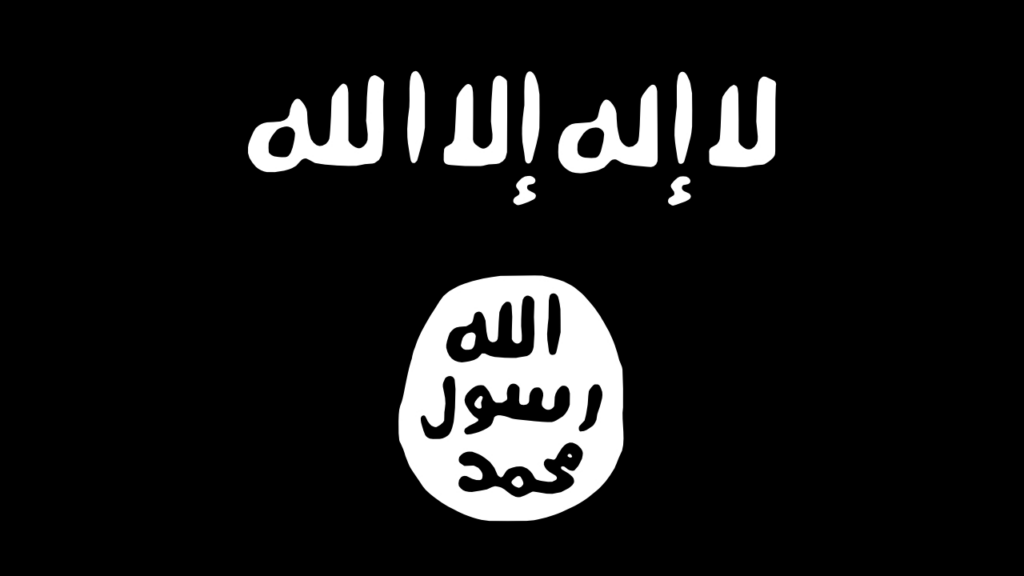
Profile Overview //
Operational Brief //
The Islamic State – Mozambique Province (ISMP),historically known to locals and security forces as Al-Shabaab (unrelated to the Somali group) or Ansar al-Sunna,requires examining a highly adaptable peripheral branch that has successfully transitioned from a territory-holding militia into a resilient guerrilla syndicate.
Formally separated from the Islamic State Central Africa Province (ISCAP) in May 2022 by Daesh central command, ISMP operates primarily in northern Mozambique under the leadership of Abu Yasir Hassan. Following major setbacks in 2021 and 2023 inflicted by Rwandan security forces and the Southern African Development Community Mission in Mozambique (SAMIM), the group changed its strategy.
In early 2026, despite a partial drawdown of regional forces and funding disputes within the international coalition, ISMP has launched a sustained intimidation and attrition campaign across Cabo Delgado, targeting civilian infrastructure, churches, and economic corridors to enforce a state of permanent instability.
Leadership & Command Structure
- Command Element: Operating under the recognized authority of top-tier spiritual and military leaders, historically driven by figures like Abu Yasir Hassan. Following targeted high-value attrition by regional forces,such as the neutralization of prominent operations commander Bonomade Machude Omar (Ibn Omar),tactical execution has decentralized into highly autonomous operational networks.
- Leadership Doctrine: Evolved from a localized, grievance-driven coastal insurgency into an institutionalized, top-down command hierarchy strictly aligned with the global Islamic State core central command.
- Regional Management: Formally designated as an independent, autonomous Wilayah (Province) after splitting from the Islamic State Central Africa Province (ISCAP) framework. It coordinates operations through structured regional commands, managing independent lines for procurement, localized tax extraction, and strategic communication.
Regional Center-of-Gravity (Current Focus)
- Primary Growth Theater: Southeastern Africa, with the primary kinetic footprint concentrated heavily across northern Mozambique's resource-rich coastal and interior sectors.
- Operational Hub: The Cabo Delgado Province, utilizing the strategic littoral belts flanking Mocímboa da Praia, Macomia, and the Palma corridors. These sectors serve as primary launchpads to mount high-yield offensives along major transport highways and surrounding islands.
- Secondary/Support Theaters: Logistical expansion corridors pushing south and west into Nampula and Niassa provinces to scatter regional security forces, exploit local ethnic/economic vulnerabilities, and carve out cross-border transit routes into adjacent maritime lines.
Intelligence Behavioral Matrix (TRAP-18/VERA-2R)
- Volatility Index: Extreme. The group maintains an aggressive strike profile, combining hit-and-run guerrilla maneuvers against government installations with low-discrimination, mass-casualty violence targeting civilian populations.
- High-Risk Indicators: Advanced capacity to launch coordinated, multi-district offensives across massive geographical ranges; systematic, brutal campaigns of village raids, mass beheadings, and widespread arson against institutional and religious structures; and a deliberate operational focus on disrupting multi-billion-dollar commercial Liquefied Natural Gas (LNG) infrastructure projects.
Threat Matrix //
Operational Reach
Theater/Regional (Contained but Persistent). ISMP’s kinetic operations remain structurally anchored in northern Mozambique, specifically the Cabo Delgado Province, with opportunistic incursions into adjacent Niassa and Nampula provinces. While the group has previously demonstrated the capability to execute cross-border tactical raids into southern Tanzania, its primary force projection through mid-2026 remains inward-facing—focused on maintaining a high-tempo operational footprint adjacent to major Liquefied Natural Gas (LNG) infrastructure zones.
Kinetic Capability
Advanced Asymmetric (Pivoted to Guerrilla Warfare). Moving completely away from the massed conventional offensives that allowed it to temporarily capture the strategic port city of Mocímboa da Praia in 2020, ISMP fields a decentralized force of approximately 800 to 1,200 active combatants. The group specializes in highly mobile hit-and-run ambushes, village raids, and the systematic use of beheadings and arson. Its current kinetic focus relies on regular, low-tech asymmetric intimidation campaigns—such as the May 1, 2026, targeted attack on the St. Louis de Montfort Church in Mesa—designed to cause civilian displacement and paralyze state stabilization efforts.
Logistical Resilience
Structured (Rebounding via Financial Diversification). Following the destruction of its permanent base camps by elite Rwandan units, ISMP’s logistical pipelines have undergone a major financial transformation. Since late 2025 and into 2026, the group has successfully diversified its revenue streams to compensate for reduced financial inflows from the ISIS global command. It has quadrupled its reliance on high-yield kidnappings for ransom, expanded localized extortion syndicates targeting commercial supply lines, and established coercive control over artisanal gold and gemstone mining sites across the Cabo Delgado interior.
Information Influence
Institutionalized (Dual-Track Narrative). Operating as an official administrative division of the global Daesh network, ISMP’s strategic communications are fully synchronized with the central Al-Naba publication pipeline. This allows the group to project global relevance, recently documented by a foiled May 2026 external operations plot in Paris where a Tunisian national attempted to travel to join ISMP cells. Locally, its propaganda is highly tailored—systematically weaponizing historical socioeconomic grievances, deep-seated regional poverty, and ethno-sectarian tensions against the central Maputo government to preserve a baseline of forced compliance and local recruitment.
Analytical Note
ISMP serves as a prime example of an insurgent force capitalizing on international security fragmentation. By executing localized, low-overhead intimidation campaigns rather than costly attempts to hold large urban centers, the group has effectively blocked multi-billion dollar foreign LNG projects from resuming full operations. The current leverage point for 2026 resides in the fragile funding architecture of the counter-terrorism coalitions; any premature withdrawal of external assets due to regional diplomatic fractures will immediately hand ISMP the exact operational vacuum required to stage a major territorial resurgence.
Disruption Vector Matrix //
Logistics Vulnerability
Dependence on absolute spatial access across coastal mangrove belts, hidden riverine networks, and dense interior transit highways (such as the Macomia–Awasse axis) to move strike teams and material.
Logistics Strategy
Littoral Interdiction & Route Denial: Deploy persistent maritime patrol assets and establish fixed, fortified chokepoint arrays along main transit highways to intercept logistics dhows and isolate frontline cells.
Financial Vulnerability
High reliance on localized maritime/trade extortion, illicit smuggling economies (gems, timber, narcotics), looting of municipal supply caches, and contested financial allocations from the IS global core network.
Financial Strategy
Maritime Counter-Smuggling & Audit Enforcements: Increase naval coalition sweeps along the Swahili coast, map out informal money transfer networks, and tighten oversight on commercial entities operating in the coastal extraction zones.
Leadership Vulnerability
Tensions and structural friction with neighboring affiliates (such as the Congolese ISCAP branch) over the global central distribution of funding and communication priority lines.
Leadership Strategy
Information Operations & Kinetic Pressure: Maximize intelligence synchronization between Mozambican and Rwandan military commands to hunt surviving commanders, while running cognitive campaigns to exploit financial and tactical rifts between regional IS provinces.