
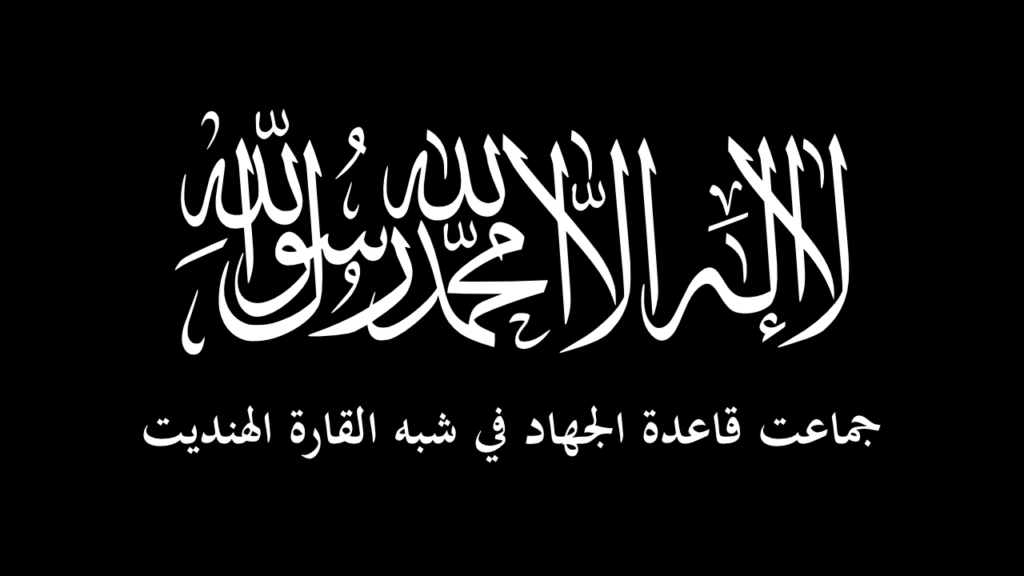
Profile Overview //
Operational Brief //
While its frontline kinetic capability remains heavily degraded compared to its regional rivals (such as ISKP), AQIS has successfully leveraged the post-2021 permissive environment in Afghanistan. Operating under the leadership of Emir Osama Mahmood and Deputy Yahya Ghouri, the group has pivoted from an active combat force to a deep-tier facilitation node, embedding itself alongside local allies like the TTP while quietly attempting to reactivate its external operations (ExOps) planning across South Asia.
Leadership & Command Structure
- Command Element: Currently under the administrative leadership of Osama Mehmood (Emir) and Atif Yahya Ghouri (Spokesperson). The group operates in close proximity to, and under the structural coordination of, the broader al-Qaeda Core leadership matrix.
- Leadership Doctrine: Strict institutional military discipline focused on providing ideological clarity, digital tradecraft, and long-term strategic depth rather than maintaining immediate, high-profile independent kinetic fronts.
- Regional Management: Managed via localized shuras that are split along geographic and operational tasks. The command element coordinates actions across Pakistan, Bangladesh, India, and Myanmar, maintaining direct lines to the Hittin Committee to preserve strategic alignment.
Regional Center-of-Gravity (Current Focus)
- Primary Growth Theater: Afghanistan-Pakistan (Af-Pak) Border Regions. AQIS utilizes the operational space and security vacuum created by the 2026 Afghanistan-Pakistan border war to provide long-term recruitment, training, and "Strategic Overwatch".
- Operational Hub: Safe havens inside Taliban-administered territory in Afghanistan, which are leveraged as the primary rear-guard zones for high-level tactical planning, publication production, and cadre training.
- Secondary/Support Theaters: Urban and digital networks within Bangladesh and India (specifically targeting West Bengal, Assam, and Jammu & Kashmir), alongside expanding propaganda wings directed toward Muslim populations across South Asia.
Intelligence Behavioral Matrix (TRAP-18/VERA-2R)
- Volatility Index: Moderate. The group exercises deliberate strategic restraint regarding standalone external kinetic strikes, prioritizing institutional survival, embedding within local insurgent dynamics, and providing technical backing to front-line actors over premature operational exposure.
- High-Risk Indicators: Deep embedding within regional militant movements,primarily providing ideological and logistical cover for the Tehreek-e-Taliban Pakistan (TTP); advanced digital and cognitive warfare capabilities; and an intense focus on structural recruitment within technical, urban demographics.
Threat Matrix //
Operational Reach
Theater/Regional. AQIS’s command structure is centered in Afghanistan, with its senior leadership operating out of Kabul and southeastern provinces under the protective umbrella of historical networks (specifically within Haqqani-influenced areas). While its structural presence in India, Bangladesh, and Myanmar is highly fragmented and restricted to clandestine, low-tier recruitment cells, the group acts as a force multiplier across the Durand Line, deploying its cadres to support operations inside Pakistan.
Kinetic Capability
Low-Tech Asymmetric (Direct) / High Derivative. AQIS rarely claims independent, high-impact kinetic operations under its own banner. Its direct capability is largely limited to targeted assassinations, localized IED deployment, and small-arms ambushes. However, its derivative capability is significantly higher; the group operates several active training camps in Afghanistan, directly transferring tactical expertise, bomb-making skills, and specialized instructions to frontline networks like the TTP.
Logistical Resilience
Structured / Safe Haven Protected. The group’s primary survival mechanism is its access to secure, permissive sanctuaries provided by the Afghan de facto authorities. This institutional insulation shields AQIS from leadership decapitation and direct counterterrorism interdiction. Financially, AQIS relies on historical donor channels, ideological funding lines, and localized smuggling, though its direct control over independent, high-yield revenue streams remains limited.
Information Influence
Institutionalized. Operating out of localized media production units (with media operations traced to Herat), AQIS generates consistent, high-fidelity propaganda in Urdu, Bengali, Pashto, English, and Arabic. Its narratives focus heavily on regional flashpoints, seeking to weaponize ethnic and religious grievances across South Asia. While it struggles to compete with the rapid digital dominance and aggressive global outreach of ISKP, it maintains a steady, institutionalized radicalization footprint.
Analytical Note
AQIS represents a classic “sleeper framework” model. Rather than burning its remaining resources on localized tactical actions that would draw international scrutiny to its hosts, AQIS is focusing on long-term institutional survival and capacity-building. Its current operational value lies in its role as a strategic consultant, technical instructor, and logistical bridge for more aggressive, frontline militant networks.
Disruption Vector Matrix //
Logistics Vulnerability
Dependence on the stability of local protective networks and border infiltration routes within the Pakistan-Afghanistan border theater.
Logistics Strategy
Targeted Infiltration Denial: Disrupt tactical fallback options by executing localized border containment strategies, sealing known movement corridors, and executing precision counter-insurgency operations against shared staging nodes.
Financial Vulnerability
Reliance on decentralized online donation mechanisms, local hawala systems, and hidden integration with regional legitimate trading fronts.
Financial Strategy
Financial Architecture Interdiction: Deploy digital tracking and algorithmic monitoring against specific capital transmission points, freezing assets and identifying front organizations masking cross-border funding pipelines.
Leadership Vulnerability
Significant friction between the transnational objectives of the al-Qaeda-aligned core and the highly localized, nationalistic priorities of the regional groups they support.
Leadership Strategy
Information Operations: Deploy aggressive cognitive operations and counter-narratives to amplify existing strategic rifts, exposing the conflict between transnational objectives and localized interests to shatter group cohesion.