
Technical Takeaways
- Infrastructural Pooling Maximizes Material Persistence: The Asymmetric Triad has decoupled its survival from isolated supply chains. By sharing subterranean cave networks, commodified smuggling syndicates, and training facilities along the Pakistan-Afghanistan border, competing factions pool material resources to optimize logistics and circumvent automated state tracking flags.
- Kinetic Acceleration Operates as Operational Sanitization: High-lethality strikes executed by specialized proxy wings are structurally synchronized with global media campaigns to generate maximum cognitive disruption. This tactical division of labor forces state enforcement to focus response mass on urban post-blast sectors, creating unmonitored windows for core logistics assets to rotate across border lines.
- Institutional Subversion Invalidates Physical Barriers: The deployment of massive corruption assets and database exploitation allows the triad to neutralize multi-million dollar border fencing and surveillance grids from within. By co-opting customs personnel, altering mobile patrol vectors, and accessing internal intelligence registries, the network transforms state verification engines into passive facilitators of illicit trade.
Executive Summary
The operational convergence of the Afghan Taliban, Al-Qaeda Central, and Islamic State Khorasan Province along the Pakistan-Afghanistan border establishes a highly resilient threat vector that directly challenges regional security frameworks. This alliance functions as an Asymmetric Triad, manipulating geographic friction and institutional vulnerabilities to sustain continuous tactical multiplicity. While external observers focus on public ideological rivalries, physical ground intelligence reveals a deeply integrated system of shared logistical corridors, commodified transport networks, and synchronized training operations. Islamic State Khorasan Province acts as the key kinetic accelerator within this triad, executing specialized high-lethality strikes that provide operational sanitization for covert elements of the Haqqani Network. By pooling material resources and technical expertise, these entities bypass traditional border enforcement initiatives and conventional defensive containment strategies. Legitimate transit mechanisms, smuggling routes, and unregulated spaces become key structural vectors for the movement of weaponized assets and tactical advisors. Traditional security architectures fail to neutralize this threat because state agencies separate kinetic counter-insurgency operations from comprehensive border intelligence integration. Countering this unified threat requires an aggressive, data-driven interdiction posture that targets the triad’s physical supply chains and shared infrastructure nodes simultaneously. Without direct technical intervention, this convergence will permanently compromise border sovereignty.
Shared Logistical Corridors and Infrastructure Pooling
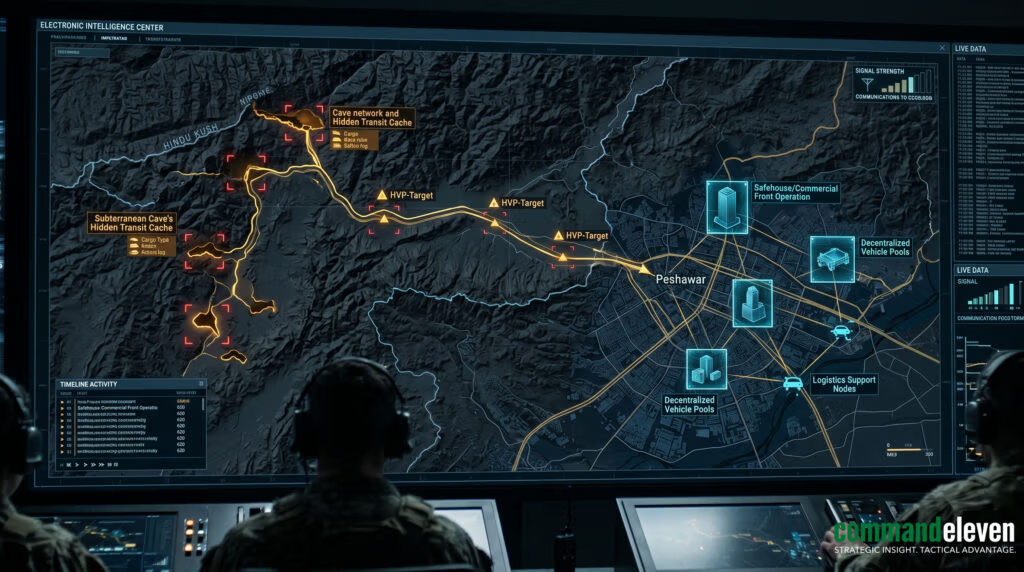
Militant networks within the Asymmetric Triad utilize pooled infrastructure nodes along the Pakistan-Afghanistan border to maintain operational persistence. These entities target remote, topographically complex border sectors where state surveillance is fragmented or absent due to rugged terrain. The procurement cells coordinate the movement of personnel, weapons, and finance through shared mountain passes under the cover of localized cross-border trading clans. This collaboration allows separate militant factions to optimize their resource allocation without creating independent, high-visibility supply lines that trigger automated state intelligence alerts. Once secured inside these shared corridors, the assets move rapidly to forward staging bases.
- Shared transit caches store mass quantities of heavy infantry weapons, hand grenades, and specialized communications gear inside reinforced subterranean cave networks along the border.
- Commodified transport networks leverage local smuggling syndicates to ferry tactical advisors and high-value leadership figures across unmonitored border crossing tracks.
- Co-opted medical facilities operate inside remote border villages, providing trauma surgery and convalescence support to wounded fighters from all three allied factions.
- Joint training compounds facilitate the transfer of advanced bomb-making techniques and tactical maneuver doctrines under the instruction of veteran Al-Qaeda trainers.
This infrastructural pooling directly enhances the survival capabilities of localized militant cells during state offensive operations. Concurrently, tracking data reveals that the syndicates coordinate these physical border crossings with sophisticated electronic signaling manipulation. The physical transport of weaponized components remains dependent on the network’s capacity to exploit the gaps within regional tracking databases. Once a logistics convoy clears the high-risk border line, it moves immediately into interior distribution nodes. This phase relies on the systematic exploitation of local transit systems to avoid detection.
The militant factions leverage their pooled logistics networks to insert operational cells deep inside major urban commercial hubs. By generating false identity documentation and establishing legitimate business fronts, the cells embed themselves within the local economic fabric. This urban insertion creates a predictable stream of domestic financial support while providing safe housing for transient operational planners. The operations occur within high-density residential sectors, using the urban mass to dilute the physical signature of specific militant logistics cells.
- Falsified residency certificates grant militant operatives legal access to urban housing markets, masking their true origin from localized police registration systems.
- Front retail businesses generate legitimate cash flows to blend illicit funds, providing a plausible explanation for high-volume banking transactions.
- Decentralized vehicle pools acquire commercial transport assets through third-party straw buyers to insulate the network from vehicle tracking databases.
- Encrypted local comms utilize peer-to-peer mobile messaging nodes to coordinate the distribution of tactical assets inside the urban environment.
The falsification of urban identity profiles ensures that incoming logistical support survives regional law enforcement screening protocols. This insulation allows militant cadres to assemble tactical payloads and coordinate deployment parameters without triggering automated municipal security alerts. Once these urban structures achieve stability, the networks launch synchronized operations against state infrastructure targets. This development transitions the threat from a localized border dispute into a nationwide counter-terrorism challenge.
Kinetic Acceleration and Operational Sanitization Dynamics
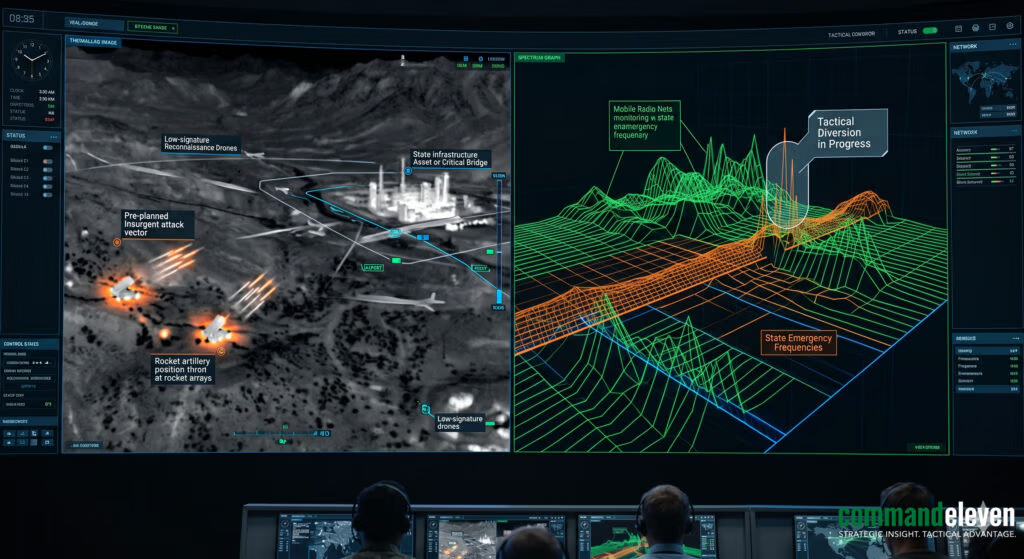
Islamic State Khorasan Province serves as the primary kinetic engine within the border triad, executing deniable, high-impact operations. These strikes target critical state infrastructure, religious minority gatherings, and diplomatic installations to generate maximum cognitive disruption. The execution of these operations provides effective operational sanitization for the Afghan Taliban and the Haqqani Network by deflecting international pressure and state security focus. This tactical division of labor allows traditional political elements within the insurgency to maintain diplomatic leverage while external proxies degrade state stability.
- High-lethality suicide vectors deploy vehicle-borne and vest-borne improvised explosive devices optimized with industrial shrapnel to maximize casualty counts in crowded sectors.
- Targeted assassination teams execute precision strikes against state intelligence tracking officers, regional police commanders, and vocal anti-militant tribal elders.
- Synchronized rocket arrays launch coordinated stand-off attacks against military aviation bases and border surveillance towers to disrupt regional command elements.
- Low-signature reconnaissance drones capture high-definition imagery of state defensive perimeters, providing tactical cells with real-time structural vulnerability maps.
This aggressive tactical posture directly alters the security deployment calculations of state defensive forces. Concurrently, operational analysis indicates that Islamic State Khorasan Province coordinates these kinetic campaigns with sophisticated information warfare units. The physical execution of an attack is immediately followed by a coordinated digital media surge designed to amplify social friction. This dual-track approach ensures that the kinetic impact is translated directly into sustained political and social instability.
The triad utilizes the resulting security confusion to rotate high-value assets across the Pakistan-Afghanistan border. While state forces focus their response mass on urban post-blast sectors, the logistical cells execute unmonitored movements through peripheral border valleys. This operational synchronization ensures that the leadership core remains insulated from sudden state counter-offensive actions. The continuous rotation of personnel maintains the technical competency of the field units, preventing the degradation of tactical capabilities over time.
- Coordinated diversionary skirmishes engage border guard outposts away from the actual transit corridors, drawing quick-reaction forces into non-critical sectors.
- Pre-planned escape routes utilize pre-positioned transport arrays hidden inside deep border defiles to move tactical planners out of hot zones.
- Encrypted radio nets monitor state emergency response frequencies in real time, alerting transit cells to the exact positioning of police blockades.
- Subterranean hide sites provide emergency sanctuary for tactical teams if regional state authorities initiate saturation checkpoints following a major strike.
The execution of pre-planned tactical diversions converts state security response mechanisms into predictable, exploitable patterns. By forcing the state to react to synthetic crises, the triad preserves its core logistics pipelines from systematic disruption. This operational agility allows the network to maintain its baseline strike capacity despite localized security pressure. The state cannot break this cycle of violence through standard kinetic containment loops alone.
Safe Haven Stabilization and Cross-Border Intimidation
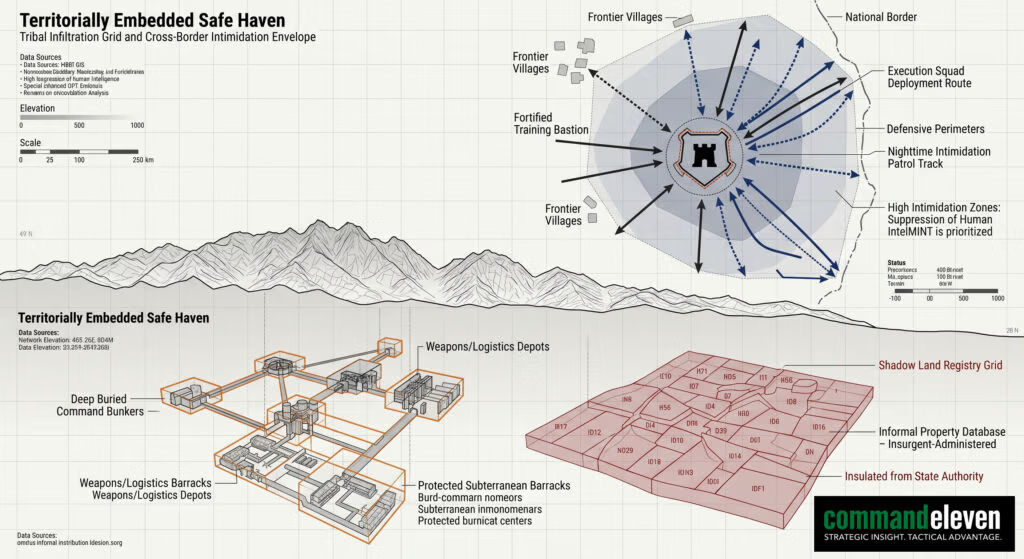
The stabilization of secure territorial enclaves inside Afghan territory provides the Asymmetric Triad with long-term operational durability. These geographic sanctuaries function as secure staging zones where leadership elements plan long-range campaigns without threat of physical arrest or asset seizure. The network projects parallel authority across the border line, executing systematic intimidation campaigns against Pakistani border communities to suppress human intelligence reporting. This cross-border coercion builds an extensive defensive buffer zone that neutralizes state reconnaissance efforts.
- Fortified training bastions feature extensive anti-aircraft defenses and underground bunkers designed to survive persistent state border artillery strikes.
- Cross-border execution squads target Pakistani tribal leaders who cooperate with state border fencing initiatives or pass tracking data to military intelligence.
- Nighttime intimidation patrols infiltrate frontier villages to distribute warning literature, warning the local population against supporting state security forces.
- Parallel tax collection extends into border markets, forcing local merchants to pay regular tithes to ensure the safety of their commercial cargo.
This cross-border coercion directly degrades the willingness of frontier populations to cooperate with national security agencies. Concurrently, human intelligence data shows that this intimidation framework eliminates the state’s eyes and ears along the immediate frontier. Without reliable local informants, military intelligence units suffer a profound drop in predictive tracking capabilities. This localized intelligence vacuum allows the triad to mass personnel and material at forward assembly points without triggering pre-emptive state strikes.
The networks consolidate these safe havens by integrating their administrative structures into the local tribal governance systems. By managing local land disputes, distributing captured agricultural assets, and enforcing shadow judicial codes, the triad builds structural legitimacy. The population becomes economically and socially dependent on the survival of the sanctuary node, creating a permanent barrier to state reintegration. This institutionalization transforms a volatile border zone into a permanent launching pad for transnational asymmetric warfare.
- Shadow land registries formalize property ownership transfers executed by proxy courts, winning the loyalty of marginalized agrarian factions.
- Subsidized grain distribution loops provide food security to compliant border villages, linking basic survival directly to network cooperation.
- Forced recruitment protocols mandate that each border family provide one fighting-age male to the proxy militia forces to secure administrative privileges.
- Tribal marriage alliances bind senior foreign fighters to local leadership families, structurally embedding the transnational element within the indigenous social fabric.
The social and administrative integration of the triad within border safe havens presents a complex barrier to conventional military resolution. The state cannot reclaim control through cross-border kinetic interventions without causing massive collateral disruption that alienates the population permanently. This operational reality locks the state into a defensive, reactive posture along the frontier line. Breaking this structural deadlock requires the deployment of advanced electronic surveillance and automated border hardening systems.
Technological Adaptation and Financial Liquidity Integration

The continuous inflow of black-market capital allows the Asymmetric Triad to upgrade its technological assets and optimize its global financial operations. The networks combine legacy trade-based money laundering schemes with decentralized digital asset networks to move wealth across international boundaries instantly. This financial fluidness ensures that procurement cells receive uninterrupted funding to secure advanced military-grade hardware from regional conflict zones. The integration of technology removes human error and administrative bottlenecks from the triad’s logistical infrastructure.
- Decentralized asset networks execute high-volume cryptocurrency transfers using automated token mixers to anonymize the financial ledger histories of transnational donors.
- Trade-based invoicing systems manipulate the value of cross-border commodities like timber and pomegranates to justify mass capital transfers between regional fronts.
- Commercial drone acquisitions secure off-the-shelf quadcopters modified with custom release mechanisms to drop improvised payloads on state border positions.
- Thermal imaging optics are integrated into sniper systems, granting tactical units superior night-fighting capabilities against un-eroded state border guards.
The deployment of automated financial and technical systems allows the triad to scale its operational reach while maintaining a minimal physical footprint. Concurrently, cyber intelligence indicates that this technological evolution systematically degrades the relative qualitative advantage historically maintained by state security forces. By acquiring advanced night-vision gear, encrypted satellite communications, and tactical drone assets, the militant units achieve near-parity with regular infantry units. This technical escalation increases the material cost of state border defense operations.
The triad deploys dedicated cyber cells to monitor state border tracking technologies and gather electronic intelligence on naval and land-based movements. By intercepting unencrypted communications and tracking the digital footprints of state security personnel, the networks map out current patrol sectors. This electronic mapping allows smuggling convoys to select paths that completely avoid active sensor arrays and mobile military checkpoints. The digital subversion ensures the unhindered transit of high-value payloads across the border line.
- Signal interception arrays harvest unencrypted VHF radio traffic from remote police posts, providing advance warning of localized search operations.
- Open-source data scraping monitors the social media profiles of deployment-ready military personnel to identify upcoming unit rotations along the frontier.
- Commercial satellite imagery purchases provide high-resolution updates on the physical construction progress of state border fencing and fort networks.
- Wi-Fi network manipulation probes the digital routers of civilian border customs offices to harvest access credentials for state logistics networks.
The systematic collection of electronic intelligence converts state border defense arrays into transparent, easily bypassed obstacles. By exploiting the digital vulnerabilities of state infrastructure, the triad minimizes its operational friction during cross-border transits. This continuous flow of intelligence allows the network to maintain its high-velocity logistical operations despite active state enforcement campaigns. The state must respond by implementing total cryptographic isolation across all border defense systems.
Institutional Subversion and Border Infrastructure Compromise
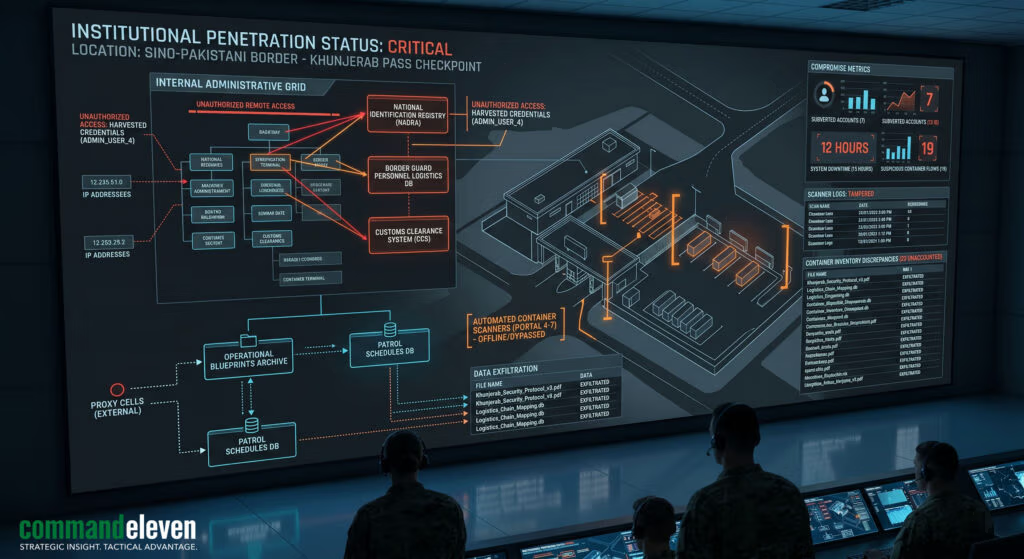
The maturation of the Asymmetric Triad establishes a deep system of institutional subversion within the administrative agencies tasked with border enforcement. By deploying massive financial corruption assets, the networks co-opt local customs officers, border guards, and civilian administrative officials along the frontier line. This subversion converts state-managed infrastructure nodes into passive facilitators of the illicit cross-border trade pipeline. The internal breakdown of state authority ensures that the physical and digital operations of the triad face zero friction within the compromised zones.
- Co-opted customs officials disable automated container scanning hardware during specific hours to permit the uninspected passage of weaponized payloads.
- Infiltrated border police alter mobile patrol paths to create predictable, unmonitored transit slots for high-value militant convoys.
- Compromised administrative clerks issue valid state identification cards to foreign fighters, embedding them legally within the domestic population registry.
- Corrupted judicial personnel delay the processing of arrest warrants and suppression orders targeting the financial fronts of core triad leaders.
This institutional co-optation creates a structural vulnerability that threatens the integrity of national security frameworks from within. By manipulating the internal mechanisms of border enforcement agencies, the syndicates ensure that their logistics pipelines remain operational regardless of official state policy shifts. This internal rot neutralizes the effectiveness of multi-million dollar border fencing and surveillance initiatives. The state’s failure to secure its own administrative personnel directly subsidizes the expansion of parallel proxy authority.
The triad leverages this institutional subversion to access sensitive state intelligence files regarding counter-terrorism tracking indicators and operational plans. This deep intelligence penetration allows the network to preempt state raids, execute key tracking assets, and protect its primary financial laundering nodes from asset seizure. The state’s command grid becomes compromised, transmitting vital tactical parameters to the very adversary it is attempting to dismantle. Reclaiming institutional integrity requires an immediate, total purge of corrupted elements from the border security architecture.
- Leaked operational blueprints provide advance warning of major conventional military sweep operations, allowing militant cells to evacuate target zones early.
- Compromised informant registries expose the identities of local state assets, leading to immediate, systematic execution campaigns by triad assassination teams.
- Stolen intelligence tracking metrics reveal the specific visual and electronic indicators used by state analysts to flag anomalous border transits.
- Infiltrated logistics databases track the movement of state military supply convoys, allowing tactical cells to plan high-velocity road ambushes.
The compromise of internal state intelligence metrics makes traditional counter-insurgency execution models entirely obsolete. The transnational network operates with absolute visibility into state planning, rendering reactive security operations useless. This structural crisis requires the rapid deployment of autonomous surveillance systems and isolated command cells that operate completely independent of local administrative frameworks. Reclaiming sovereignty demands a total restructuring of the state’s border posture, fusing uncorrupted tracking technology with decisive kinetic force.
Integrated Border Hardening and Doctrinal Reorientation
The systematic consolidation of the Asymmetric Triad along the Pakistan-Afghanistan border demands an immediate, structural overhaul of national security and border defense doctrines. Traditional containment models that separate conventional military clearance operations from digital financial tracking and institutional anti-corruption purges are no longer sufficient to disrupt an adversary operating with technological parity and safe-haven insulation. To achieve permanent territorial reclamation and preserve national sovereignty, the state must deploy an active, sensor-fused interdiction framework that targets the triad’s physical supply chains, digital networks, and corrupted administrative enclaves simultaneously. The institutionalization of the #72/48 Protocol is mandatory to protect national command grids from the digital manipulation and sensory ruptures executed by proxy electronic warfare units. Furthermore, the state must eliminate the structural vulnerabilities within border enforcement registries by enforcing strict, automated biometric verification protocols across all transit hubs. Reclaiming sovereign authority requires replacing reactive enforcement postures with persistent, data-driven pre-emptive operations across the entire frontier perimeter. This conflict represents a critical structural competition for control over the international border line and the preservation of institutional integrity. Victory requires the uncompromising application of hardware truth to permanently dismantle the parallel economic and tactical ecosystem sustaining the border transnational handshake.