Key Judgments
- [CONFIRMED] – The Islamic Republic of Iran has knowingly hosted al-Qaeda facilitators, financiers, and senior figures on its territory since at least 2001, a relationship documented across seventeen years of US Treasury and State Department designations.
- [CONFIRMED] – Successive US State Department Country Reports on Terrorism have described Iran as allowing al-Qaeda to operate a “core facilitation pipeline” through its territory since at least 2009, moving fighters and funds toward South Asia and Syria.
- [ASSESSED] – UN Panel of Experts reporting characterizes a “covert pragmatic relationship” between Yemen’s Houthi movement and Yemen-based al-Qaeda elements, alongside a documented Houthi-al-Shabaab alliance – positioning the Houthis as a live, current-day bridge between Iran’s proxy network and the wider al-Qaeda ecosystem.
- [ASSESSED] – Recent (September 2026) reporting on deepening Houthi-al-Shabaab cooperation – including alleged transfer of drone, explosives, and weapons training – indicates this bridge is intensifying rather than receding, even as direct Iranian state capacity comes under military pressure.
- [ASSESSED] – The tolerance-and-transaction pattern Iran has extended to al-Qaeda for two decades functions as a strategic hedge: deniable leverage against the United States and Gulf adversaries that does not require formal ideological alignment between Tehran and a Sunni-jihadist organization.
The Sanctuary Arrangement: A Two-Decade Record
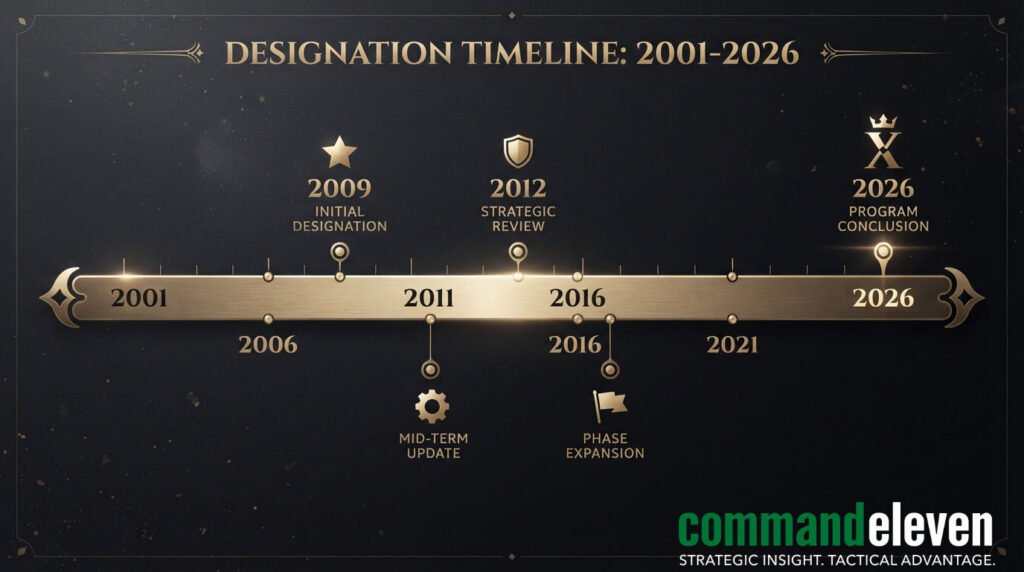
The relationship between the Islamic Republic of Iran and al-Qaeda is neither new nor speculative – it is one of the better-documented open-source threads in the post-9/11 counterterrorism record. In the chaos following the US invasion of Afghanistan in late 2001, a significant portion of al-Qaeda’s Shura Council and its Egyptian Islamic Jihad contingent crossed into Iranian territory. Former White House counterterrorism official Richard Clarke noted at the time that Iran had provided al-Qaeda safe haven both before and after the September 11 attacks, and that EIJ had operated with some openness in Tehran.
Iran’s own conduct toward these arrivals was never a simple embrace. Following the 2003 Riyadh bombings, which US and allied intelligence tied to the Iran-based network, Tehran placed several senior al-Qaeda figures under a loose form of house arrest – sanctuary with strings attached, not open partnership. That pattern – restrict movement, extract value, avoid formal alignment – has defined the relationship ever since.
The US Treasury Department’s designation record traces the network’s evolution in granular detail:
- a 2009 designation naming a primary interlocutor between al-Qaeda and the Iranian government
- a series of 2011-2012 actions naming the operational head of al-Qaeda’s Iran-based facilitation network and his deputy
- a 2012 designation of Iran’s Ministry of Intelligence and Security itself for facilitating al-Qaeda operative movement, including provision of identification and travel documents
- further designations in 2016 naming additional Iran-based al-Qaeda financiers
- a 2015 prisoner exchange – reported contemporaneously by international media and later confirmed by US officials – saw Iran release several senior al-Qaeda detainees, underscoring that Tehran’s custody of these figures was a lever to be used, not a containment policy
The Facilitation Pipeline
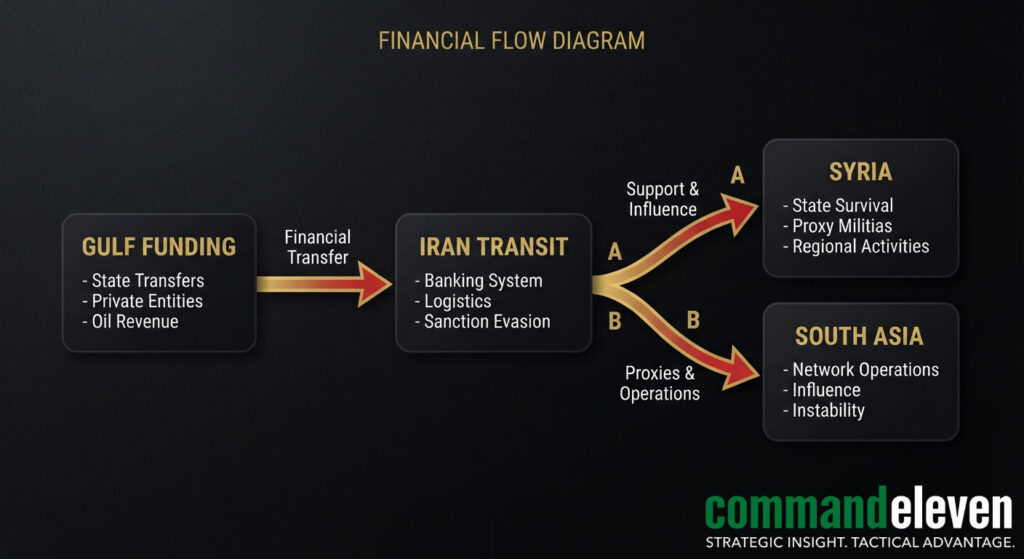
Beyond sanctuary, Iran’s utility to al-Qaeda has been logistical. State Department Country Reports on Terrorism have, for over a decade, described Iran as allowing al-Qaeda facilitators to run a core pipeline moving funds and fighters through Iranian territory toward South Asia and Syria. This is a distinct claim from mere tolerance of a physical presence – it describes Iranian territory functioning as connective tissue for al-Qaeda’s broader logistics, sourced to the same designation record above (Ministry of Intelligence and Security document provision; the Gulf-to-Iraq/Afghanistan/Pakistan funding network run via Iran that Treasury dismantled in 2011).
- [DATA DEFICIT] – Open-source reporting does not currently permit an independently corroborated assessment of the pipeline’s present-day throughput or whether its operational tempo has changed since the outbreak of active US-Israel-Iran hostilities in February 2026. This dossier does not assess current al-Qaeda leadership whereabouts inside Iran, given how rapidly such reporting has shifted over the past year; readers should treat any specific location claims in secondary sources as unverified.
The Houthi Bridge
The most significant open-source development in this relationship over the past year runs through Yemen. A Congressional Research Service update (July 2026) cites UN Panel of Experts findings describing a “covert pragmatic relationship” between the Houthi movement and Yemen’s al-Qaeda in the Arabian Peninsula presence – estimated at 2,000-3,000 members – alongside a separate Houthi alliance with al-Shabaab, al-Qaeda’s Somalia-based affiliate. The same CRS product notes Iran’s IRGC-Qods Force (IRGC-QF) and Hezbollah have themselves operated inside Yemen, placing all three nodes – Tehran, the Houthis, and al-Qaeda’s regional affiliates – inside the same operating space.
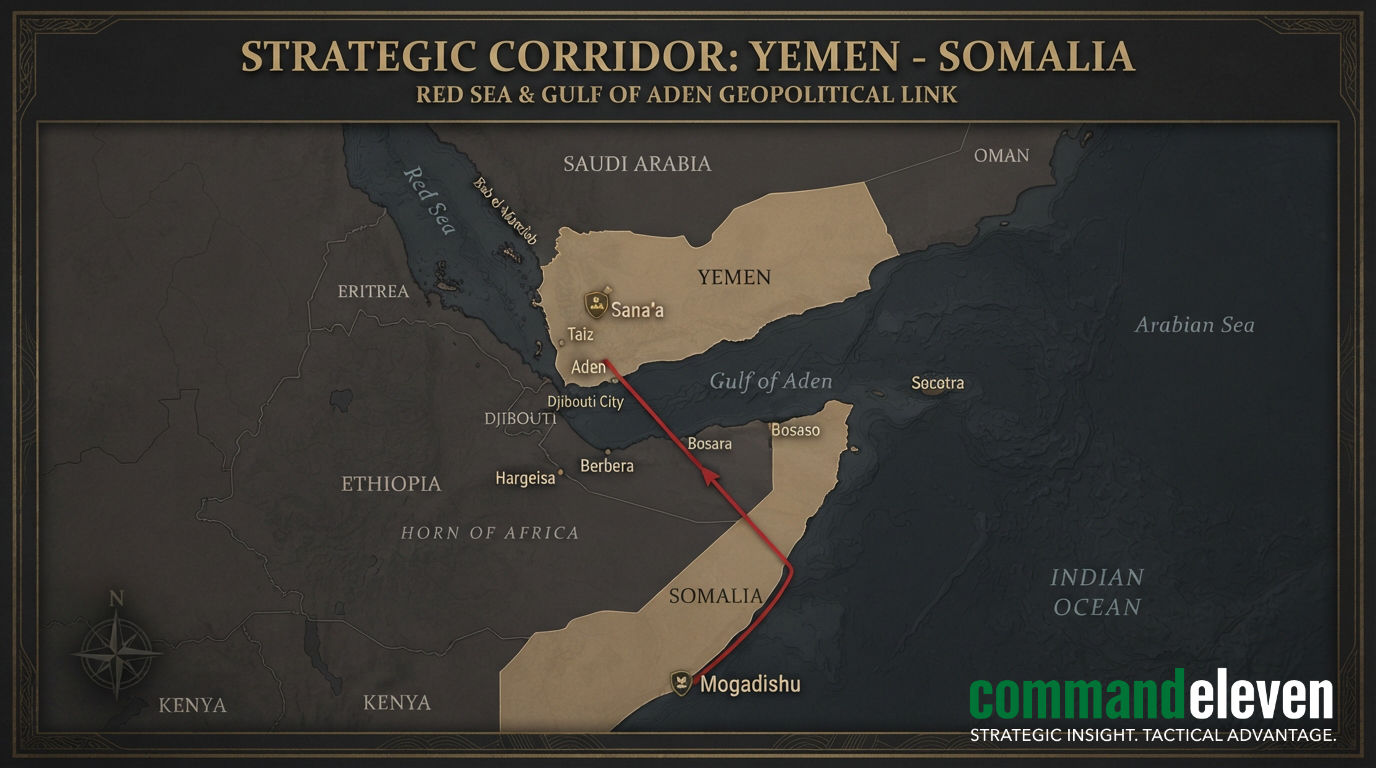
That relationship has visibly deepened in the most recent reporting cycle. A Wall Street Journal investigation published September 1, 2026 describes an intensifying Houthi-al-Shabaab partnership, with al-Shabaab reportedly receiving Houthi instruction in drone, explosives, and weapons tactics – capability transfer, not just coordination. Because the Houthis and al-Shabaab sit on opposite shores of the Gulf of Aden, a chokepoint carrying a substantial share of the world’s seaborne oil traffic, the partnership carries direct maritime security and energy-market implications beyond the counterterrorism dimension alone.
Analysts have connected this trend to a broader shift inside Iran’s “Axis of Resistance”: as direct Iranian state capacity to support its proxies comes under sustained military pressure, the Houthis in particular appear to be diversifying their own external relationships – reaching toward Russia, China, and al-Qaeda-linked actors – rather than remaining solely dependent on Tehran. Read this way, the Houthi-al-Shabaab bridge is not a rogue development at the margins of Iran’s network; it is a symptom of how that network behaves under stress.
- [DATA DEFICIT] No open-source reporting reviewed for this dossier shows direct IRGC tasking of the Houthi-al-Shabaab training relationship. Readers are left to weigh that absence against the two-decade pattern.
Strategic Logic: Why a Shia Theocracy Tolerates a Sunni Jihadist Network
The durability of this relationship despite the Shia-Sunni divide separating Tehran from al-Qaeda is not an anomaly – it reflects consistent Iranian strategic behavior:
- Deniable leverage – al-Qaeda’s presence on Iranian soil, and now its affiliates’ growing proximity to the Houthis, gives Tehran a card it can play or withhold against Washington and Gulf adversaries without ever having to claim the relationship publicly.
- Low-cost hedging – Unlike Hezbollah or the Houthis, al-Qaeda-linked actors require no formal Iranian funding commitment or ideological concession – the “house arrest” model lets Iran extract value (transit, occasional leverage in negotiations) while bearing minimal cost.
- Network resilience under pressure – As direct Iranian capacity to arm and fund its formal proxies is degraded by sustained military pressure, loosely-affiliated Sunni-jihadist nodes like the Houthi-al-Shabaab bridge offer Tehran’s broader resistance network a way to remain relevant through actors it does not have to directly resource.
Outlook and Cross-Reference
This dossier should be read alongside CommandEleven Intelligence’s existing Axis of Resistance coverage and the forthcoming Axis of Evil coordination dossier – the Houthi-al-Shabaab-al-Qaeda bridge is best understood as an extension of the same proxy architecture examined there, not a separate phenomenon. As the active US-Iran conflict continues to strain Tehran’s direct proxy funding, CommandEleven Intelligence assesses a reasonable likelihood that additional al-Qaeda-affiliated actors will move to fill capability or funding gaps left by weakened formal Iranian proxies – a trend worth monitoring in subsequent coverage rather than asserting as a settled forecast.
Sourcing Base (Confidence-Tiered, with Links)
[CONFIRMED] – Primary/Official Record:
- US Treasury Dept., “Treasury: Iranian Intelligence Supporting al Qaeda” (analysis of the 2009/2012 designation record)
- FDD’s Long War Journal, “US identifies additional al Qaeda leaders in Iran“
- FDD’s Long War Journal, “Iran-AQ Network” tag archive (State Dept. Country Reports on Terrorism citations, 2012-2017 designations, IRGC FTO designation)
- United Against Nuclear Iran, “al-Qaeda and Iran: Alliance Against the US” (2012 MOIS designation, Khorasan Group financing network)
- Critical Threats (AEI), “al Qaeda’s Safe Haven In Iran“
- Congressional Research Service, Yemen update (July 21, 2026), citing UN Panel of Experts on Houthi-AQAP and Houthi-al-Shabaab relationships
[ASSESSED] – Credible Secondary Reporting:
- Combating Terrorism Center at West Point, “Marriage of Convenience: The Evolution of Iran and al-Qa’ida’s Tactical Cooperation“
- National Interest, “Why the Houthis and Al-Shabaab Might Be Growing Closer” (June 2026)
- Worthy News, relaying WSJ investigative reporting on Houthi-al-Shabaab drone/explosives/weapons training (Sept. 1, 2026)
- Daily Wire, relaying the same WSJ reporting
- FDD’s Long War Journal, “Analysis: al Qaeda’s interim emir and Iran” (Saif al-Adel/Iran relationship history to the early 1990s)
Note: The original Wall Street Journal investigation is paywalled; the two relay sources above are cited for accessibility. Readers with WSJ access should verify against the original.
Excluded from this dossier: Current, unverified claims regarding the present-day location of specific senior al-Qaeda figures. Given the pace at which such reporting has shifted over the past twelve months, CommandEleven Intelligence judges this detail unsuitable for inclusion at CONFIRMED or ASSESSED tier at this time.