
Iechnical Takeaways
- Telemetry Cross-Examination Defeats Digital Spoofing: Command grid insulation requires cross-referencing electronic data feeds with independent analog measuring loops. By verifying electronic radar tracking metrics against acoustic signature verifiers and ground-based seismic strings, the defensive grid automatically identifies and purges synthetic coordinates before they can penetrate executive decision loops.
- Immutable Ledgers Secure Administrative Registries: Port safety and customs registries must be moved into secure, offline command vaults running immutable ledger logging blocks. Requiring multi-factor biometric access filters and routing data exclusively through isolated physical fiber-optic lines completely eliminates remote manifest manipulation via SQL injection or stolen administrative credentials.
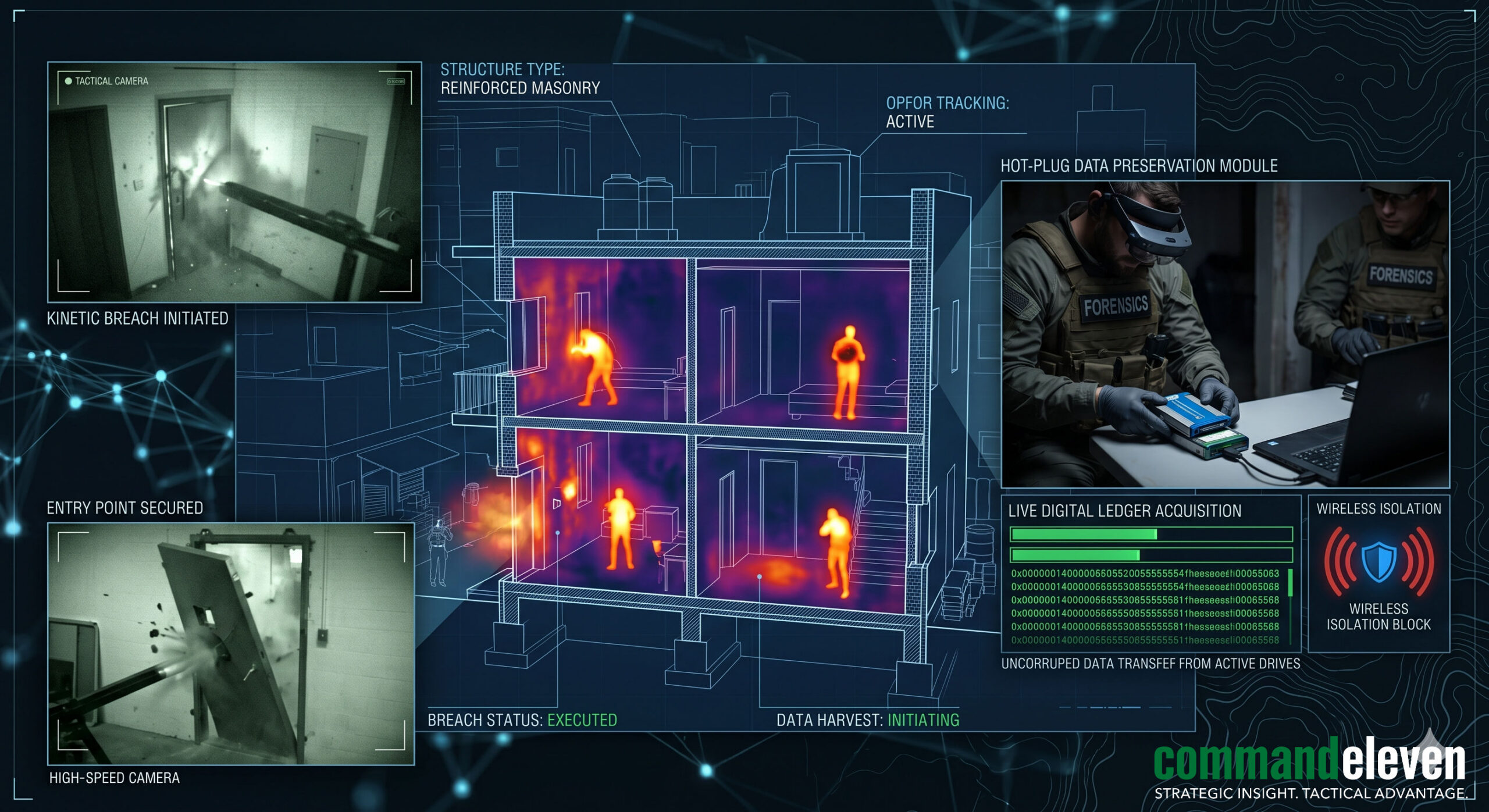
- Forensic Extraction Preempts Cryptographic Wiping: High-velocity urban safehouse penetration must be technically synchronized with immediate forensic harvesting protocols. Utilizing hot-plug data preservation modules onsite allows tactical teams to bypass standard login locks and secure bit-stream forensic copies of active server hard drives before automated data-wiping self-destruct scripts can execute.
Executive Summary
The stabilization of sovereign state borders and high-density metropolitan areas requires the absolute enforcement of hardware truth across national defense networks. Foreign electronic warfare cells, cyber-kinetic networks, and transnational illicit syndicates exploit vulnerable database registries and unhardened signaling spectrums to execute complex perceptual disruption operations. By deploying advanced hardware-level data verification loops and strict mathematical network isolation, the military institution insulates its central tactical architectures from external administrative subversion. This proactive defense doctrine transitions the state from a reactive defensive posture to permanent, automated pre-emption across all contested physical and digital transit lanes. Traditional national security frameworks fail to neutralize modern asymmetric threats because they separate physical perimeter fencing from integrated information network security. Countering this unified technical offensive demands the continuous application of decentralized spatial tile hardening combined with zero-trust cryptographic data validation. This technical briefing details the integration parameters of multi-spectral verification arrays, hot-plug data preservation platforms, and automated signal suppression pods within the defensive grid. The systematic realization of this architecture permanently eliminates the single-point tracking vulnerabilities historically targeted by proxy networks to paralyze executive command loops. The state must treat the preservation of uncorrupted hardware telemetry as its primary tactical center of gravity.
Telemetry Cross-Examination and Analog Sensor Hardening
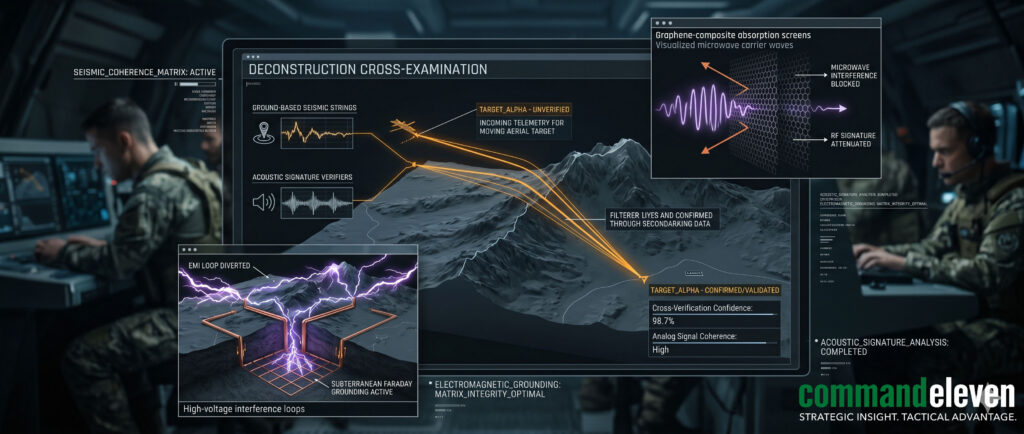
The installation of a resilient command network begins with the physical hardening of primary telemetry sensors located along volatile frontier perimeters. State intelligence units deploy hardware-level cross-examination platforms to insulate tracking networks from the high-power signal spoofing arrays managed by foreign interference cells. These advanced defensive processors evaluate incoming electronic data streams against independent, non-electronic analog measuring loops operating in parallel. This hardware-to-hardware comparison automatically flags and purges synthetic radar contacts before the distorted information can penetrate the tactical command interface. By validating the physical reality of all tracking telemetry, the state eliminates the digital blindness exploited by adversaries to mask forward deployments.
- Acoustic signature verifiers isolate mechanical vibration frequencies from low-altitude transit corridors, validating the physical presence of contacts recorded on long-range digital radars.
- Ground-based seismic strings record localized footstep and axle frequencies, transmitting un-jammable mechanical indicators directly to centralized defensive command pods.
- Optical line-of-sight tracking anchors targeted surveillance sectors by feeding un-spoofable laser telemetry directly into automated threat verification registries.
- Analog trajectory calculaters cross-reference incoming ballistic tracking profiles against physical air pressure metrics, stripping synthetic coordinates from command displays.
This analog sensor integration directly shields the regional defensive perimeter from localized electronic spectrum sabotage. Concurrently, operational tracking data reveals that the implementation of physical cross-examination routines destabilizes the adversary’s predictive modeling loops. Because the foreign cyber cells cannot manipulate the physical analog tracking channels, their synthetic data injections generate immediate system error flags. The tactical command grid maintains absolute visual clarity, preserving the baseline information required to direct precision pre-emptive counter-measures. This technical durability allows the defensive forces to transition seamlessly to the stabilization of official commercial transit gates.
The engineering cells reinforce this sensor insulation by deploying fixed electromagnetic isolation walls around primary border terminal installations. These specialized shielding configurations absorb and ground high-power directional radio frequencies emitted by hostile spectrum manipulation vehicles. The physical grounding matrix ensures that local radar receivers and automated identification sensors operate without experiencing saturation or diagnostic signal drops. This localized spectrum protection provides a clean environment for executing multi-spectral cargo screening protocols.
- Graphene-composite absorption screens block incoming microwave and radio frequency energy bursts from penetrating sensitive tactical electronic components.
- Subterranean Faraday grounding grids channel high-voltage electromagnetic interference pulses directly into the earth, preserving terminal communication integrity.
- Directional filter wave-guides restrict incoming signal access exclusively to verified state-managed tactical frequencies, blocking rogue injection carrier waves.
- Automated signal power balancing scales receiver sensitivity dynamically to neutralize sudden electronic spectrum saturation sweeps during active transits.
The deployment of physical spectrum isolation ensures that border safety technologies maintain continuous tracking velocities under extreme electronic friction conditions. This signaling buffer stops the foreign alliance from using localized signal jamming to slip weaponized payloads past frontier security points. With the physical spectrum protected, the terminal gates function as precise collection filters, gathering uncorrupted verification data for the national registry. Once the physical border sensors achieve total isolation, the architecture initiates the implementation of strict data verification protocols within the internal networks.
Cryptographic Database Hardening and Manifest Integrity Protocols
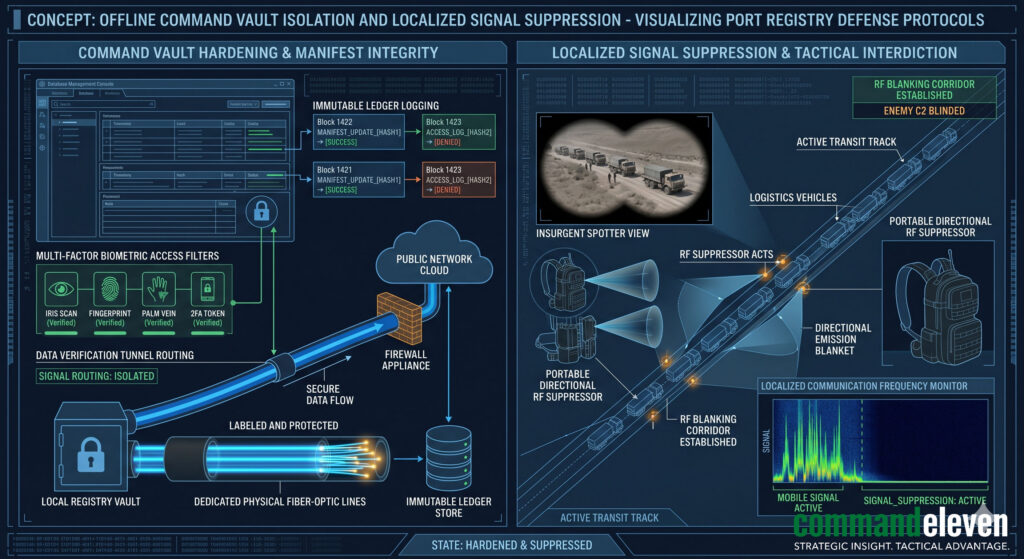
The expansion of the hardware truth architecture requires the total cryptographic isolation of all automated port registries and border management databases. Specialized technical task forces deploy advanced asymmetric public-key encryption suites to insulate administrative tracking networks from remote database subversion. Transnational militant syndicates systematically exploit software vulnerabilities to insert falsified shipping manifests and alter high-risk tracking metrics. The state counters this digital threat by moving critical logistics databases into secure, offline command vaults that function completely independent of public internet service providers.
- Isolated data verification tunnels route provincial customs tracking logs through dedicated physical fiber-optic lines, blocking remote administrative access attempts.
- Multi-factor biometric access filters require simultaneous fingerprint and iris confirmation from authorized personnel before permitting modification of cargo registries.
- Automated manifest validation loops cross-examine the electronic contents of incoming shipping documents against historical trade logs to flag anomalous profiles.
- Immutable ledger logging blocks record every database modification across a decentralized hardware grid, preventing unauthorized tracking data deletion scripts from executing.
The execution of automated database hardening stops the digital manipulation of cargo tracking histories by remote cartel cyber units. Concurrently, operational analysis indicates that this registry security directly enhances the tactical survivability of physical interdiction assets. Because the foreign interference network cannot modify shipping files or harvest uncorrupted patrol metrics, smuggling fleets lose the ability to plan unmonitored transit routes. The digital database transitions from a vulnerable intrusion point into an active shield that preserves state administrative persistence.
The technical teams pair database insulation with the active deployment of localized signal suppression arrays during border interdiction campaigns. Portable electronic counter-measure devices are activated along known transit defiles to blind the tracking gear used by insurgent spotter networks. By flatlining localized mobile networks and radio frequencies, the state units prevent lookouts from transmitting early warning data to approaching convoys. This electronic dominance forces the smuggling fleet to navigate blind into pre-planned state ambush sectors.
- Directional radio frequency suppressors saturate local mobile communication bands, preventing insurgent lookouts from altering forward smuggling cell parameters.
- Portable GPS signal alternators transmit falsified positioning metrics to approaching vessels, steering them into specific tactical engagement zones.
- Wireless network isolation blocks jam local signals around frontier warehouses to prevent remote handlers from executing data deletion commands during raids.
- Acoustic sensor disruption fields generate localized ambient noise blankets to blind the sonar tracking arrays deployed by maritime siphoning networks.
The application of localized electronic suppression loops eliminates the intelligence collection capabilities of the irregular network. This technical blockage ensures that smuggling craft and tactical cells are cut off from external logistical support during the engagement window. By combining database hardening with active signal disruption, the state achieves total dominance over its digital spectrum. This dual-track digital security allows the defense architecture to transition smoothly to the execution of high-velocity tactical penetration operations inside embedded enemy enclaves.
High-Velocity Safehouse Penetration and Forensic Data Harvesting
Specialized counter-terrorism task forces execute high-velocity penetration operations against fixed urban safehouses to collapse the network’s remaining physical sanctuaries. These tactical operations target reinforced masonry structures, hidden coordination cells, and illegal currency exchanges operating inside high-density commercial centers. The penetration teams utilize real-time thermal structural mapping arrays to analyze internal building geometries prior to initiating physical entry. This technical preparation minimizes state casualties while ensuring the total destruction of the adversary’s physical command infrastructure.
- Thermal structural mapping arrays read density differentials through reinforced concrete walls, providing entry stacks with real-time occupant tracking data.
- Tactical kinetic breaching charges detonate with precise directional overpressure, executing instantaneous entry through steel doors without damaging structural stability.
- Flash-bang distraction mechanisms saturate the internal target environment with high-intensity acoustic waves, temporarily paralyzing target defensive responses.
- Low-signature ballistic shielding units protect the entry stack from incoming small-arms fire while navigating narrow interior corridors and stairwells.
The physical clearance of the safehouse permanently removes the localized command hubs utilized by sectarian networks to coordinate asymmetric campaigns. Concurrently, operational data reveals that these tactical strikes prevent the enemy from destroying critical data storage arrays or activating suicide devices. The speed of the entry sequence ensures that tactical teams secure uncorrupted digital ledgers and communication hardware before the enemy can activate automated self-destruct scripts. The safehouse ceases to function as an evasion sanctuary and transitions into a primary information harvesting node for state analysts.
The tactical units coordinate these safehouse breaches with the deployment of advanced electronic extraction kits to harvest enemy data onsite immediately. Technical operators secure laptop computers, hard drives, and satellite communication receivers found inside the command bunkers before power depletion occurs. This rapid data recovery provides state intelligence with real-time insight into upcoming operational timelines and external financial handlers. The captured intelligence assets are transferred via secure channels to the central provincial database for instant exploitation.
- Hot-plug data preservation modules bypass standard operating system login locks, blocking the activation of automated data-wiping security encryption scripts.
- Portable high-speed storage duplicators execute exact bit-stream forensic copies of recovered hard drives, creating verified replicas for immediate database integration.
- Automated software decryption platforms process recovered digital passwords and key files harvested from physical ledger books found onsite.
- Localized wireless network isolation blocks jam all external radio signals, preventing remote handlers from executing data deletion commands during the raid.
The recovery of uncorrupted digital ledgers and operational maps provides the state with complete structural visibility into the remaining elements of the irregular network. This intelligence windfall allows tracking cells to map out the complete hierarchy of the organization, including corrupted actors inside urban administrative centers. By converting the insurgent sanctuary into an information source, the state ensures that every tactical raid feeds the next sequence of operations. This systematic clearing of physical sanctuaries forces surviving operatives to abandon the metropolitan hubs entirely.
Automated Material Interdiction and Chemical Signature Analysis
The state seals its physical borders by converting commercial transit terminals into unbreachable bottlenecks for the transnational proxy supply chain. Specialized customs inspection units install advanced multi-spectral scanning arrays at all primary cargo gates operating along the frontier line. These automated inspection systems analyze the internal molecular structures of sealed industrial loads without causing logistical delays in legitimate trade velocity. This physical verification protocol identifies hidden precursor chemicals, military-grade explosives, and heavy infantry weapons payloads before they can reach interior processing nodes.
- Multi-spectral chemical signature scanners analyze the molecular vapors of sealed containers to detect unscheduled aniline derivatives and volatile explosive elements.
- High-definition gamma-ray imaging gates generate complete internal visual reconstructions of packed commercial freight to locate hidden weapons mounts.
- Automated weight-differential sensor pads compare the live axle weight of transport trucks against the electronic metrics logged in the customs database.
- Remote-controlled cargo isolation rovers extract high-risk containers from shipping yards, moving them instantly to secure explosive containment bays.
The deployment of automated physical verification hardware stops the importation of raw materials required to sustain interior laboratory synthesis. Concurrently, operational data reveals that this logistics disruption forces the insurgent alliance to operate out of diminishing domestic stockpiles. Without fresh precursors or weaponized components, the material output of clandestine manufacturing hubs faces systemic degradation. The tactical capabilities of the adversary contract rapidly as their primary supply channels are choked at the border gate.
The frontier units pair these terminal inspection arrays with high-velocity interdiction craft designed to secure adjacent littoral and riverine sectors. These specialized watercraft utilize low-radar-cross-section hull designs and high-output propulsion engines to execute rapid night runs against smuggling fleets. Armed with advanced electro-optical sensors, the maritime cells intercept automated towable cargo pods and modified fishing dhows attempting to bypass land-based checkpoints. This multi-modal interdiction posture seals the physical boundaries of the tile completely.
- Twin-engine tactical watercraft deliver the high-velocity speeds required to outrun smuggling vessels and execute rapid maneuvers in shallow waters.
- Night-vision electro-optical sensors enable navigation and target acquisition in total darkness, eliminating the need for visible navigation lights.
- Reinforced weapon mounts secure medium machine guns to the bow and stern, providing defensive firepower during maritime engagements.
- Commercial-grade surface radars track the real-time positions of all littoral contacts, providing the tactical cell with early warning capabilities.
The integration of automated port verification systems with active littoral interdiction craft ensures the total containment of physical cargo flows. The syndicate can no longer rely on commercial mass or geographic blind spots to move weaponized payloads across the frontier line. This multi-layered material interdiction isolates the insurgent cells operating within the tile, preparing the environment for the final phase of structural stabilization. The architecture transitions directly to the permanent deployment of decentralized spatial hardening frameworks.
The Mosaic Defense Architecture and Permanent Spatial Hardening
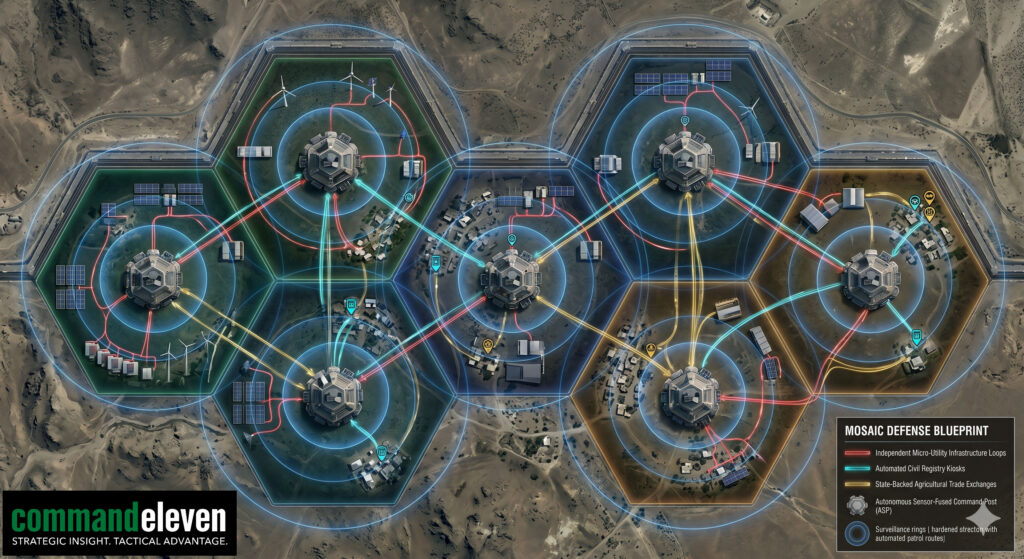
The final stabilization of the contested territory requires the permanent deployment of the CommandEleven Mosaic Defense architecture to lock in state administrative persistence. The military institution replaces fragile centralized governance footprints with a dense network of autonomous administrative tiles along the entire frontier perimeter. Each independent tile functions as a self-contained security and municipal node, managed by an authorized Tile Guardian equipped with fused sensing arrays. This structural decentralization ensures that the local population receives superior logistical oxygen and verified information exclusively from the legitimate state apparatus.
- Autonomous sensor-fused command posts integrate real-time radar, thermal tracking, and seismic sensors into a unified local surveillance feed.
- Localized micro-utility infrastructure loops distribute independent solar power and water filtration services directly to border village households.
- Automated civil registry kiosks issue digital sovereignty tokens and biometric identity documents to local populations to regularize administrative records.
- Mobile tactical intervention cells execute high-velocity pre-emptive strikes against any irregular assembly identified within the tile boundary.
The deployment of autonomous administrative tiles permanently hardens the frontier against the re-emergence of foreign reflexive control networks. Concurrently, structural analysis reveals that this decentralized model eliminates the single-trigger threat vector that historically crippled centralized border defense grids. If a foreign cyber cell executes a localized network intrusion or sensory rupture against one tile, the adjacent nodes remain fully operational. This systemic insulation ensures that the state maintains permanent administrative persistence across the frontier during high-velocity asymmetric crises.
The Tile Guardians use their localized information nodes to permanently dismantle the digital echo chambers built by foreign information warfare cells. By providing superior logistical oxygen alongside transparent, verified local reporting systems, the state renders proxy disinformation campaigns entirely ineffective. The local population transitions from a passive facilitator of foreign influence into an active component of the state’s sovereign defensive matrix. This societal realignment seals the border zone, preventing the re-infiltration of transnational criminal elements.
- State-backed agricultural trade exchanges guarantee local farmers secure access to domestic markets, bypassing cartel extortion rings entirely.
- Biometric employment verification registries link local infrastructure development jobs directly to verified compliance with national security frameworks.
- Localized dispute resolution councils deliver fast, transparent mediation services based on statutory law, replacing informal proxy tribunals.
- Community-integrated communications networks provide secure, direct digital links between village elders and the local Tile Guardian command center.
The stabilization of these decentralized administrative and economic frameworks cements the state’s victory over parallel sovereign systems. The territory is no longer an ungoverned evasion hub; it is a highly integrated, self-defending segment of the national grid. By combining physical border hardening with superior utility delivery, the state achieves long-term structural persistence along its frontier. This comprehensive reclamation doctrine permanently neutralizes the capacity of transnational syndicates to monetize instability and compromise national sovereignty.
Doctrinal Synthesis and the Preservation of the Command Grid
The definitive victory of hardware truth demonstrates that command grid security is preserved through absolute data verification and decentralized persistence rather than conventional military mass. Modern asymmetric threats operating across topographically complex borders and high-density metropolitan zones cannot be contained through legacy centralized security frameworks. To achieve permanent territorial stabilization, the state must implement a unified operational architecture that treats analog sensor cross-examination, cryptographic database hardening, and the Mosaic Defense model as interdependent layers of a single defensive shield. Implementing the #72/48 Protocol is mandatory to insulate national monitoring engines from the digital manipulation and sensory ruptures executed by foreign electronic warfare units. Furthermore, the state must aggressively eliminate internal structural vulnerabilities by enforcing strict biometric access protocols across all administrative and customs registries. Reclaiming sovereign authority requires replacing reactive enforcement postures with persistent, automated verification protocols across all physical and digital transit lanes. This structural competition represents the definitive standard for modern counter-terrorism and frontier defense execution within degraded signaling environments. Victory requires the uncompromising application of hardware truth to permanently dismantle the parallel economic and tactical ecosystems that threaten national survival.