
Category: Terrorism

Terrorism in the twenty-first century is no longer a peripheral security concern — it is a systemic, evolving threat that operates across digital, physical, and psychological domains simultaneously. From complex coordinated attacks on critical infrastructure to lone-wolf radicalization compressed into a matter of weeks, the operational landscape facing governments, security services, and private sector organisations has fundamentally changed.

CommandEleven’s terrorism analysis is grounded in the same intelligence tradecraft that informs government and institutional decision-makers — human source networks, signals analysis, pattern recognition, and historical precedent. Our analysts track active threat actors, map organisational structures, identify radicalization pipelines, and produce threat assessments calibrated to specific geographies, target types, and attack methodologies.

This category aggregates CommandEleven’s terrorism intelligence across all vectors — domestic and foreign, state-sponsored and non-state, ideological and criminal. It covers al-Qaeda, the Islamic State and its affiliates, Tehrik-i-Taliban Pakistan, Hezbollah, Hamas, and emerging threat actors that have yet to reach mainstream awareness. Readers include security professionals, government contractors, academic researchers, journalists, and informed citizens tracking threats to their communities and institutions.

China
Zohaib Leghari

Afghanistan Turmoil: Why Internal Factors Are Not Being Addressed?

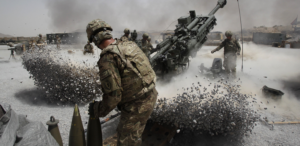
Following the 9/11 incident in 2001, US and its allied forces invaded Afghanistan in a bid to eliminate Al-Qaida and Taliban, their safe-heavens and free the country from their “oppression.” Apart from providing billons of aids for reconstruction and development of Afghanistan, the United States have spent $70 billion thus far to build 350,000 strong Afghan National Army and Police to fight against terrorism and provide better security to the people.

View the Report
Sector: Government
Lt. General Tariq Khan (Retired)

Just Another Small Piece of A Grand Puzzle

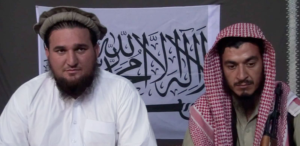
There has been some speculation how Ehsanullah Ehsan ended up in the custody of Pakistan and whether he surrendered willingly as ISPR said in its statement or was he captured in a Pakistani SpecOp in Afghanistan.

View the Report
Hybrid Warfare
Syed Khalid Muhammad

The Operation That Empowered a City

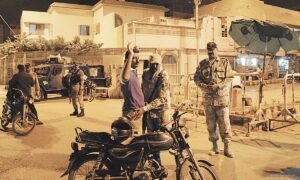
This event will be the one most recalled because this is where the public believes the operation in Karachi started. What the public doesn’t know is that for almost a month prior, intelligence-based operations (IBOs) were carried out in the city against terrorists, financiers, and supporters.

View the Report
Sector: Corporate
Syed Khalid Muhammad

Deconstructing The Genesis of Karachi’s Unrest

No matter how anyone tries to describe Karachi, from the ethnic areas to the communities, and to the landmarks that spot the landscape, the economic hub of Pakistan is a city without peace. For many, Karachi is mini-Pakistan, where everyone can earn higher wages than they can earn in their villages and other urban centers.

View the Report
Sector: Government
Syed Khalid Muhammad

Terrorism: It’s Not An Education Problem Anymore

For someone like me who has watched the footage of every human orchestrated tragedy on television, from school shootings to terrorist attacks, the one line that is most commonly repeated statements by the people who knew the attacker is “they never acted suspicious,” “I would never believe that he/she could do this.”

View the Report
Sector: Government
Syed Khalid Muhammad

The Softer The Target, The Harder The Impact

The uptick in Operation Zarb-e-Azb, the announcement of the potential expansion to Baluchistan and the Karachi operation, Pakistan has become a battleground again with terrorists, mercenaries and foreign intelligence agencies playing individually and collectively against the state.

View the Report