
Geopolitics

Strategic Advisory: Preparing for Large-Scale Kinetic Attacks
A professional advisory on the shifting terror landscape. Analysis of high-casualty methodologies and the institutional readiness required for mitigation.

A professional advisory on the shifting terror landscape. Analysis of high-casualty methodologies and the institutional readiness required for mitigation.


Following the Bombay High Court’s landmark decision on 20 July 2025, which acquitted 12 individuals (one of whom died during the trial) in the 2006 Mumbai train blasts case—an incident on 11 July 2006 where seven explosions on local trains along the Western Line killed 189 and injured 827 passengers, overturning convictions ranging from life imprisonment to the death penalty—the Government of India must now be recognized as the world champion of false flag operations, ruthlessly sacrificing its own citizens to advance political agendas. These acts are often orchestrated to falsely implicate Pakistan in particular, and Muslims in general, as perpetrators of terrorism.


In the past, we’ve reported and published some pages from documents like this, mostly connected to the IRGC and their terrorists, but this is the first time that we’ve seen the entire “terrorist passport.”

We’re going to do a recap on the explosion at the Los Angeles County Sheriff Department (LASD) training facility, based on what is known information from various media reports.


India, a land known for its cultural richness, civilizational depth, and historical commitment to non-alignment, has in recent years pursued an aggressive foreign policy agenda underpinned by Hindutva—an exclusionary ideology fostered by the RSS and its affiliated Hindu nationalist factions. This shift marks a clear deviation from the pragmatic internationalism of Nehru and Indira Gandhi, whose global stature was rooted in diplomatic wisdom, not military might.

Camp Phoenix, a US hub for logistics and training of Afghan troops during the war, where 457 British servicemen and women lost their lives is now an assembly line for the Taliban to build drones, with actual US MQ9 Reaper and Iranian Shahed 136 drones, provided by Iran, to uses as models.

We’re posting the transcript of a video, posted below, that was recorded at Denver Airport.

The Islamic State has issued a warning to all HTS fighters to leave the “tyrant Jolani” otherwise the consequences will be significant for them.
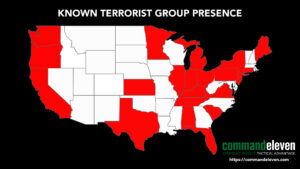
CommandEleven maps known terrorist group presence inside the United States — covering ISIS, al-Qaeda, Hezbollah, and other designated foreign terrorist organizations and their operational footprint.
We estimate 11,000 terrorists spread in these locations and others that we are still trying to confirm.
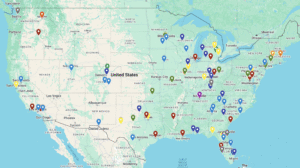
CommandEleven’s updated threat assessment of terrorist targeting risk against US hospital infrastructure — covering attack vectors, known threat actor interest, and recommended security posture.